
Dawson’s $10.2 million sewer project leaves major financial questions unresolved
As Dawson’s finance director resigns and operating pressures mount, records show $10.2 million in sewer funding, frozen loans, missing audits and gaps in the public accounting of project money.
As Dawson’s finance director resigns and operating pressures mount, records show $10.2 million in sewer funding, frozen loans, missing audits and gaps in the public accounting of project money.
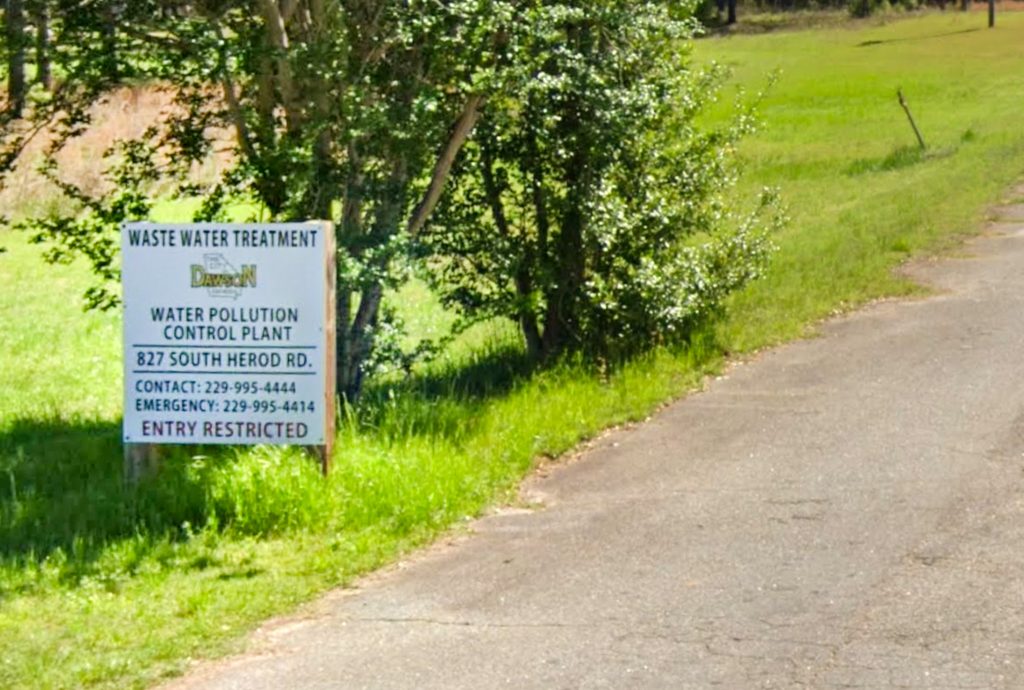
DAWSON — The resignation of Dawson’s finance director Friday adds new urgency to understanding a city financial picture that has become increasingly difficult to reconcile.
Dawson has struggled to bring recurring revenues in line with the cost of normal operations. At the same time, millions of dollars in federal grant and state loan money have moved through the city for one of the largest infrastructure projects in its recent history.
Those are separate sources of money. Funding tied to Dawson’s wastewater project is restricted and cannot simply be redirected to cover payroll, utilities or other routine city expenses.
But the distinction makes a complete accounting more important, not less.
State records show how much project funding was approved, how much Dawson requested or received and what the money was authorized to pay for. The records do not provide a complete accounting of what happened after every dollar reached the city.
The Albany Herald requested Dawson’s vendor-payment records as part of a broader request for financial documentation. Those records would show which contractors the city paid, how much it paid them and when. The city has declined to provide them.
Without those records, The Herald cannot independently trace every project dollar from the state and federal funding programs through the city to the contractors ultimately paid.
That uncertainty exists alongside a much older infrastructure problem.
Dawson’s documented sewer problems stretch back more than two decades. Georgia Environmental Protection Division complaint records reviewed by The Herald include a sewage overflow dating to approximately January 2002, followed by additional spills and overflows documented in 2010, 2013, 2017 and as recently as 2024.
The city’s current wastewater improvement effort was underway by 2022, when Dawson began securing grant and loan funding to rebuild its wastewater treatment plant and repair aging sewer lines.
Since then, Dawson has entered into three funding agreements totaling $10.2 million — more than the city’s entire annual budget for all operations.
One is a $5.82 million federal American Rescue Plan Act grant administered by the Governor’s Office of Planning and Budget. It does not have to be repaid. The other two are loans through the Georgia Environmental Finance Authority totaling $4.38 million, although as much as $2.08 million of that principal may eventually be forgiven.
No single city document presents the full financial picture. The Herald reconstructed it from grant agreements, amendments, state payment records, GEFA disbursement logs, contractor pay applications and written responses from the agencies administering the funds.
Dawson also has not completed outside audits for Fiscal Years 2023, 2024 or 2025. Its most recent completed outside audit covers Fiscal 2022. GEFA says some of its financial review depends on those audits being available, and the agency told The Herald it has not conducted a site inspection of the project, although it said project managers generally conduct site visits while construction is underway.
None of those facts establishes that project money was improperly spent.
They do mean that, with the records currently available outside City Hall, the full movement of the money cannot be independently reconstructed.
How the project is funded
Dawson was already pursuing the current wastewater improvements by 2022, more than two years before it signed a consent order with Georgia EPD.
The November 2024 order did not initiate the project. It imposed specific deadlines for correcting long-standing wastewater problems after years of violations and sewage spills. Under that agreement, Dawson committed to completing sewer-line repairs by Dec. 31, 2025, and wastewater treatment plant work by March 31, 2026. Both deadlines have passed.
The funding supports two major construction contracts.
Southern Champion Construction of Savannah submitted the $7.54 million low bid for modifications to the wastewater treatment plant. K-Dug Corporation of Patterson submitted the approximately $1.24 million low bid for sewer-line improvements.
Together, the two construction contracts total about $8.78 million.
The grant grew to $5.82 million
Dawson’s ARPA grant began at $1.2 million in 2022. A 2023 amendment increased the award to $1.32 million. In late 2024, another $4.5 million was added, bringing the total grant award to $5.82 million.
The additional $4.5 million came with restrictions. State records specify that it may be used only for cost overruns within the project’s approved scope and not for separate projects or additional project elements.
Dawson also was required to contribute toward the project, but its original $1.2 million match was itself federal money.
The city received $1.548 million in direct federal pandemic-relief funding and pledged $1.2 million of that money toward the sewer project. When the required match later increased to $1.32 million, records reviewed by The Herald did not identify the source of the additional $120,000.
The grant also carries a deadline. Eligible costs must be incurred by Oct. 31, 2026, and supporting documentation must be submitted to the state by Nov. 30.
A review of the underlying contractor records provides a fuller picture of how much Southern Champion work has been submitted through the grant.
Southern Champion’s first 11 pay applications total $3,855,624.72. Ten payment-request templates released by OPB total $3,239,619.07. Pay Application 3, for $616,005.65, was separately submitted to OPB under payment request PA-0023376.
Together, the two figures account for the full $3,855,624.72 billed by Southern Champion through Pay Application 11. That distinction matters because the payment-request templates released by OPB do not, by themselves, represent the complete amount of Southern Champion work submitted to the grant.
Two state loans remain partly undrawn
Dawson’s first GEFA loan totals $2.18 million, with up to $1.09 million eligible for principal forgiveness. The city has drawn about $765,111 from that loan. Its original draw period expired in June 2023 and repayment has not begun.
The second GEFA loan totals $2.2 million, with up to $990,000 eligible for forgiveness. Dawson has drawn about $1.21 million from that loan. It expires in January 2027 unless the schedule is modified, and repayment could begin as soon as then.
Together, Dawson has received about $1.98 million from the two loans.
If the city ultimately draws both loans in full and receives the maximum available forgiveness, roughly $2.3 million in principal would remain to be repaid.
The exact debt cannot yet be calculated because the city has not drawn the full loan amounts and publicly released records do not show the interest rates, repayment terms or eventual annual payments.
Another $369,338 in submitted loan requests remains unpaid because GEFA has placed both loans on hold while Dawson remains on the Georgia Department of Audits and Accounts’ noncompliance list for failing to submit annual audits.
The funding sources are no longer as clearly divided
The ARPA grant and GEFA loans finance different portions of the same sewer project. Until recently, available records showed a relatively clear division: Southern Champion’s wastewater treatment plant work was being submitted through the ARPA grant, while K-Dug’s sewer-line work was being funded through GEFA.
Dawson described that arrangement directly in a state filing, saying “all K-Dug construction costs are being paid by the city using GEFA funds” and that all payment applications submitted at that point were for Southern Champion.
The distinction mattered because Dawson was seeking to use the full $5.82 million ARPA grant for Southern Champion’s portion of the project. Every eligible dollar paid with grant money is a dollar the city does not have to borrow and repay.
An Aug. 13 city record shows that division is changing. In the City Council work session packet, the city manager said a $109,886 change order for two additional floating aerators on Southern Champion’s contract “will be funded through GEFA.”
The underlying document identifies the expense as Supplemental Work Allowance Draw No. 8. Supplemental Work Allowances are not a separate contract; they are part of a $600,000 allowance contained within Southern Champion’s contract and billed through the company’s regular pay applications.
That matters because Southern Champion’s first 11 pay applications account for the ARPA submissions reviewed by The Herald, while the city is now identifying a Southern Champion expense for payment through GEFA.
The records reviewed so far do not show that the same expense was reimbursed twice. A comparison of available GEFA requisitions and ARPA payment records found no exact matching payment amounts.
But the change means future records will need to clearly distinguish which Southern Champion costs are being charged to the federal grant and which are being charged to GEFA loans — particularly because Dawson previously told the state that K-Dug construction was being paid through GEFA while Southern Champion payment applications were being submitted through ARPA.
How the money is reviewed
The grant and loan programs use different payment systems.
For the ARPA grant, Dawson’s engineer, Carter & Sloope, prepares payment requests and certifies that the billed work has been completed. RSM US LLP reviews those requests before OPB approves payment.
The released grant requests were processed as “Modified Payment Requests.” Under that system, the state may send money to Dawson before proof of payment to the contractor is submitted. Documentation showing that the contractor was paid follows with a later request.
GEFA uses a different process. The authority told The Herald its agreement is with Dawson, not with Dawson’s contractors.
“Our loan agreement is with the city,” GEFA officials said. “Disbursements are paid to the city, and the city is responsible for paying its contractors.”
That distinction is central to what the available records can and cannot establish.
GEFA told The Herald it conducts annual reviews of debt-service coverage and audited financial statements when those audits are available.
The city’s missing audits leave the public without a single document showing how the city’s project debt fits into its broader financial condition. That issue takes on added significance as Dawson works to reconcile its operating finances.
The sewer grant and loan money remain restricted to the project and cannot simply be redirected to cover payroll, utilities or other ordinary city expenses. But millions of dollars in restricted funds have nevertheless moved through the same city government while its operating revenue has been insufficient to meet anticipated expenses.
The project remains years behind
Dawson has filed quarterly progress reports on the project since January 2023, but for nine consecutive reporting periods, from January 2023 through January 2025, the city reported the project as “Not Started.”
Beginning in April 2025, Dawson reported it as “Completed less than 50 percent” for six consecutive quarters through July 2026. The projected timeline has also moved substantially.
Construction was initially expected to begin in May 2023 but was later reported as beginning in June 2025 — 25 months later.
The treatment plant was originally projected to begin operating in May 2024. The latest reported date is December 2027 — 43 months later.
Those delays now intersect with several financial deadlines.
What still cannot be verified
State records reviewed by The Herald establish how much grant and loan funding was approved, how much Dawson requested or received and the purposes for which the money was authorized.
What they do not provide is a complete accounting of what happened after every dollar reached the city.
The Herald requested Dawson’s vendor-payment records as part of a broader request for financial documentation. Those records would show which contractors were paid, how much they were paid and when. The city has declined to provide them.
Publicly released GEFA logs also do not identify the invoices or contractors supporting each requisition. GEFA confirmed that it retains the underlying invoices, pay applications and related documentation. The Herald initially requested those records but narrowed the request after GEFA advised that retrieving the full set would involve significant additional costs.
While the records available so far do not establish that project money was improperly spent or that the same expense was reimbursed more than once, they also do not allow The Herald to independently trace every dollar from the state and federal funding programs to the city and then to the contractors, or independently confirm that all work billed to those programs was actually completed.
For a project involving $10.2 million, two state loans, a federal grant, years of schedule changes and a city whose most recent completed outside audit covers Fiscal 2022, that remains a significant gap in the public record.
The project remains only slightly more than half complete. With the ARPA spending deadline approaching and both GEFA loans frozen, the unresolved question is no longer only how Dawson has financed the work already performed, but how the city will pay to finish what remains.
Related Articles

Months of unresolved records requests leave Dawson taxpayer questions unanswered
The City of Dawson will move ahead with its fiscal year 2027 budget before completing external audits that remain unfinished, city officials told The Dawson News on July 31 — more than three months after the newspaper began requesting the financial records behind the city’s decisions.
Jail HVAC work divides Dougherty County Commission
Dougherty County commissioners deadlocked in two 3-3 votes, with one commissioner abstaining in each, related to work on the heating, ventilation and air-conditioning system at the Dougherty County Jail on Monday. The issue has divided commissioners for months.
Dougherty tax assessor charged in criminal case will remain in position
“I’m not aware of any rule that requires them to take action. It’s up to their discretion.”
