
Chehaw officials laud benefits of Zoos & Aquariums accreditation
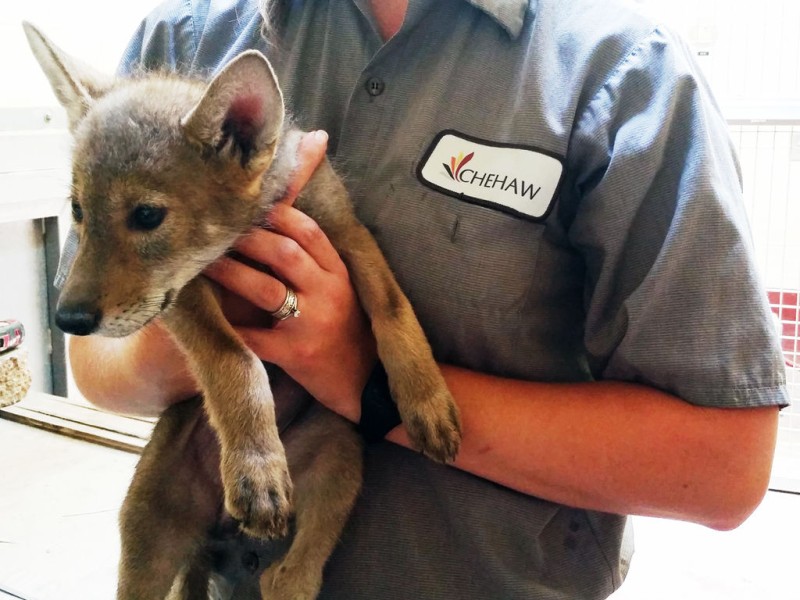
File Photo
By Tom Seegmueller
[email protected]
ALBANY – The level of financial support provided by the city of Albany to Chehaw Park and Zoo, as well as the value of accreditation by the Association of Zoos & Aquariums (AZA), was once again a topic of discussion for the Albany City Commission this week.
Since its partnership with Zoo Atlanta two decades ago, Chehaw had been an AZA-accredited institution. However, a series of issues, including a lack of long-term commitment to funding for the park by the city, led to the loss of accreditation in 2018.
The AZA serves as an accrediting body for zoos and aquariums and ensures accredited facilities meet higher standards of animal care than required by law. Institutions are evaluated every five years in order to ensure standards are met and to maintain accreditation. As of December 2019, AZA had 238 accredited facilities in the U.S. and 11 other countries.
Chehaw Executive Director Tommy Gregors highlighted some of the impact that the loss has created on Wednesday.
“We have been analyzing this since we lost our accreditation,” Gregors said. “What did it mean for Chehaw?”
The cost of liability insurance is one of the most obvious items impacted by the loss.
“Our previous underwriter would only write accredited institutions,” Gregors said. “This forced us to go with a company that is not familiar with zoological institutions. Our cost went from $77,000 to $106,000. That’s a hard thing. There again, AZA standards lower your risk and are proof you are managing to the highest standards for safety, training and enclosures.”
Another area where the zoo suffered from the loss is that other organizations that are responsible for sanctioning the operations of zoological facilities, including the United States Department of Agriculture, United State Fish & Wildlife Service, and the Georgia Department of Natural Resources, had grandfathered some older exhibits because they were being operated by a facility with AZA accreditation. When this was lost, those exhibits had to be brought up to current standard. The standards of the AZA ensure not only the safety and well-being of the animals held in captivity but that of the visiting public as well.
Approximately 800,000 animals representing 6,000 species are in the care of AZA-accredited facilities, including 1,000 threatened or endangered species. The association also facilitates both the Species Survival Plan and Population Management Plan, which serve to sustainably manage genetically diverse captive populations of various animal species.
Samantha Sassfone, curator of the animal collection at Chehaw, explained how in this regard Chehaw was also severely impacted by the loss of accreditation.
“It greatly limits the species we are going to be able to work with,” she said. “A lot of your more critically endangered animals are controlled by AZA zoos, and they’re not going to let you have them unless you’re AZA, too. There are some hoops you could possibly jump through, but you might as well be accredited if you can jump through those hoops.”
Under AZA accreditation, Chehaw has played an important role in the Species Survival Program. Taking part in breeding programs for black rhino, red wolf and cheetah.
“We were lucky with some of the animals like the cheetahs,” Sassfone said. “But the only reason we got those cheetahs is they were so low on the genetic value in the country they were never going to breed them. If they were going to breed them, they never would have given them to us.”
Animals in the SSP are not owned by the facilities that house them; they are loaned to them and rotated by the program as needed. Without accreditation Chehaw’s involvement has been greatly reduced and is in jeopardy of becoming lost all together.
More than 2,800 individual members meet each year at AZA’s September conference, the largest, most comprehensive zoo and aquarium professionals’ events in the country. Peer-developed program meetings, round tables, and workshops aimed at allowing those in attendance to collaborate with one another to learn and discuss issues critical to the profession.
Due to COVID-related issues, Chehaw is not currently operating its internship programs. However, it is working with seasonal relief workers. Both programs are impacted by the quality of candidates that apply. Top tier applicants are going to seek a position at an accredited institution over those that are not.
“If we are AZA, we are going to get a hugely better selection of candidates,” Sassfone said. “Just being at an AZA facility looks so much better on your resume. If you’re not, during your interview you have to prove that the institution you were at was a good institution. If you were at an AZA institution, you don’t have to argue that point.
“The AZA provides a lot of resources, husbandry manuals, population management plans, stud books, a lot of this information they are not going to provide if you are not AZA. They make husbandry manuals with the current best practices to take care of species. You can’t get your hands on these or contribute to them if you are not AZA.”
The AZA also offers professional development opportunities for its members. Some are available to non-members, but the prices for attendance are much higher for non-members. Also, if there is limited attendance, members will have priority.
The loss of accreditation also impacts the ability to raise funds through contributions, grants and potential partnerships.
As all of this is being fit into Chehaw’s new Master Plan in a post-COVID era, Gregors offers another reason he feels AZA accreditation is important.
“We aren’t coming back to normal or a new normal,” he said. “It is an opportunity to transform our facilities to meet the needs of our community in the future. We have to fundamentally change how we deliver our programs, our message and interact with the community.”
Gregors said he understands the need to periodically evaluate the level of funding from the city to meet Chehaw’s operational needs. He also acknowledges that Chehaw is lucky to be included in the city budget. However, he said, “In the future we should not have to argue our value to the community, which we currently have to do. That should not be in question. The impact on the quality of life in our community, the economic impact, the attraction to tourism and education should not be in question. Accreditation proves these things every five years.”
Author

Related Articles

Southwest Georgia artists recognized at packed opening of exhibition
The annual juried exhibition, one of the region’s largest showcases of visual art, features approximately 46 artists and nearly 90 works spanning painting, sculpture, ceramics, photography and mixed media.
Powerful performances drive Theatre Albany’s ‘The Color Purple’
From the street, strands of purple ribbon wind around the white columns of the historic theater, hinting at the story waiting beyond its doors. Inside the foyer, a carefully curated slideshow flickers across a large screen, cycling through the faces of the cast. Some are seasoned performers. Others are stepping onto a stage for the very first time. Teachers stand alongside former students. Parents perform beside their children. People who worship in different churches, work different jobs and come from different corners of Southwest Georgia gather beneath the same lights to tell the same story.
Annual exhibition showcases southwest Georgia talent, community connections
Now in its 26th year, the exhibition features work by artists from across Southwest Georgia and offers residents an opportunity to engage directly with the area’s creative community.
