
Pet owner brings ‘Dangerous Dog Law’ issues before Lee Commission
Special Photo
By Tom Seegmueller
[email protected]
LEESBURG – Issues related to Georgia’s “Responsible Dog Ownership Law,” or the ‘Dangerous Dog Law” as it is more commonly known, were the primary focus of Tuesday’s Lee County Commission Meeting.
Eddie Epperson, a resident of Lee county who recently lost his dog to an attack by a neighbor’s dog, addressed the commission on behalf of his neighbors who now live in fear of a repeat occurrence.
Epperson informed the commission that although the attack of his pet is the only one on record, that two other attacks have occurred since the dog owner moved into the neighborhood in 2012. In his words, these two attacks were “paid off” by the owner of the dangerous dogs in question.
“He paid the vet bills and bought a new dog for these dog owners,” Epperson said.
“My wife used to come home to her safe space. It’s not safe anymore. Now I have to wear a pistol to go to the mailbox or mow the grass.”
During a brief discussion by commissioners and Epperson, it was determined that the Lee County dog ordinance is modeled after state law. In July 2012, Gov. Nathan Deal signed House Bill 685, otherwise known as the “Responsible Dog Ownership Law,” in response to several dog attacks that occurred in the years leading up to the bill’s passage.
As its name implies, the Responsible Dog Ownership Law places greater legal responsibility on pet owners whose dogs injure other people’s pets, kill other people’s pets or bite, but do not seriously injure, a human.
Under the law, if an owner’s dog ever injures or kills another person’s pet, or if the dog bites another person without causing serious injury, the dog’s owner will be required to:
— Submit a yearly application for a certificate of registration for his or her dog;
— Construct (or hire someone to construct) a “secure enclosure” for the dog;
— Put warning signs around the owner’s home saying that a dangerous dog lives on the property.
There are even stricter requirements for the owners of dogs that inflict serious injuries. If a dog seriously harms another person, under the law the owner will also be required to purchase a minimum of $50,000 in liability insurance coverage, which will help to pay for medical bills and property damage if the dog attacks another person, and have the dog microchipped by a veterinarian.
Those are the requirements after the first time a dog seriously injures another person. If the dog seriously injures someone a second time, the owner will be required by law to have the dog euthanized.
Epperson said he was not allowed to speak in court, where his neighbor pleaded guilty to charges against him and was ordered to pay fines of $155 per dog and pay $150 to the Eppersons.
“I don’t want a dime,” Epperson said. “We want to donate this to the Lee County Animal Shelter. I will bring the check here so they can rewrite one to the animal shelter. I want in on record I didn’t receive anything from them”.
Epperson said his neighbor has bred German Shepherds and Rottweilers. Currently he is breeding Cane Corso Mastiffs, which can reach weights of more than 100 pounds. Epperson warned commissioners that if the owner did not build an adequate kennel, he feared there would be another incident.
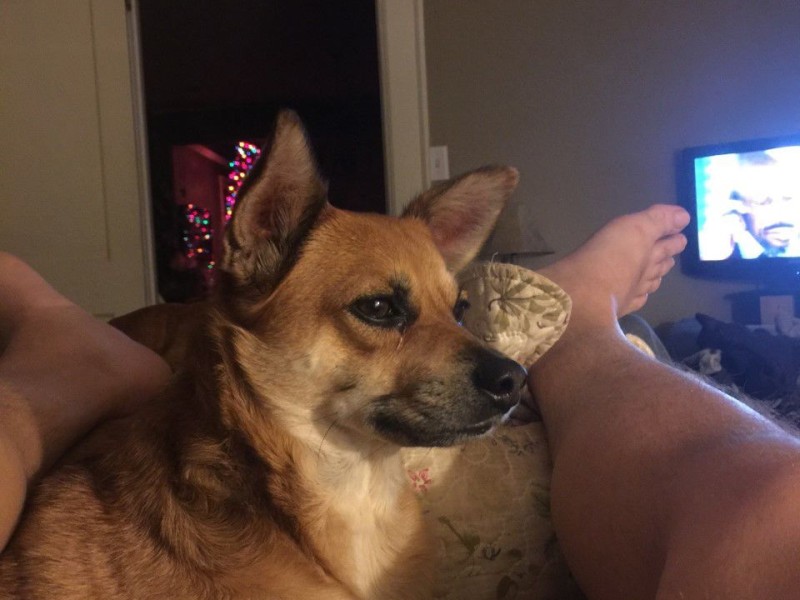
Epperson showed commissioners two pictures, one of Bosco, a 26-pound mixed breed rescue dog that his had enjoyed living with for more than eight years. The other picture showed the wounds he received in the attack.
Commissioner Luke Singletary, who has been working with Epperson on the issue, commended him for coming before the commission as well as taking appropriate actions after his dog was attacked.
“We’ve had several conversations; I’m glad you are here,” Singletary said. “I’m glad this case went to court; now there’s a record. If your neighbors had done the same thing, it might have changed the situation you’re in, what happened to you.”
Commission Chairman Billy Mathis said the board would review the county’s ordinance to see if any changes needed to be made and would have Code Enforcement look into the issue as well.
“We can look at our ordinance and see if any changes need to be made,” Mathis said.
Following the commission meeting, Epperson said that he has tried to warn others that might walk or ride in the Southwood Subdivision about the potential danger.
In other business, the board approved the appointment of Art Ford, Victor Stubbs, Robert Usry and John Wheaton to the Utility Authority for one-year terms.
Commissioner Rick Muggridge questioned whether the commission should be following a previous protocol of reading the names of those who submitted letters of intent to serve at one meeting and then waiting for two weeks for public input or questions before appointment. The commission as a whole agreed, so the other appointments were read for the record and will be voted on at the next meeting. Those appointments include Bobby Watkins for a five-year term on the Family Services Board, and Peter Ngwafu, Lee Johnston and Chris Philips for two-year terms on the DARTS Citizens Transportation Committee.
A request for bids for the New York Road Culvert project was postponed until the next meeting in order to verify adequate (T-SPLOST) funding was available for the project.
Author

Related Articles
Albany Rescue Mission in recovery but still can use some help
“We can’t do this without the community. We are so grateful for the willing vessels. We just can’t thank them enough. We also appreciate the other ministries that have sown seeds into our ministry.”

Plenty of oil, not enough diesel — and southwest Georgia farmers are paying for it
Sedrick Rowe doesn’t spray herbicides on his 10 acres of organic peanuts. He fights weeds with his tractor instead, which means he runs it more often than most farmers — and burns at least 30 gallons of diesel on a typical day. This harvest season, every one of those gallons costs more than it has at any point on record.

Dougherty schools plan task force as SNAP changes raise concern over free meals
The Dougherty County School System plans to create a task force to help families retain food assistance and navigate new reporting requirements as district officials warn that declining SNAP participation could eventually affect the federal provision that allows every student to eat free at school.
