
Memorial Day: Some gave all
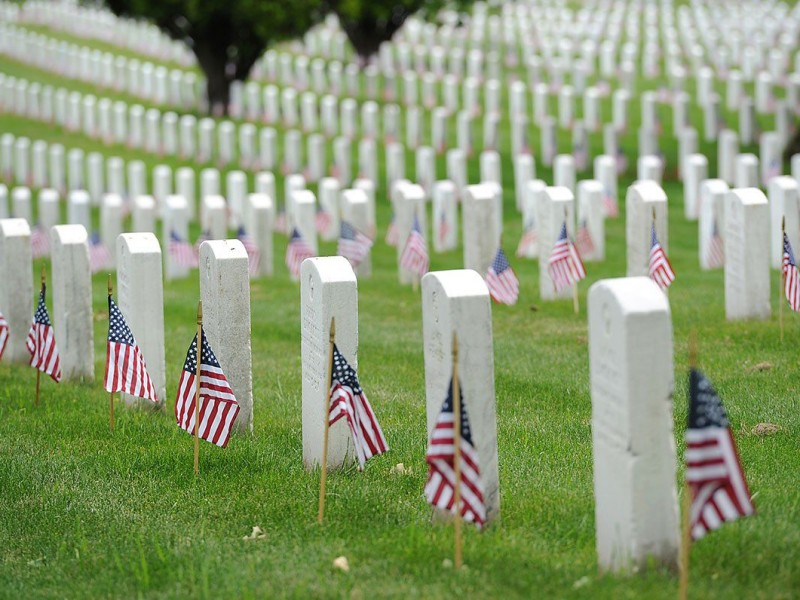
Special Photo
By Tom Seegmueller
[email protected]
Let every nation know, whether it wishes us well or ill, that we shall pay any price, bear any burden, meet any hardship, support any friend, oppose any foe to assure the survival and the success of liberty. — John F. Kennedy
ALBANY — During his inaugural address, President Kennedy used these words to underline a national ethos that had already required 1,257,696 Americans to make the ultimate sacrifice for their country.
When we honor their sacrifice this year on Memorial Day another 161,341 Americans will have joined their ranks.
The roots of this observance can be traced to the spring of 1865, which marked the end of the War between States. That conflict resulted in the remains of more than 650,000 Americans being scattered mainly across the Southeastern United States.
Many communities claim to have held the first observance of this holiday. There are numerous accounts of freed slaves decorating the graves of union soldiers whose graves they dug as the bodies were relocated following the war. Savannah and Charleston lay claims on this basis.
Some scholars believe the recognition should go to Columbus in recognition of the Ladies Memorial Association writing a letter in the press requesting assistance in establishing an annual holiday to decorate the graves of soldiers scattered across the South.
Others contend that when Abraham Lincoln visited the battlefield at Gettysburg in 1863 and gave his famous address there, a ceremony was held to commemorate the soldiers buried there and that location should therefore receive the founding honors.
The official origin of the national observance of Decoration Day is credited to Gen. John A. Logan, who called for a nationwide day of remembrance in May of 1868. “The 30th of May, of 1868, is designated for the purpose of strewing with flowers, or otherwise decorating the graves of comrades who died in defense of their country during the late rebellion, and whose bodies now lie in almost every city, village and hamlet churchyard in the land,” he proclaimed.
The date was chosen because it was not the anniversary of any specific battle. On the first observance, President James Garfield gave a speech at Arlington National Cemetery. More than 5,000 people participated in a ceremony decorating the graves of the 20,000 Union and Confederate soldiers buried there.
Arlington was created as the first National Cemetery in the country as a result of the growing demand for burial space in the area during the war.
The site was originally the home of Confederate Gen. Robert E. Lee. Obviously, Lee and his family were unable to live there during the war, and the house was acquired by the U.S. government at a tax sale in 1864 for $26,800, although the Lees sent an agent to the sale to attempt and retain ownership. He was not allowed to bid at the sale.
Private William Christmas was the first military service member buried at the site. More than 400,000 burials have taken place there since. Today, more than 30 burials a day are conducted at the cemetery.
The Tomb of the Unknown, one of our nation’s most significant monuments, is located at Arlington. It is dedicated to unidentified U.S. service members who gave their lives in the line of duty. The tomb was dedicated on Nov. 11, 1921, during an Armistice Day celebration with the body of an unknown U.S. soldier, which was was exhumed in France and reburied at Arlington under two inches of soil brought from France. The ornate sarcophagus above reads, “Here rests in Honored Glory an American Soldier Known but to God.”
The WW I unknown has since been joined by the unidentified remains of soldiers from WW II, the Korean War, and the Vietnam War. The tomb has been perpetually guarded since July 2, 1937, by the U.S. Army.
In 1948, the 3rd U. S. Infantry regiment, “The Old Guard,” took over this duty and performs a meticulous ceremony continually guarding the tomb, regardless of weather. The guard continually marches 21 steps behind the Tomb, turning and facing each point of the compass for 21 seconds. After each turn, the guard executes a sharp “shoulder arms” with his weapon, placing the weapon on his shoulder closest to the visitors, signifying he stands between the tomb and any threat.
The number 21 was chosen because it symbolizes the highest military honor, the 21-gun salute. Generally, this salute is preformed by an odd number of service members generally from 3 to 7. This honor guard fires three times in unison in recognition of the fallen warrior.
Other traditions are attached with military burials. One common practice is leaving coins at the grave site so family members might know that their loved one has been visited. Some believe it is a down payment for a drink when they are reunited. Each denomination has a meaning:
♦ A penny at the grave means someone has visited;
♦ A nickel means the visitor and the deceased were in boot camp together;
♦ A dime means that they served together;
♦ Lastly, a quarter means that the visitor was with the fallen soldier when he was killed.
Memorial Day has seen numerous changes since it was first observed. Initially, it was observed on May 30, regardless of the day of the week the date fell on each year. In 1968, as part of the uniform holiday bill establishing a series of three-day holidays, it was moved to the last Monday in May.
COVID-19 will have a great impact on the observance of this year’s Memorial Day celebrations, many of which have been canceled altogether. Nevertheless, Americans are coming up with creative ways to honor our fallen warriors. Virtual ceremonies, moments of silence, visits to obscure or local monuments, and perhaps just an individual prayer of gratitude will have to do this year.
In recent years, Americans have been asked to stop a 3 p.m. for a moment of silence in recognition of those who paid the ultimate price for freedom. If you can’t come up with any other celebratory idea after your moment of silence, you might consider listening to Trace Atkins’ “Arlington” or pull up the lyrics and think about them for a second.
And I’m proud to be on this peaceful piece of property,
I’m on sacred ground and I’m in the best of company,
I’m thankful for those thankful for the things I’ve done,
I can rest in peace, I’m one of the chosen ones, I made it to Arlington.
Author

Related Articles

Terrell County invites community to celebrate Independence Day with July Fest
Families from across Southwest Georgia are invited to gather in Dawson on July 4 for an afternoon of food, fellowship and fireworks as the Terrell County Recreation Department hosts its annual July Fest celebration.
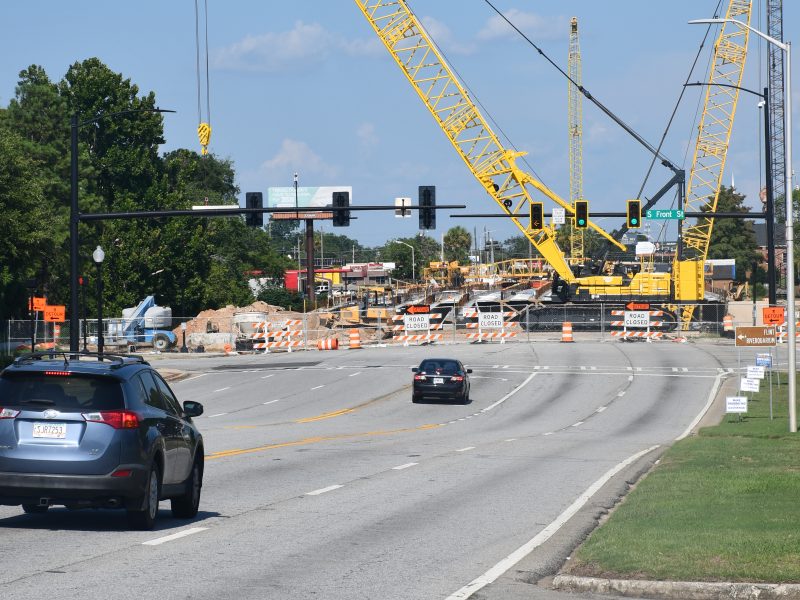
DOT says delay in Oglethorpe Bridge opening should be brief
“We know it’s not going to be July 22. We don’t think it’s going to be much later than that.”
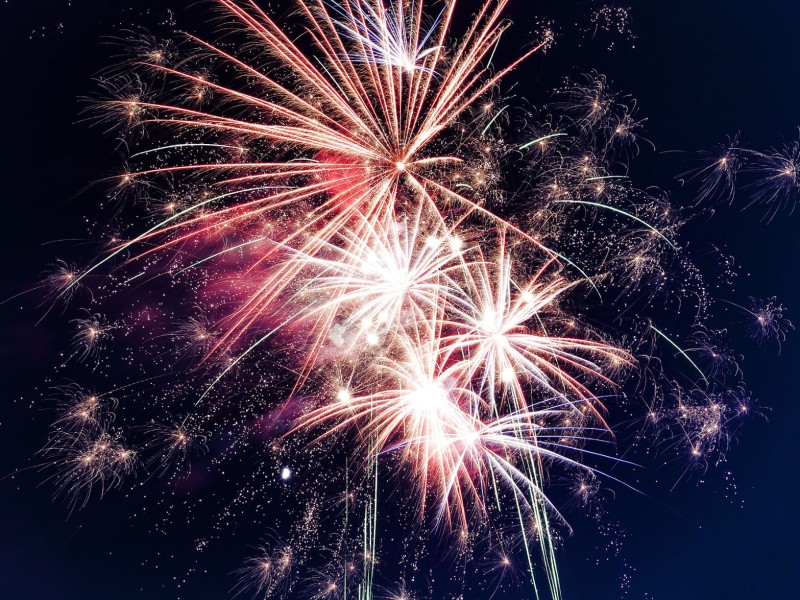
City of Albany has big July 4 celebration planned for Saturday
“It’s going to be a lot of moving and shooting them off in a short time. It’s going to be a big show.”
