
CAMIA HOPSON: Post-session committee work impacts legislation
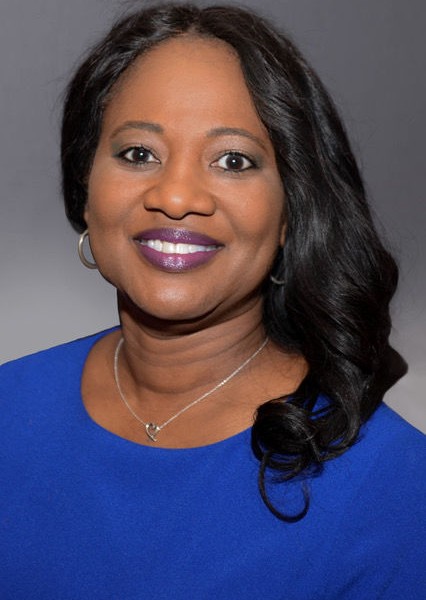
Special Photo
By CaMia Hopson
[email protected]
The General Assembly returned to the Gold Dome Jan. 27 for the third week of the 2020 legislative session. The House convened every day this week to take up business, and we also spent more time in our committees and subcommittees to review proposed legislation and hear testimonies from area experts. By the end of our third week of the session, my colleagues and I passed several House bills out of our respective committees that could soon be considered for a vote on the House floor.
As we go through the legislative session, some of the legislation that is introduced is the result of work that we do in study committees, councils and commissions that hold meetings after the session ends. After the 2019 legislative session, my colleagues and I spent time studying several important issues that impact our state to prepare for the 2020 session. House Resolution 37 was adopted last session and established the Georgia Commission on Freight & Logistics for the 2019 calendar year. The commission was authorized to analyze and recommend comprehensive public policy that would support our freight and logistics industries.
We also adopted House Resolution 214 that re-authorized the House Rural Development Council, and over the last year, the council continued its work to find solutions to improve economic opportunities in rural areas of the state. Finally, House Resolution 589 was adopted in 2019 to create the House Study Committee on Maternal Mortality to study the state’s high maternal mortality rate and issues that impact maternal health. Each of these groups issued in-depth final reports that included policy recommendations, which will guide us as we craft sound and effective legislation this session.
This week, the Joint House and Senate Transportation Committee approved the Georgia Commission on Freight & Logistics’ final report and legislative recommendations. The commission’s proposal seeks to address top issues that were identified last year, such as work force development, truck parking, freight rail investment and funding gaps. Additionally, the commission recommended that their work be extended through 2020 to continue to develop solutions for some of these key issues. As a result, the House Transportation Committee approved House Resolution 935 this week, which would re-authorize the commission for the 2020 calendar year.
The House Transportation Committee approved another important legislative measure this week that was a recommendation of the Georgia Commission on Freight & Logistics. House Bill 820 would establish the Georgia Freight Railroad Program within the Department of Transportation. I am eager to see this measure make its way through the legislative process so that we can continue to improve these infrastructures in our state.
The House Rural Development Council also submitted several legislative recommendations that would continue to support communities and businesses in rural Georgia. In 2019, the council met 10 times in five rural areas of the state to develop its proposals for the 2020 session. The council’s recommendations include supporting our agriculture industry, which is our state’s largest industry, as well as expanding funding for rural broadband deployment and addressing mapping issues that currently overestimate the amount of broadband coverage across the state. The council also proposed solutions for providing adequate health care by creating tax incentives for rural physicians and developing a state-funded residency program to bring health care workers to rural areas.
Members of the House Study Committee on Maternal Mortality spent several months last year developing ideas and strategies to decrease and prevent maternal deaths in Georgia. The study committee’s final report includes several of these strategies, such as extending Georgia’s Medicaid coverage for pregnant and postpartum women and introducing legislation that would mandate a postmortem examination for any maternal death. The study committee also seeks to increase accessibility to health care for pregnant and postpartum women through telehealth services.
This week, my colleagues and I also observed International Holocaust Remembrance Day, which marked the 75th anniversary of the liberation of the Auschwitz-Birkenau concentration camp. This powerful day commemorates the catastrophic genocide that resulted in the deaths of 6 million Jews and 11 million others. To honor the lives that were lost during the Holocaust, the General Assembly passed legislation during the 2019 session to create a memorial in the State Capitol. Members of the General Assembly, along with Israel Consul General Anat Sultan-Dadon, joined together to unveil the new memorial this week.
The House adopted another resolution this week to dedicate a space in the State Capitol to our friend and colleague Jay Powell. Powell served as chairman of the House Ways & Means Committee, which serves as the chief committee for tax-writing legislation, for several years before being named House Rules chairman. My colleagues and I adopted House Resolution 961, which will dedicate the House Ways & Means Committee’s conference room in honor and solemn memory of our friend. This conference room will now be known as the Alfred Jackson “Jay” Powell Jr. conference room in honor of the years of service that Rep. Powell spent championing tax legislation, and it will serve as a reminder of his dedication to Georgia.
Gov. Kemp signed the first major piece of legislation of the 2020 session on Jan. 30. House Bill 276 was passed via a conference committee report during the first week of the session and allows the state to collect taxable revenue from marketplace facilitators whose online platforms or apps are used to sell goods or services. The new revenue will be collected from marketplace facilitators who collect in excess of $100,000 or more annually. This new law will go into effect on April 1 and will help level the playing field for small brick-and-mortar businesses that currently have sale tax charged to their products.
Next week is sure to be even busier at the State Capitol as we enter into the fourth week of the legislative session. I encourage you to provide me with your input and thoughts on any proposed legislation that is important to you. You are always welcome to visit my Capitol office, which is located in room 607-B of the Coverdell Legislative Office Building in Atlanta. My office phone number is (404) 656-0287, and I can be reached via email at [email protected].
Thank you for allowing me to serve at your representative for HD 153.
Related Articles

CARLTON FLETCHER: The frustration of rooting for the Jekyll-Hyde Atlanta Braves
The Braves have, of late, held onto first place by the skin of their teeth despite losing series to good teams (the Brewers), mediocre teams (the Twins and Diamondbacks) and really bad teams (the Mets).
CARLTON FLETCHER: Dismissal of Dublin School Board should ring local warning bells
Georgia Gov. Brian Kemp suspended all seven members of the Dublin School Board Monday over claims of financial mismanagement.
CARLTON FLETCHER: For some Lee County ‘leaders,’ ego trumps success
Watch a little deeper than the surface the actions of certain individuals in Lee County, and you’ll have no problem figuring why the once-thriving county to the north of Albany is one of the few Republican enclaves in the region.
