
FREDDIE POWELL SIMS: State Legislative session kicks off
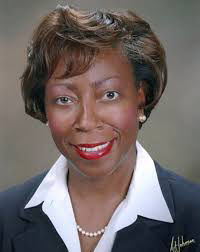
By Freddie Powell Sims
Georgia’s Legislative Session began on Monday. Each year, legislators from outside metro Atlanta make the long trek to Georgia’s State Capitol to take care of the “people’s business.” Usually, the list of legislative priorities begins with the budget, and education, followed by health care, social services and retirement, along with many legislative Bills.
Bills are offered and authored by legislators in both houses in hopes that they will be voted upon and become law. Supposedly, bills are sponsored for the purpose of improving the quality of life for all Georgians. On their own merits, some bills will be vigorously debated while causing great consternation for both Democrats and Republicans.
There are 56 State Senators and 180 State Representatives from many professions equipped with myriad skills needed to make thorough and investigative decisions for the state budget and all budgetary items. Returning to the capitol year after year is necessary for preparation of the state budget. Preparing the state budget is the single most important issue for annually convening the state legislature.
Locally, the legislative delegation representing approximately 20 southwest Georgia counties has already received legislative priorities from several governmental entities. Of course, budgetary items always seem to take precedent over all other matters.
One such item will address math challenges in the state. Math Corps addresses gaps in math knowledge, beginning with elementary school students. Math Corps is an AmeriCorps program that provides schools with tutors to support math development in grades 4 through 8. During the 2018-2019 school year, Math Corps was chosen to make its initial launch in the Dougherty County School District, the first of its kind in the state. This math tutorial program has recorded positive results. Long-range planning is to duplicate Math Corps programs across the entire state. Currently, it is housed in the Commodore Conyers College and Career Academy and utilized throughout the Dougherty County School District.
Another important issue is that of health care worker shortages, most notably among nurses. By 2030, the state of Georgia is expected to have the sixth-worst nursing shortfall in the country. More than any other region of the state, southwest Georgia battles challenges associated with attracting and retaining the best medical talent.
Over the next decade, there will be a desperate push to make Albany a leader in filling the state’s nursing shortage. Partnerships such as Albany State University, Albany Technical College, Georgia Southwestern State University, Andrew College, Mercer School of Medicine, MCG/Georgia Health Sciences Clinical Campus, Morehouse School of Medicine, AHEC and other partners have master plans in the works for growing health care personnel.
Along with this crucial nursing shortage, there is a need for behavioral health services for adults and children, especially between the ages of 8-15. In the Albany area alone, there is a need for 20 additional psychiatrists. How do we solve this medical dilemma? Local institutions of higher education and health care employers have begun discussions on ways to incentivize health care workers to become permanent residents in southwest Georgia upon completion of their educational training.
Communities with strong educational and health care institutions can help to eliminate low wage workers, unemployment, crime, homelessness, and many other formidable struggles.
Georgia’s Legislative Session is slated to begin on Monday, January 13, 2020. Each year legislators from outside Metro-Atlanta make the long trek to Georgia’s State Capitol to take care of the “people’s business.” Usually, the list of legislative priorities begins with the budget, and education, followed by healthcare, social services and retirement, along with many legislative Bills. Bills are offered and authored by legislators in both houses, in hopes that they will be voted upon and become law. Supposedly, Bills are sponsored for the purpose of improving the quality of life for all Georgians. On their own merits, some bills will be vigorously debated, while causing great consternation for both Democrats and Republicans.There are 56 State Senators and 180 State Representatives equipped with a myriad of professions and skills needed to make thorough and investigative decisions for the State budget and all budgetary items. Returning to the capitol year after year is necessary for preparation of the state budget and for no other reason. Preparing the State budget is the single most important issue for annually convening the state legislature. Locally, the legislative delegation representing approximately twenty Southwest Georgia counties, has already received legislative priorities from several governmental entities. Of course budgetary items always seem to take precedent over all other matters. One such item will address Math challenges in the State. Math Corps addresses gaps in math knowledge, beginning with elementary school students. Math Corps is an AmeriCorps program that provides schools with tutors to support math development in grades 4 through 8. During the 2018-2019 school year, Math Corps was chosen to make its initial launch in the Dougherty County School District, the first of its kind in the State. This math tutorial program has recorded positive results. Long range planning is to duplicate Math Corps programs across the entire State. Currently, it is housed in the Commodore Conyers College and Career Academy and utilized throughout the Dougherty County School District.Another important issue is that of the healthcare worker shortages, most notably among nurses. By 2030, the State of Georgia is expected to have the sixth worst nursing shortfall in the country. More than any other region of the State, Southwest Georgia battles challenges associated with attracting and retaining the best medical talent.
Over the next decade, there will be a desperate push to make Albany a leader in filling the State’s nursing shortage. Partnerships such as Albany State University, Albany Technical College, Georgia Southwestern State University, Andrew College, Mercer School of Medicine, MCG/Georgia Health Sciences Clinical Campus, Morehouse School of Medicine, AHEC and other partners have master plans in the works for growing healthcare personnel.Along with this crucial nursing shortage, there is a need for behavioral health services for adults and children, especially between the ages of 8-15. In the Albany area alone, there is a need for 20 additional psychiatrists. How do we solve this medical dilemma? Local institutions of higher education and healthcare employers have begun discussions on ways to incentivize healthcare workers to become permanent residents in Southwest Georgia upon completion of their educational training. Communities with strong educational and healthcare institutions can help to eliminate low wage workers, unemployment, crime, homelessness, and many other formidable struggles.
Related Articles

CARLTON FLETCHER: Lousy customer service leaves a fowl taste
Before I get into this, let me say from the get-go that I understand that we all have bad days, that the aggravations of life can put a damper on everything that gets in our way on a given day.

Squawkbox – June 27, 2026
Albany’s “leadership” is involved in criminal activity and will be… Franklin Graham and the other pastors of “super churches”…

My Grandpa Was Killed in World War II. I Met Him Through His Letters Home
Gina Wolf’s grandfather died before she was born. His letters sent to her grandmother from Europe during World War II made it possible to know what kind of man he was.
