
Keep feeders hanging for winter hummingbirds
Bob Kornegay
Despite tradition and old, outdated beliefs, don’t take down your hummingbird feeders as temperatures drop this fall and winter. That’s the suggestion of Georgia Wildlife Resources Division biologists, who say that some visiting hummers make the state their winter home and benefit from the nourishment feeders provide. Although our common summering ruby-throated hummingbird is the only breeding hummingbird species in eastern North America, 12 hummer species have been recorded by observers and banders in Georgia over the last few decades.
Every year in early fall, our resident ruby-throats migrate south to southern Mexico and Central America, often crossing the Gulf of Mexico in a single flight. But even before this departure, hummingbird species from the western United States and northwestern Canada start showing up in Georgia.
These winter visitors may arrive as early as August and stay into late March or early April. Among the southward-migrating newcomers is the rufous hummingbird, which has the longest migration route of any hummer species, and the calliope hummingbird, the smallest bird in North America. Georgia also provides a winter home for a number of black-chinned hummingbirds, a species similar to the ruby-throated.
In the past, many Georgians took their feeders down for winter, fearing that the food supply would deter hummingbirds from migrating. A lot of backyard birdwatchers continue this practice, believing they are doing the migrating birds a favor. However, the shortening of the days as fall moves into winter is nature’s signal for hummers to move, not the availability of food. Hummingbirds will migrate regardless of regional food supply. Keeping feeders up through the winter, contrary to past belief, does not affect normal migration.
Instead, homeowners who keep their hummingbird feeders full are providing a supplemental source of food for migratory hummers and may even get a rare glimpse of a western species visiting their yards in the winter. Observers who have experienced the sight of a rare winter hummingbird far from its traditional breeding range all agree it is quite an exciting phenomenon.
Keeping feeders available for winter hummers also helps biologists gather data on winter hummingbird populations, according to Todd Schneider, a biologist with the Wildlife Resources Division’s Nongame Conservation Section, a Georgia Department of Natural Resources unit specifically concerned with nongame wildlife species.
“Until a few years ago, we didn’t even know that we had several of these hummingbird species wintering here,” Schneider said. “But we are now able to establish a baseline so we can see whether certain species become more or less frequent in the state during winter.”
Of the western hummers that occasionally appear in Georgia, the rufous hummingbird is the most common. This species breeds farther north than any other hummingbird, spending the summer in the Pacific Northwest and Alaska. When making the long migration down the chain of the Rocky Mountains toward south-central Mexico, a few rufous hummingbirds will follow a different route and end up in Georgia and other parts of the Southeast during winter. Several rufous have already appeared in the state this fall, including one female in Valdosta that returned to the same backyard in which she was banded last year.
The calliope hummer is another snowbird, colorful but tiny at about a tenth of an ounce. This species also sometimes veers off track on its journey to wintering grounds in Mexico. A calliope was first recorded in Georgia during the winter of 1998-1999.
Black-chinned hummingbirds show up almost regularly in the Macon area and along the Georgia coast. The state has also hosted at least one ultra-rare Allen’s hummingbird, seen and recorded in Southwest Georgia in the mid 1990s. Other rare hummingbirds that have been documented in Georgia are Anna’s, Broad-billed, Broad-tailed, Buff-bellied, Green-breasted mango, Magnificent, and Green violet-ear.
When maintaining feeders for winter hummingbirds, or for our summering ruby-throats, there is no need to use expensive, ornate feeders or commercially prepared nectar mixes. Inexpensive plastic feeders, easy to clean and available for a few dollars, work as well as any. A homemade sugar/water solution mixed at four parts water to one part sugar is sufficient and nutritious. No red food coloring or other perceived attractant is necessary and may even be harmful.
The best way for Georgians to report winter hummingbird sightings is at the Georgia Hummer Study Group website, www.gahummer.org. This group is particularly interested in hummingbirds spotted in early November to early March. Sightings can also be reported to Wildlife Resource’s Nongame Conservation Section in Forsyth by calling (478) 994-1438. These reports document the incidence of wintering hummers and help biologists determine the birds’ habitat needs.
Georgians can also help conserve endangered and other nongame wildlife by purchasing or renewing a bald eagle or hummingbird license plate or contributing to the Georgia Wildlife Conservation Fund through the state income tax checkoff or direct donations. Each option provides vital support for the Nongame Conservation Section, which receives no state appropriations for its mission.
Related Articles

Dawson City Council uninformed as state freezes sewer loans, audits remain incomplete
With three overdue audits, no Mauldin & Jenkins briefing on Thursday’s agenda and funding deadlines approaching, the larger question is increasingly urgent: How will Dawson pay to finish the work, and what will further delay mean for the future reliability of the city’s water and wastewater systems?
Across a county line, foster care rates reveal stark divide
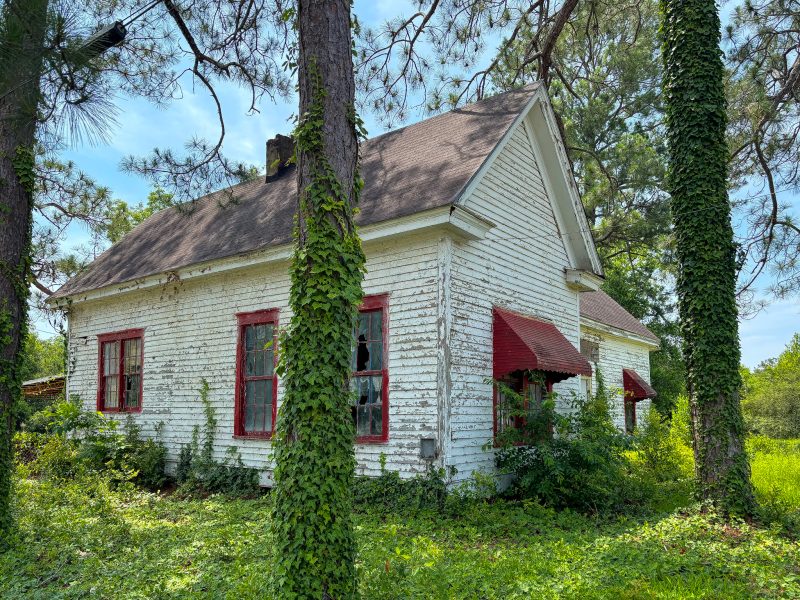
An abandoned home in Dawson sits overgrown and deteriorating, one example of the city’s ongoing struggle with blighted and unusable housing. Dawson’s long-range planning documents identify both a high vacancy rate and a need for more safe, affordable housing. Staff Photo: Kathryn Crockett
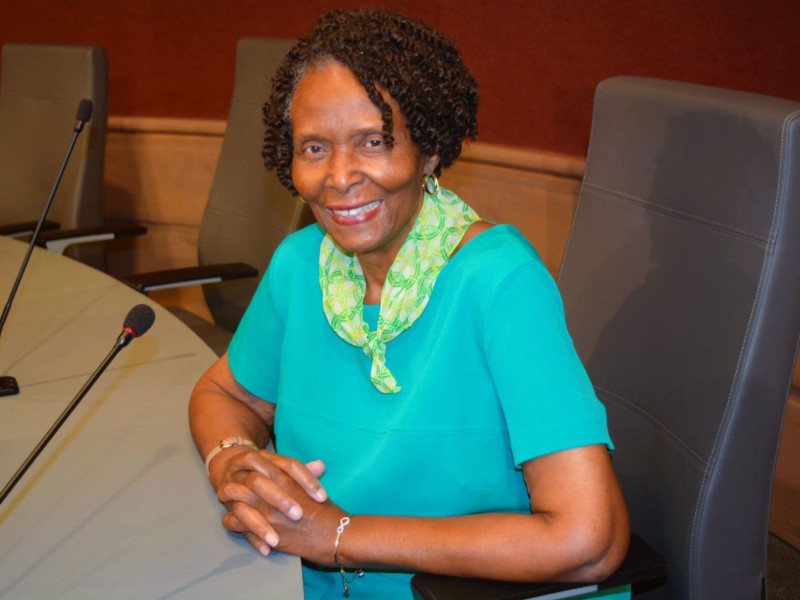
Dougherty Commissioner Gloria Gaines to serve as honorary sponsor of 2027 international conference in Atlanta
“By Alan Mauldin
[email protected]
ALBANY – In 1898 academic and sociologist W.E.B. Du Bois traveled to southwest Georgia during his summer break from teaching to investigate the lives of black residents in the “Black Belt” and later covered his sociological studies of the region in two chapters of his book “The Souls of Black Folk.”
The academic and peace activist’s visit and subsequent account was more than an intellectual exercise, however, according to Dougherty County Commissioner Gloria Gaines.
Du Bois’ account inspired South Carolina native Joseph Winthrop Holley to move Albany, where he founded the Albany Bible and Manual Training Institute. The institute later became part of the University System of Georgia and became a four-year college in 1943 before its last renaming in 1996 as Albany State University.
Holley was inspired by Du Bois’ writing, said Gaines, who will be an honorary sponsor of The International Conference on W.E.B. Du Bois: Race, Democracy and Global Justice in 2027. The conference is scheduled for April 9-11 in Atlanta.
“I am in admiration (of) his impact on the founding of Albany State University,” she said. “I also appreciate his political philosophy as well. He was clearly identified with Atlanta University and education.”
During her time at Albany State Gaines worked in the office of civil rights attorney C.B, King.
She holds a master’s degree in community development and worked as an assistant general manager for MARTA.
Her travels also have taken her to Africa, where she worked and met Nelson Mandela and Archbishop Desmond Tutu.
For the 2027 conference, Gaines has collaborated with individuals including professor Preston King, C.B. King’s youngest brother..
Last year she traveled to Accra, Ghana, where DuBois died after he was stranded out of the United States for his opposition to nuclear weapons and had his passport renewal denied, for his 157th birthday celebration.
The conference will feature discussions of democracy, equality and human dignity, Gaines said
“Those are issues that were important to him,” she said. “Now is a good time to talk about democracy. Some may see it as under threat. I think this conference will be timely. It’s a timely issue, not just for black folks as well as human dignity and equality within the country.”
