
BARRY LEVINE: Westerns were king in the late 1950s
Barry Levine
It started 65 years ago when TV Westerns “Hopalong Cassidy” and “The Lone Ranger” made their debuts in 1949.
“Hopalong Cassidy,” starring William Boyd as Hopalong Cassidy, a fictional cowboy hero, was the first TV network Western when it appeared on the small screen on June 24, 1949. Cassidy and his sidekick Red Connors, played by Edgar Buchanan, always chased the bad guys. The success of “Hopalong Cassidy” helped inspire other Westerns, including “Annie Oakley,” “The Gene Autry Show” and “The Roy Rogers Show.”
“The Lone Ranger” appeared on TV on Sept. 15, 1949, and starred Clayton Moore as a fictional former Texas Ranger, who wore a mask and fought outlaws in the Old West with his Indian partner Tonto (Jay Silverheels).
Never without his mask or a disguise, the Lone Ranger opted to use only silver bullets to remind him that life is precious. At the beginning of each episode, his white stallion, Silver, would rear up with the Lone Ranger on his saddle, then they would dash off with the Lone Ranger shouting, “Hi-Ho, Silver!”
“Hopalong Cassidy” ended in 1954 and “The Lone Ranger” in 1957.
With the emergence of network TV during the 1950s, producers developed a large number of Western-oriented shows. At the apex of their popularity during 1959, there were more than two dozen “cowboy” programs.
Not only did the plethora of TV Westerns change the nation’s viewing habits, they also changed the way boys dressed. It was common to see youngsters wearing Cowboy hats with their cap-firing six-shooters around their waists. After the five-episode Davy Crockett TV miniseries aired from 1954 to 1955, boys began emulating him by wearing replicas of his coonskin cap.
Here are 12 of the best Westerns that debuted during the 1950s and lasted for at least five years. The shows are listed by the years they first appeared.
“The Cisco Kid” (1950-56): The first TV show to feature Latino characters –— Desi Arnaz Sr., a Cuban, debuted in the “I Love Lucy Show” in 1951 — starred Duncan Renaldo as the Cisco Kid and Leo Carrillo as Cisco’s sidekick, Pancho. They were Robin Hoodesque characters who assisted the needy when law enforcement officials did not help.
Most of the series’ 156 episodes ended with its patented repartee, with Pancho saying in an elongated “Ohhh, Ceesco!” and Cisco responded by saying, “Oh, Pancho!”
“The Cisco Kid” is one of many Westerns that had a Top 40 song named for it. In 1973, War had a No. 2 hit with “The Cisco Kid.”
“The Adventures of Wild Bill Hickok” (1951-58): The show featured U.S. Marshal Wild Bill Hickok (Guy Madison) as the legendary Old West lawman, who, with his 300-pound sidekick, Jingles P. Jones (Andy Devine), brought bad guys to justice in the Kansas territory.
The duo appeared in all of the series’ 112 episodes. No other actor was seen in 10.
Interestingly, Burl Ives was considered originally for the role of Jingles, but he wanted to play Wild Bill Hickok. The idea was quickly dropped.
Set during the 1870s, Hickok and Jingles encountered many adventures and solved a plethora of crimes, including bank robbery, cattle rustling, land swindles and thievery.
“The Adventures of Rin Tin Tin” (1954-59): The highly popular show centered around Rusty (Lee Aaker) who was orphaned as a result an Indian raid in Arizona. Following the attack, Rusty and his dog, Rin Tin Tin, a German shepherd, were adopted by the troops at Fort Apache in Arizona. The troops helped establish law and order in and around Mesa Grande. Aaker was 11 years old when the show made its debut.
Lt. Rip Masters (James Brown, not the singer) was in charge of the fort. Other key characters were Joe Sawyer as Sgt. Biff O’Hara and Rand Brooks as Cpl. Randy Boone.
“The Life and Legend of Wyatt Earp” (1955-61): The show focused on frontier Marshal Wyatt Earp, who was played by Hugh O’Brian. Most of the series occurred in Kansas.
The only actor besides O’Brian to appear in more than half of the show’s 229 episodes was Jimmy Noel, who was seen in 144. O’Brian reprised the role in 1989 and in the 1994 TV movie “Return to Tombstone,” which incorporated colorized scenes from the original series.
Earp’s signature on the show was his use of oversized weapons, primarily a Buntline Special, which had a 12-inch barrel.
“Cheyenne” (1955-63): The first hour-long Western, “Cheyenne” starred Clint Walker as Cheyenne Bodie, who fought for frontier justice in the West during the post-Civil War Era. No other actor appeared in at least half of the show’s 108 episodes.
Although appearing in several movies after “Cheyenne” finished its run, the 6-foot-6 Walker did not star in another successful TV series. Among his movies were “Send Me No Flowers” in 1964, “None But the Brave” in 1965 and “The Dirty Dozen” in 1967.
“Gunsmoke” (1955-75): Tied with “Law & Order” for the longest running TV drama at 20 seasons, “Gunsmoke” is centered on Dodge, Kan., about 1870 as the West was being settled. It still holds the record for most episodes (631) for a primetime television drama series.
It starred James Arness as U.S. Marshal Matt Dillon, who was in charge of keeping the peace in rough and tumble Dodge. Also starring were Milburn Stone as the irascible Doc Adams and Amanda Blake as Kitty Russell, owner of the Long Branch Saloon and Dillon’s love interest. The 6-foot-7 Arness and Stone appeared in all 20 seasons and Blake in 19.
Dennis Weaver, as gimpy-legged Chester Goode, and Ken Curtis, as Festus Haggen, shared the role of Dillon’s primary deputy. Weaver played the chief deputy role from 1955 to 1964 and Curtis from 1964 to 1975.
“Maverick” (1957-62): Bret Maverick (James Garner) and his brother, Bart (Jack Kelly), starred in this series about the nattily attired siblings who traveled to different towns or on Mississippi riverboats, looking for a high-stakes poker game. The brothers usually appeared in individuals, alternating episodes, but occasionally appeared together.
The series helped propel Garner into a major star. Following his Maverick role, he also starred in many movies including “The Great Escape” in 1963, “The Americanization of Emily” in 1964, “Grand Prix” in 1966, “Victor Victoria” in 1982, “Murphy’s Romance” in 1985, “Divine Secrets of the Ya-Ya Sisterhood” in 2000, and “The Notebook” in 2004.
“Have Gun — Will Travel” (1957-63): The series followed the adventures of Paladin, a gentleman gunfighter who lived in a posh San Francisco hotel during the late 19th century.
Played by Richard Boone, Paladin, a mercenary, attempted to resolve problems without using gunfire on behalf of those who commissioned his services. Different than most TV Western heroes, Paladin was stylishly dressed and had an elegant manner. Paladin was an accomplished pianist and enjoyed refined entertainments.
The only other character besides Paladin to appear regularly in the show’s 225 episodes was the hotel’s Chinese bellhop, known as “Hey Boy,” played by Kam Tong.
Before his role in “Have Gun — Will Travel –—Boone played a physician in “Medic,” a series about a doctor from 1954 to 1956.
“Wagon Train” (1957-65): “Wagon Train” followed the many journeys of a wagon train as it traveled from Missouri to California in the post-Civil War Era.
Ward Bond starred as the wagon master, Maj. Seth Adams, retired from the Union Army, and Robert Horton as the wagon train’s scout, Flint McCullough. Bond died of a heart attack in the middle of the fourth season in November 1960 and was replaced by John McIntire as wagon master Christopher Hale. Among the other key members of the show were Frank McGrath as Charlie Wooster, the cook, and Terry Wilson as Bill Hawks, a team member and wagon owner.
Each episode generally focused on an individual member of the wagon train.
“The Rifleman” (1958-63): Set during the 1870s and 1880s, the series starred former Major League Baseball player Chuck Connors as rancher Lucas McCain and Johnny Crawford as his young son, Mark McCain, who lived in town of North Fork in the New Mexico Territory.
McCain had served in the Civil War as a Union officer and got his nickname because of his acumen with a rifle.
This was one of the first primetime series to feature a widowed parent raising a child.
The program’s regulars included Paul Fix as Marshal Micah Torrance , Bill Quinn as Sweeney the bartender, Patricia Blair as Lou Mallory, owner of Mallory House hotel owner.
An original Mouseketeer, Crawford parlayed his role in “The Rifleman” as a pop singer with four Top 30 hits — “Cindy’s Birthday” and “Your Nose in Gonna Grow” in 1962 and “Rumors” and “Proud” in 1963.
“Rawhide” (1959-66): Spanning 7
Related Articles
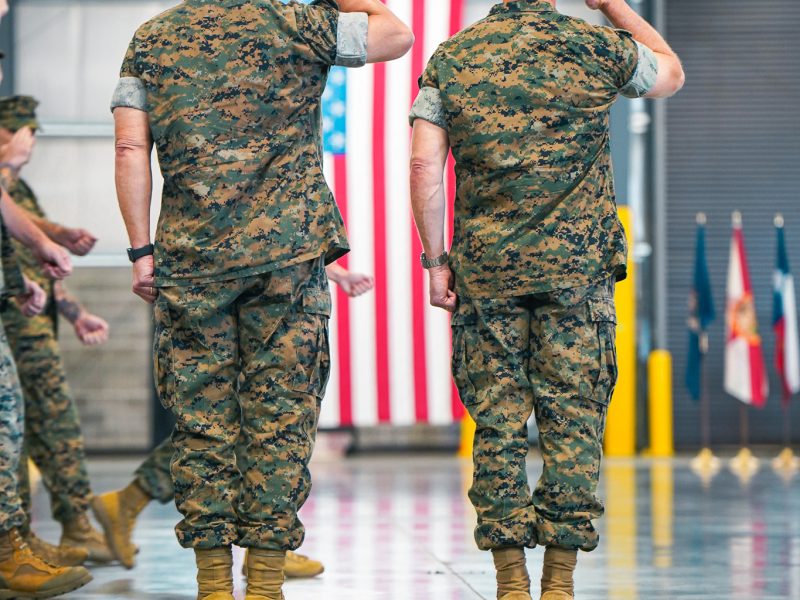
New commander takes helm as Marine Corps logistics adapts to evolving battlefield
Brig. Gen. Kevin G. Collins assumed command of Marine Corps Logistics Command during a change of command ceremony at Marine Corps Logistics Base Albany, succeeding Maj. Gen. Keith D. Reventlow after four years leading the organization responsible for sustaining Marine forces around the globe.

Classifieds – July 2, 2026
Cemetery lots for sale: 5 burial plots in Riverside Cemetary… Health: Private Caregiver…Full-Time Job: Irrigation Tech needed…

Albany Herald – July 2, 2026
Dougherty schools prepare for bell-to-bell… From Ledo to Coston, Lee County’s summer road… Lee County moves another step closer to issuing…
