
Proposed Sabal Trail pipeline makes water coalition Dirty Dozen
Georgia Water Coalition says Sabal Pipeline risky for SOWEGA
Brad McEwen
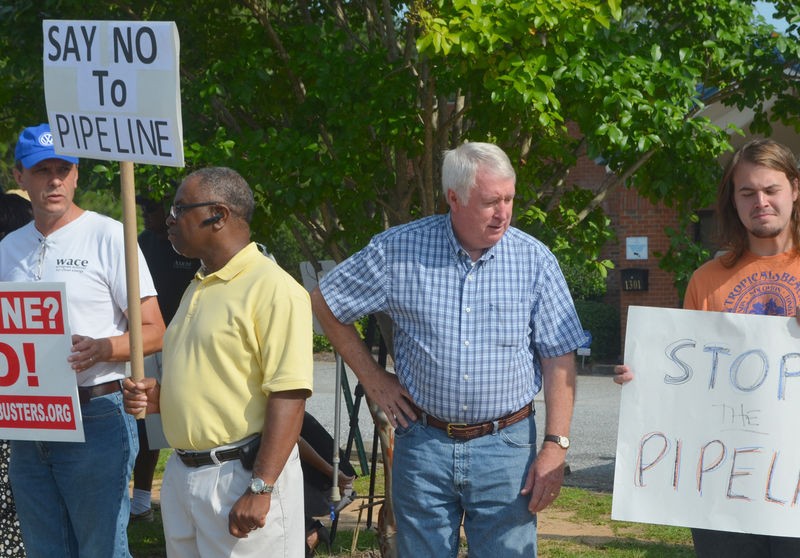
ALBANY — As a proposed 500-mile natural gas pipeline that would run through the heart of Southwest Georgia moves closer to becoming a reality, the state’s leading water quality watchdog group has weighed in by listing the project as one of Georgia’s top water threats.
In it’s annual “Dirty Dozen” report, which lists the greatest threats posed to Georgia’ rivers, lakes, streams, and other bodies of water, the Georgia Water Coalition called attention to Spectra Energy’s proposed Sabal Trail pipeline, which, if made a reality, would run directly through Terrell, Lee, Dougherty, and Mitchell counties.
According to the Dirty Dozen report the biggest concern voiced by the coalition, which is a consortium of 228 conservation and environmental organizations, hunting and fishing groups, businesses and faith-based organizations, is that the proposed pipeline could negatively impact the Withlacoochee, Flint, and Chattahoochee rivers, as well as smaller streams and creeks, along with the Florida aquifer, which is considered the region’s most important water source.
As the project has currently been presented to the Federal Energy Regulatory Commission (FERC), the pipeline, designed to carry natural gas to central Florida to be distributed by Florida Power and Light, would require placing a considerable length of pipeline under the aforementioned rivers and streams and above the aquifer.
The water coalition report states that the proposed route takes a “dangerous path through Southwest Georgia where sinkholes are common and could result in catastrophic gas leaks.”
The report goes on to say that “while Florida Power and Light and its customers get the natural gas, Georgians would only have their property taken and be left with the constraint threat of pipeline leaks that could contaminate drinking water or result in life-threatening explosions.”
Additionally the report states that the proposed route through Southwest Georgia is home to multiple rare wildlife species including the gopher tortoise, the indigo snake and the red cockaded woodpecker, with the latter two being federally protected species.
The report specifically mentions Albany and concerns the coalition has about the city’s drinking water, which is primarily drawn from wells, and the project’s route through geologically unstable terrain.
“Among the dangers of the project is its proposed route through the City of Albany’s drinking water well fields and through the karst geology of southwest Georgia where sinkholes pose a serious risk of pipeline collapse that could result in explosions, property damage and the contamination of drinking wells.”
In addition to listing the Sabal Trial pipeline on this year’s Dirty Dozen list the Georgia Water Coalition also included, in no particular order:
– Cooper Creek: Timber Harvest to Muddy Mountain Streams
– Georgia’s Stream Buffers: Confusing State Law Leaves Some Streams Without Protection
– Chattahoochee River: EPD Water Grab Threatens Health of State’s Most Critical Water Supply
– Georgia’s Hazardous Waste Sites: Toxic Legacies Pose Public Health Risk
– Chattahoochee River: Chattahoochee Tubers’ Trash Draws Ire of Riverfront Landowners
– Altamaha River: Rayonier Pulp Mill Fouls Altamaha; State Allows Pollution to Continue
– Georgia’s Coast: Offshore Drilling Poses Threat to Coastal Tourism’ Fisheries
– Coosa River: Power Plant Killing Fish on the Coosa
– Little Satilla Creek and Penholloway Creek: Strip Mine Threatens Property Values, Water in Wayne County
– Bear Breek: Reservoir Deal in Newton County a Boondoggle for Taxpayers
– Georgia’s Groundwater: Legislative Inaction Leaves Well Water at Risk
The list also includes a 13th entry, which is celebrated as the “Clean #13” in which the coalition praises Georgia Governor Nathan Deal’s support of Georgians fighting the proposed Palmetto Pipeline that would run from Augusta through the Georgia coast to Florida.
A complete list of the Dirty Dozen plus in depth information about each issue can be found at www.garivers.org/gawater/dirtydozen2015gwc.
Related Articles
Lee County homeowners have until Aug. 1 to claim property tax exemptions
Lee County homeowners have until Aug. 1 to apply for homestead and other property tax exemptions for the 2026 tax year, a deadline members of the Lee County Board of Tax Assessors highlighted Monday as they encouraged eligible residents to take advantage of available tax relief.

Dawson police arrest wanted suspect after Flock Safety camera alert
According to police, May drove into the yard of a nearby residence instead of complying with officers’ commands. He then exited the vehicle and ran into the home on foot.
Lee County stands alone without E-SPLOST. Here’s what that means for schools, taxpayers and the county’s future
Following the defeat of its referendum, Lee County became just the second of Georgia’s 159 counties without voter approval for an active ESPLOST, leaving the school system without the state’s primary local funding source for major construction, renovations, school buses and other capital improvements.
