
MARY BRASWELL: Looking Back at the White House, home of all but one American president
HISTORY: The White House was designated a National Historic Landmark in 1960
By Mary Braswell
Each week Albany Herald researcher Mary Braswell looks for interesting events, places and people from the past. You can contact her at (229) 888-9371 or [email protected]. Follow @ABH_MBraswell on Twitter.
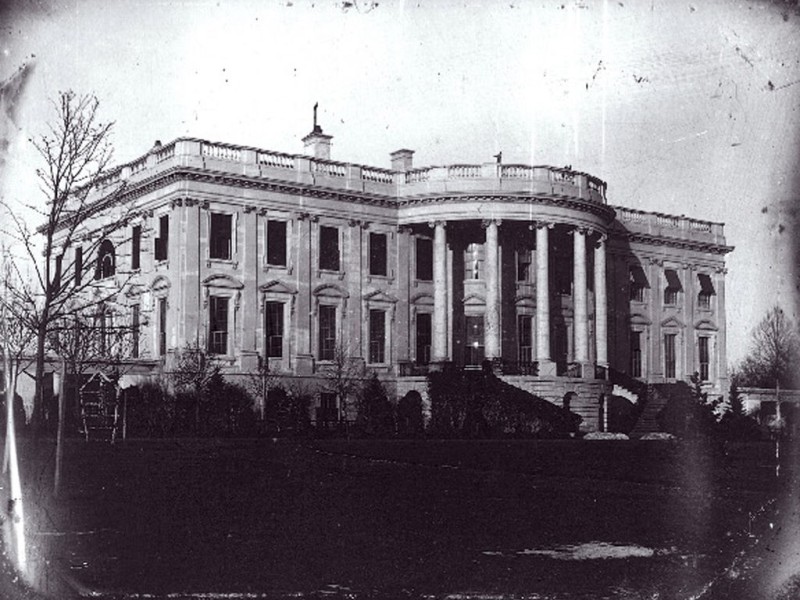
The race is on to see which candidate can pack his or her belongings and take up residence at the White House in January 2017. That, however, is not the topic of this week’s column. It is the people’s house itself and the long history therein.
THE EARLY YEARS
— Construction of what was then called the President’s Palace or the President’s Mansion began in 1792.
— The architect for the White House was chosen through a design competition. George Washington selected the winner, James Hoban, on July 16, 1792.
— The house was built, in part, by slaves, at least three of whom belonged to the architect, as well as free African-American laborers. Numerous immigrants, many without U.S. citizenship, also helped build the house. The sandstone walls, the high relief rose and garland decorations above the north entrance and the “fish scale” pattern beneath the pediments of the window hoods were erected by Scottish immigrants, none with American citizenship. Much of the brick and plaster work was done by Irish and Italian immigrants.
— First to occupy the home was John and Abigail Adams in 1800, although it was still partly under construction.
— On Aug. 24, 1814, during the War of 1812, British troops burned the White House. The 1800 Gilbert Stuart portrait of George Washington was one of the few items rescued from the fire by First Lady Dolley Madison.
—The White House was originally natural gray, which is the color of sandstone used for the building. Some historians believe the building was painted white to hide the damages incurred during the fire.
— Most of its external walls are still made of wood, which require 570 gallons of paint to cover up.
— James Monroe and his wife, Elizabeth, moved into the rebuilt White House in 1817.
— In 1825, John Quincy Adams planted the first flower garden and ornamental trees on the grounds of the White House.
— Running water was plumbed into the house in 1833. In 1837, a central heating system was installed.
— Millard Fillmore (1850-53) established the first White House library. Before that time, there was no permanent collection of books in the home.
— Electricity lighted the White House for the first time in 1891. Benjamin Harrison was president. He feared getting shocked and would not touch the switches himself.
— Benjamin Harrison brought the first Christmas tree inside the house in 1889.
—In 1901, Theodore Roosevelt established the official name of the president’s home by having “White House — Washington” put on all government stationery.
— Originally known simply as the Executive Office Building, the West Wing was built by Theodore Roosevelt to keep the residential and official business areas separate. It wasn’t attached to the main house until the next president, William H. Taft (1909-13), ordered it done.
— The Oval Office was part of an expansion of executive offices in 1934.
— The original builders never considered the possibility of a handicapped president, so when Franklin Delano Roosevelt (1933-45) was elected, ramps and elevators to accommodate a wheelchair were added. It was also FDR who had the first movie theater built in the White House.
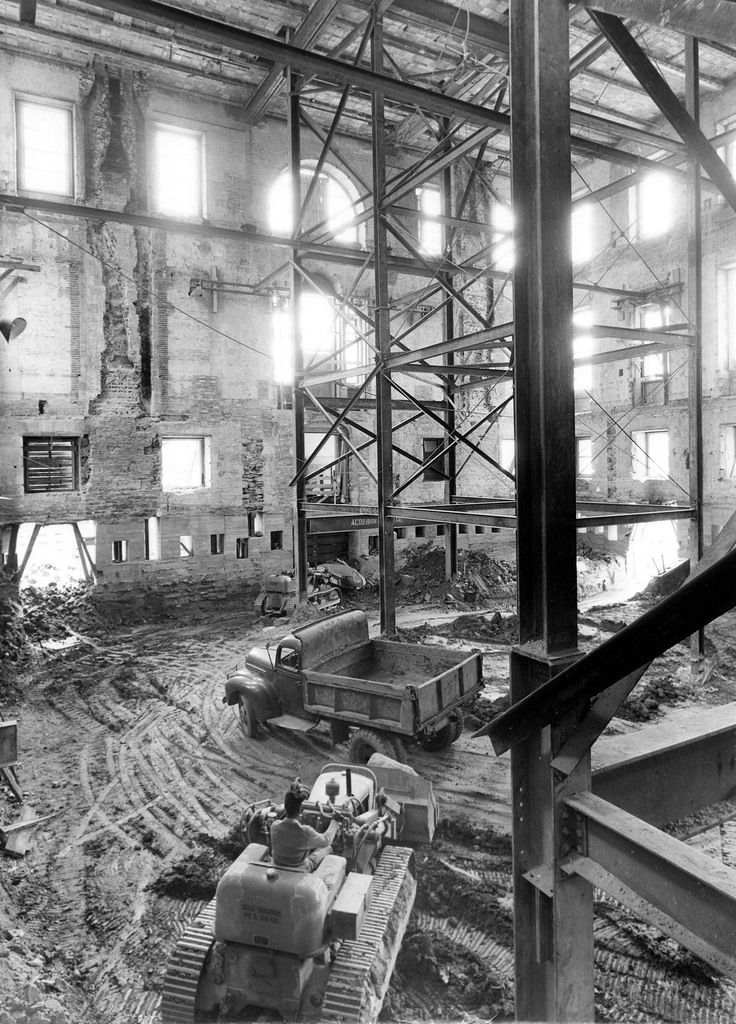
— Harry S. Truman and his wife, Bess, were forced out of the White House to the Blair House across the street after officials decided the aging White House was close to collapse in 1948. The restoration project was completed in 1952.
THIS ’N’ THAT
—Thomas Jefferson (1801-09) had a pet mockingbird that flew freely about the White House when guests were not present.
— Andrew Jackson (1829-37) threw open the doors of the White House for a party after he was first elected. Guests became so unruly they broke dishes and stood on the furniture with muddy boots. The crowd swelled to around 20,000, and the new president left to stay in a local hotel. White House staff reportedly lured the guests out to the lawn by filling washtubs with oranges and whiskey, then staff closed and locked the doors.
— Franklin Pierce (1853-57) ordered the installation of the first bathtub in the White House. Some thought the notion a foolish one, since bathing could make a person sick, or so they thought.
— Rutherford B. Hayes (1877-81) had the first telephone installed in the White House. He was instructed on how to make calls by none other than its inventor, Alexander Graham Bell.
— During World War II, a bomb shelter was constructed under the East Wing, later converted into the Presidential Emergency Operations Center. It is not in the same location as the Situation Room, which is in the basement of the West Wing.
— The story goes that Winston Churchill refused to ever again stay in the Lincoln Bedroom after Abraham Lincoln’s ghost appeared to him beside the fireplace as he was emerging from a bath, fully nude.
— In 1933, President Franklin D. Roosevelt had an indoor swimming pool built at the White House as therapy for his polio. Located in the gallery between the White House and the West Wing offices in a former laundry area, the pool measured 50 feet by 15 feet and was 8 feet deep. Richard Nixon had the pool covered over to turn it into a press room.
— Gerald Ford was an avid swimmer. In 1975 an in-ground outdoor swimming pool was built on the White House grounds, near the tennis courts.
— The basement beneath the north portico features a flower shop, carpenter and engineer shops, a dentist and, added by Richard Nixon in 1969, a bowling alley.
BY THE NUMBERS
Levels — six
Rooms — 132
Bathrooms — 32
Doors — 412
Windows — 147
Fireplaces — 28
Land — 18 acres
QUIK QUIZ ANSWER:d) $232,372
What was the cost of the original White House structure?
a) $167,845
b) $198, 254
c) $215, 978
d) $232,372
Answer is at the end of Mary Braswell’s Looking Back column.
Related Articles
My Grandpa Was Killed in World War II. I Met Him Through His Letters Home
Gina Wolf’s grandfather died before she was born. His letters sent to her grandmother from Europe during World War II made it possible to know what kind of man he was.
‘Sounds Like a Mutiny.’ Secret Recording Exposes Claims of Toxic Leadership After a Marine’s Suicide
This week’s War Horse story follows the systemic failures before and after the death of Cpl. Drew Mobley who was the third in two years at Marine Corps Base Quantico to die by suicide.
Southwest Georgia artists recognized at packed opening of exhibition
The annual juried exhibition, one of the region’s largest showcases of visual art, features approximately 46 artists and nearly 90 works spanning painting, sculpture, ceramics, photography and mixed media.
