
AAA study: Premium gas in autos that don’t require it doesn’t pay off
Modest gains in performances don’t offset extra cost of higher-octane fuel
Staff Reports
ALBANY — Some vehicles require the use of premium fuel, but for those autos where it’s only recommended, motorists are throwing extra money into the tank with no strong benefit, a study indicates.
New research by AAA shows that paying the additional 20-25 percent cost of the higher octane fuel has little benefit to drivers unless the auto requires it.
“Sometimes consumers think they are giving their vehicle a boost by buying a higher-grade gasoline than what is required,” Garrett Townsend, Georgia public affairs director, AAA – The Auto Club Group, said. “AAA already proved that there is no benefit to using premium gasoline in cars designed to run on regular.
“Now we can confidently say that unless the vehicle manufacturer requires it, or you drive in demanding conditions, motorists who buy premium are wasting money at the pump.”
How much is wasted? On Tuesday, AAA’s Daily Fuel Gauge Report survey showed a 59.1-cent gap between the average prices of regular grade gas ($2.318) and premium grade ($2.909) in Georgia. On a 16-gallon fill-up, that’s a difference of $9.45. In metro Albany Tuesday, the gap was narrower on the survey — premium was averaging 53 cents more than the regular average of $2.246 — but that would still be a difference of nearly $8.50 on a 16-gallon fill-up.
While some autos require the 91-octane or higher fuel and have engine knock if lower grades are used, AAA officials said that nearly 1.5 million of the cars, SUVs and trucks sold in the U.S. in 2016 recommended that drivers use the high-octane fuel.
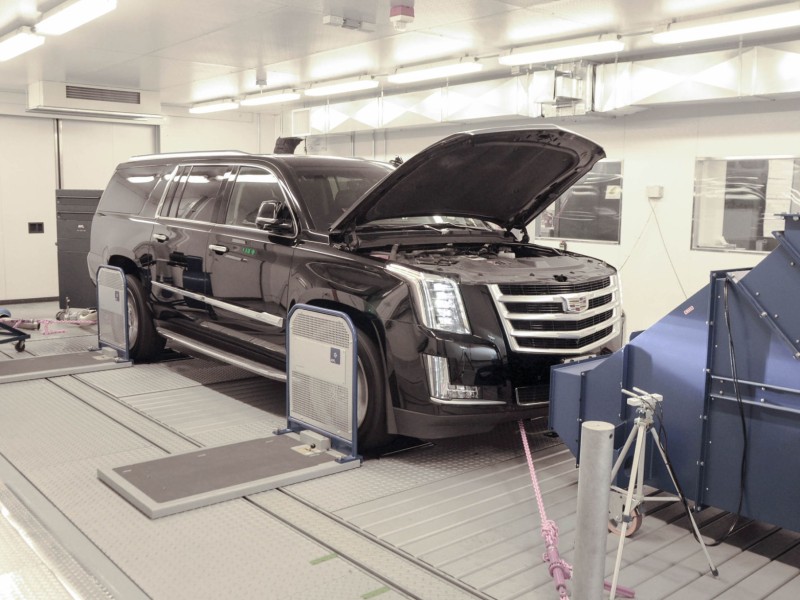
Officials with AAA said they already had proven that premium-recommended vehicles don’t benefit from using the higher grade in typical in-town and highway driving, but tested a variety of the vehicles to determine whether that held true for lab and on-road tests simulating “extreme” driving conditions, such as towing, hauling cargo and aggressive acceleration. AAA researchers were looking at whether there was better fuel economy or improved performance in terms of horsepower.
Test vehicles included a Ford Mustang GT, Jeep Renegade, Mazda MX-5 Miata, Cadillac Escalade ESV, Audi A-3 and Ford F150 XLT.
AAA researchers found:
— Most vehicles showed a modest improvement in fuel economy and performance;
— The fuel economy for test vehicles averaged a 2.7 percent improvement. Individual vehicle test result averages ranged from a decrease of 1 percent (2016 Audi A3) to an improvement of 7.1 percent (2016 Cadillac Escalade);
— The horsepower for test vehicles averaged an increase of 1.4 percent. Individual vehicle test result averages ranged from a decrease of 0.3 percent (2016 Jeep Renegade) to an improvement of 3.2 percent (2017 Ford Mustang);
— The fuel economy improvements recorded during AAA testing did not offset the potential extra cost to purchase premium gasoline.
AAA officials noted that some drivers may find the differences suit their driving style enough to be willing to spend the additional money for the additional torque and horsepower for off-the-line acceleration, highway passing, and hill-climbing with a load such as luggage and trailer towing.
Manufacturers are making the premium-fuel recommendations as they work toward meeting tougher Corporate Average Fuel Economy, or CAFE, standards.
“By offering a choice, automakers can market modest gains in fuel economy and performance, and car buyers are less likely to hesitate about buying the vehicle, because their operating costs will be lower,” Townsend said. “Unfortunately, by only recommending premium fuel, the engine cannot be calibrated to take full advantage of the higher octane, because it also needs to perform adequately with lower octane (regular) fuel. Therefore, the fuel economy and performance gains are only minor.”
AAA’s bottom-line recommendation: Drivers of vehicles that require premium gasoline should always use it, while those with vehicles that do not recommend or require premium gasoline should opt for the cheaper regular fuel.
Related Articles

James Rubino installed in new role at Marine Corps Logistics Command in Albany
James L. Rubino recently assumed the role as executive deputy of Marine Corps Logistics Command in Albany. In his new role he will oversee integrated logistics support.

Rain depresses voter turnout in Dougherty County
“A lot of people don’t vote when it’s raining. People don’t do a lot of things when it’s raining.”

City of Albany faces shortfall for police, fire salaries
“We can’t tell staff to hire more police officers and then complain at what it costs.”
