
GACH’s Monty Veazey: Expect changes in rural health care
Health care official expects new trends in rural delivery
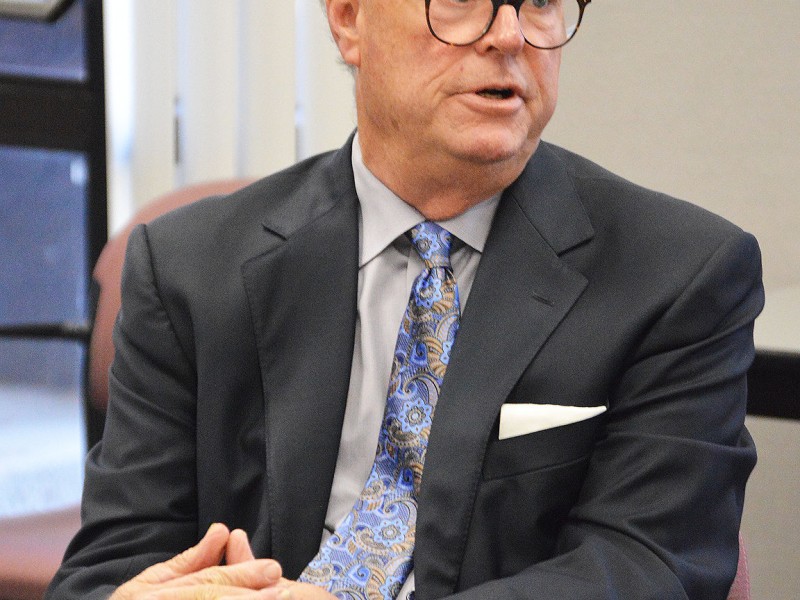
File Photo
By Terry Lewis
ALBANY — With small rural hospitals closing all across the state, the subject of rural health care reform is bound to be a hot topic of discussion when the state’s General Assembly convenes next month under the Gold Dome.
Monty Veazey, the president/CEO of the Georgia Alliance of Community Hospitals, dropped into town Monday to talk to Albany’s legislative delegation of Sen. Freddie Powell Sims, D-Dawson; and Reps. Darrel Ealum, D-Albany; Ed Rynders, R-Leesburg, and Gerald Greene, R-Cuthbert, about upcoming changes in rural health care.
With the number of family practice physicians dwindling, especially in rural areas, Veazey said primary health clinics staffed with nurse practitioners, physician assistants, advance nurses utilizing telemedicine could be the future of rural health care.
“I think that is the direction we are headed, especially in rural Georgia,”Veazey said. “I think we are going to see more hospital closures taking place. And as those closures take place and physicians have nowhere to see patients, I think it will be the advance practice nurses who are going to be the ones on the first line of care along with EMS.
“EMS would be for emergency-type situations because what I think you will see take place as hospitals fail and there’s nothing there, we’ll see regional EMS fill that gap.”
Veazey said telemedicine won’t be far behind, despite the region’s lagging networking capability.
“What you would have is a facility where the patients come to and where there would be an exam room and a room to hook them up to telehealth. I am thinking an access point much like a physician’s office where they come in, are examined and are hooked up to a monitor with a physician located in a remote location,” Veazey said. “If a person came into a clinic and was experiencing chest pain, then you could hook them up to the proper monitors, be they EKG machines or anything else, and you can transmit that data to a cardiologist who could read the report right there. He could then say, ‘Administer this, this or this and get them to the hospital.’
“It would work the same with a stroke victim or someone who is having an aneurysm. It’s all about urgent immediate care. That would be the first line of provider care.”
Veazey added that rural health care providers would be forced to change the scope of their practice to allow them to do more in terms of delivering health care.
Related Articles
Federal agency to investigate Monday paragliding fatality
The death of a 63-year-old man who was killed in a paragliding accident on Monday is under investigation by the National Transportation Board, according to Dougherty County Coroner Michael Fowler.
Audit of police surveillance cameras results in arrests of five former APD officers
“The bottom line is when we find people who have misused resources that they have, we’re going to hold them accountable. These resources help fight crime, but we will not tolerate when they are misused.”
New commander takes helm as Marine Corps logistics adapts to evolving battlefield
Brig. Gen. Kevin G. Collins assumed command of Marine Corps Logistics Command during a change of command ceremony at Marine Corps Logistics Base Albany, succeeding Maj. Gen. Keith D. Reventlow after four years leading the organization responsible for sustaining Marine forces around the globe.
