
Summer fishing means early, late and slow
By Bob Kornegay
Although it is only mid-spring, there are inevitably hot days to come. While there are still some pleasant spring fishing days ahead, the consistent heat and high humidity of a typical south Georgia summer are not far away.
Fishing during hot weather, particularly the heat waves experienced in late May, June, July and August, is not always a pleasant experience. Actual temperatures in the 90s and heat indices well above the 100 mark can quickly make being on the water not only uncomfortable, but sometimes downright dangerous.
However, if a fisherman makes the best of what can be a bad situation, summertime angling, even on the most oppressive days, needs not be a complete bust. In fact, hot-weather fishing can be very productive when one approaches it from the proper perspective.
Obviously, dealing with the heat itself is a top priority. While broiling is OK for the fish one brings home, the person who catches them should return “uncooked.” He can do so by primarily limiting his time on the water to the early morning, late afternoon, and nighttime hours.
If he does choose to fish during the heat of the day, he should not stay out too long. He must dress properly, apply and reapply copious amounts of quality high-SPF sunscreen, and rehydrate often with water or non-alcoholic, low-sugar beverages. The more comfortable one can make himself, the longer he can safely fish in extremely hot weather.
All that is, or should be, common knowledge and a matter of common sense. But how does an angler deal with the fish themselves during hot-weather periods? Deep south sportfish are, after all, are also adjusting to the region’s overly long “dog days” period.
As a rule, according to most experts, think deep. Be it a bass, a panfish or a catfish, a fish will habitually seek water with a temperature conducive to its normal routine of daily activity. This is not always the coolest or deepest water layer in a lake, pond, or river, but will usually be found well below the super-heated, oxygen-poor surface water.
Largemouth bass, for instance, often adhere to the ledges along a river or creek channel this time of year. The natural incline of a ledge slope provides variable, graduating depths, usually with an abundance of fish-holding structure or cover at all levels.
A largemouth can readily find a safe haven while moving up or down a ledge slope into its optimal preferred temperature range. Forage fishes (such as gizzard and threadfin shad) and other prey also seek these areas, and bass will often hold tight to the ledges well into fall and right up to the first appreciable cooling-off period. As a bonus, they are also apt to feed at any given time of day, regardless of surface temperature.
When feeding, while they will often feed more often, summertime river-ledge bass are apt to become less aggressive than at other times of the year. This calls for a slower, more methodical bait presentation such as that made by a simple Carolina-rigged worm, lizard, or craw fished directly in the ledge cover.
Fished with a one-ounce weight, the soft-plastic offering falls quickly downward into the cover and can be slowly worked up or down the ledge into the water layer where the bass lie in wait. A fast-moving bait looks unnatural to the fish this time of year. Follow the old rule of thumb: When you think you are fishing too slowly, slow down some more. This will drastically increase your hot-weather bass fishing success.
In recent years, oversized spinnerbaits have become popular for fishing the ledges. They, too, are best fished slowly by pumping and retrieving the lure in the now-commonly used “slow-rolling” fashion.
Summertime crappies in large river reservoirs often fall prey to medium to large jigging spoons fished vertically in brush and other “trash” that accumulates on medium-depth flats lying just off the river channels. Use spoons in the ½ to ¾-ounce range and fish the transient, temporary structure located at depths of 12 to 20 feet. Move the bait up and down with short, wrist-controlled jerks of the rod.
Jig-fish gentler than is necessary for largemouths as crappies usually prefer a bit more finesse in presentation. Also be ready to receive most of your strikes as the spoon falls and do not allow the line to become too slack as the lure descends. This results in missed fish and strikes never felt.
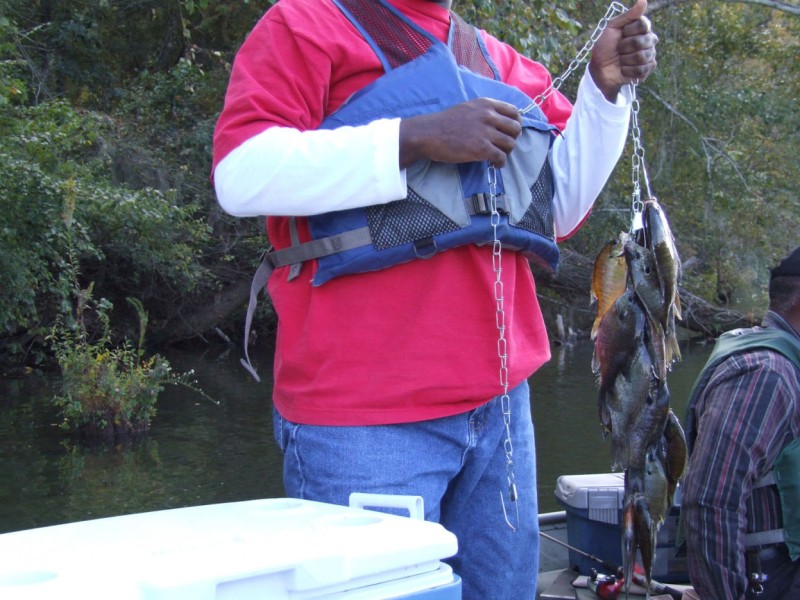
Bluegills, redears (shellcrackers), and the various catfish species are often the most dependable fishes for the hot-weather angler. Bluegills, for example, may spawn throughout the summer and well into early fall in the deep south. This time of year, however, bream beds will often be located deeper than those found earlier in the season in just a few feet or even mere inches of water. Thus, the angler may find them harder to consistently locate.
Most fish will be taken a few at a time while drifting over likely warm-water habitat. Sunken structure and sand or gravel bottoms in 5-10 feet of water are excellent starting points for bream fishermen during the summer months. Arguably, live earthworms are better than crickets as bait in this situation. Bigger bream may also take tiny jigs or small spinnerbaits like Beetle Spins with some consistency. Where catfish are concerned, look for them to feed on shallow flats very late in the afternoon.
Obviously, under no circumstances is hot-weather fishing as pleasant an experience as the angling done during cooler seasonal periods. It can, however, be just as productive. Given some care, caution, and the proper technique, there is no reason not to wet a hook this time of year.
Related Articles

Carl Willis named women’s tennis coach at Georgia Southwestern
Carl Willis, a veteran educator and coach with more than 45 years of experience in Georgia athletics and education, has been named the next head women’s tennis coach at Georgia Southwestern State University, Director of Athletics Mike Leeder announced today.

Andrew College joins NAIA
Andrew College officially enters a new era Wednesday, completing its transition to the National Association of Intercollegiate Athletics and becoming a full member of the Southern States Athletic Conference.

Braves may have found another gem in Fuentes
Didier Fuentes’ first taste of the major leagues looked like a lesson in patience.
