
Project Elevation brings barber shop experience to June Men’s Health Fair
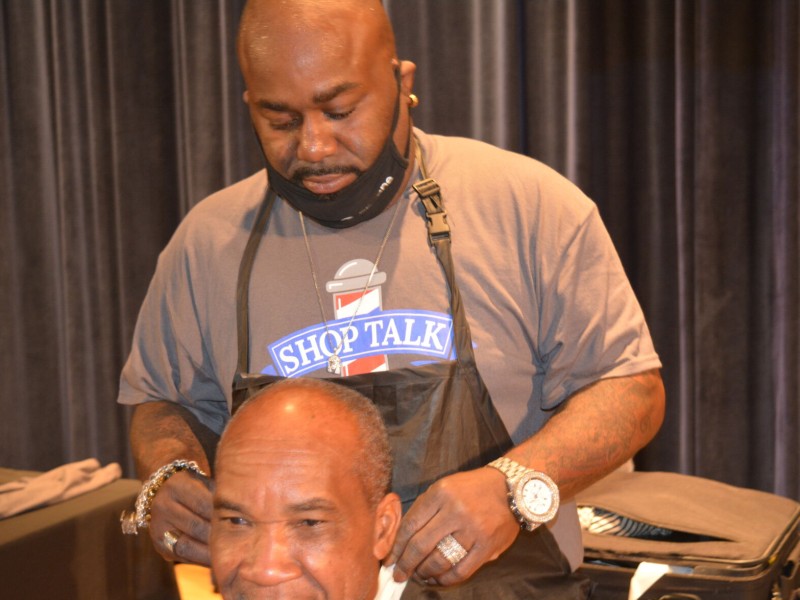
File Photo: Carlton Fletcher
By Alan Mauldin
[email protected]
ALBANY – When the Phoebe Putney Health System identified tackling prostate cancer as a goal and enlisted the community to help with the battle, a seed was planted.
That seed has sprouted and has branched out to 20 churches in Albany and surrounding communities, along with five barber shops, spreading the message of screening, prevention and, for those who get a positive diagnosis, treatment. All of those parts are working together, from ministers and church members to doctors and researchers, in a partnership that is making a difference.
The annual Phoebe Men’s Health Fair that will bring free prostate, blood pressure, diabetes and cholesterol screenings to the community on June 15. The health fair, timed to fall close to Father’s Day, will offer screenings from 8-10 a.m., followed by “Shop Talk,” featuring a cast of barbers, sports figures and health care professionals.
Shop Talk, which will be held in the Billy C. Black Building at Albany State University’s East Campus, will give attendees the opportunity to interact with health care experts in a familiar and casual setting.
The overall prostate cancer program, Project Elevation, has been funded by grants from the Morehouse School of Medicine, and has expanded this year to reach out to areas outside Albany, including Turner, Lee, Sumter and Terrell counties.
“The hospital’s role was to do the research, the initial community health assessment,” Darrell Sabbs, Phoebe’s former community benefits director, said. “That’s how we determined prostate cancer is a leading cause of death in our community.
“Prostate cancer came up on the radar screen because men had not been to their doctors because of COVID. The hospital’s role was to do the science, design the program, put the program out there, and step back and let the community run with it.”
Phoebe has provided training sessions at area churches, and has brought a total of 80 ministers and church volunteers to join the 15 Phoebe nurses, phlebotomists and navigators, and 10 barbers who are part of the effort. When a man receives a cancer diagnosis, the navigator helps guide him through the treatment process, including helping provide services for those who cannot afford it.
The churches are not only taking the message to their congregations, they are making a difference in the communities where they serve, Sabbs said.
“Each church has a strong interest and energy for outreach to get the word out about men’s health,” he said. “The importance of this is we’re starting to develop – we call them champions, but they’re really health promoters. When you’re training people to be health promoters, the message spreads into these neighborhoods.
“Now we’re starting to see these messages are resonating in families and throughout neighborhoods in the whole region.”
More than 700 men have been screened since Project Elevation was launched. Invariably, with that many people tested, some have tested positive for prostate cancer, and Phoebe also plays a role there.
“The hospital has agreed to give care to those, be they insured, uninsured or under-insured,” Sabbs said.
For black men, the barber shop is a place where they can have conversations about issues, including health and prostate cancer, he said. That atmosphere is part of the Shop Talk for the June 15 health fair.
In addition to the screenings and Shop Talk, attendees will get breakfast, a watermelon and T-shirt from the event.
“We will also hook them up with a primary-care doctor,” Sabbs said. “It’s a celebration of men. It’s the fellowship.”
Albany barber Tosh Sevier, who has been participating in Project Elevation and the Shop Talk sessions each year since the inception of the programs, said that barber shops are a great place to start having conversations about health.
“It’s been an amazing response,” he said. “It’s awesome when you can feel somewhat comfortable. The barber shop is a safe space. They’re places where people meet to begin having conversations about health. It’s a conversation, having that discussion. Starting these conversations, that’s saving men’s lives.”
Black men and men over the age of 35 should be thinking about prostate cancer screenings, Sevier said
“The best detection is early detection,” he said.
For those who need a more authoritative voice, there is the opportunity to reach them during the hour or more they sit in a pew each Sunday.
“On Sunday mornings, we have a captive audience, more than anyplace else,” said the Rev. Daniel Simmons, pastor of Mt. Zion Baptist Church, which was one of the first 10 involved in Project Elevation. “Churches give you that captive audience. The other thing about the church is it’s a trusted source. When we tell them they need to attend this particular event, they are inclined to do it.”
Since becoming involved, the minister said he has seen men who have had screenings reveal health issues, including high blood pressure, high cholesterol, and one with an elevated PSA of 75 who was diagnosed with prostate cancer.
“He’s not the only one,” Simmons said. “We’ve assisted these individuals. Literally lives have been changed. Children still have fathers. Wives still have husbands.
“I think without the churches, you couldn’t be as effective at getting the message out.”
Author

Related Articles
Albany Herald – July 7, 2026
Lee County stands alones without… DOT say delay in Oglethorpe Bridge… ASU’s Leah Cowen Selected for…

Classifieds – July 7, 2026
Albany Herald Classifieds: July 7, 2026
Lee County JROTC cadets honored by DAR for citizenship and leadership
Several Terrell County High School JROTC cadets were recognized for outstanding citizenship, leadership and service during the school’s recent JROTC Honors Night, receiving awards from the Old Herod Chapter of the National Society Daughters of the American Revolution.
