
American Red Cross briefs officials on disaster relief
Red Cross briefed officials Wednesday on disaster relief efforts following Hurricane Michael, provide insight on its operations
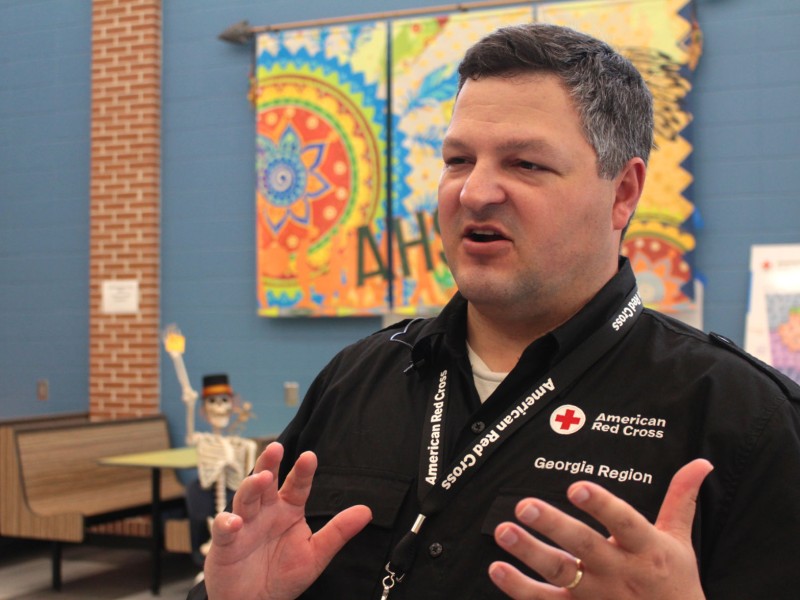
By Gypsy Crow
ALBANY — The American Red Cross follows with manpower and supplies to fit the needs of a community when disaster strikes. Hurricane Michael has been no different.
The organization briefed officials on Wednesday of their Hurricane Michael operations in Albany and the southwest Georgia region. The “command center” operates in the old Albany High School where teams gather in the morning before dispersing throughout the community with supplies and aid.
“For the storm that came through, Hurricane Michael, I think most of you know, did damage along the Florida coast as well as inland,” Anna Trefethen, vice president of humanitarian services in the Southeast and Caribbean division, said. “It came all the way up through Georgia and parts of Alabama. We have been actively responding before the storm hit.
“We have what we call a 120-hour timeline so five days out we preposition resources. We put resources out in the field, we plan for it, we send support and we send leadership.”
The Red Cross had a unique wish to fulfill to the Albany area after Hurricane Michael, with a large request for charcoal to cook refrigerated and frozen meats before they spoiled. The Red Cross has put people 2,572 people in beds since the beginning on the disaster relief.
For food distribution the Red Cross gave out 10,000 meals, 35,000 snacks and 1,100 shelf-stable meals on Tuesday. On Wednesday, it began distributing breakfasts boxes to children not in school. The goal for emergency supply distribution is 81,000 — which includes anything from clean up kits or rakes to tarps.
The team is made of Red Cross family members of more than 400 responders from all over the country. Volunteers from as far as Alaska and Hawaii came to Albany to assist in recovery. Members are cycled out, and the Red Cross works every day to get disaster areas to the point where they can “hand it off” to local volunteer groups, including charity organizations and religious groups.
A part of how the Red Cross effectively operates within disaster effected areas are their partnerships with different groups and organizations within that community. Partnerships include the Albany Civic Center, churches and mental health agencies.
“We are in post-disaster mode right now, and we’re in a short term recovery so we are working with families that are at the shelter that have anything from a tree that’s gone through the house or maybe some pre-storm damage to their home or maybe they were homeless or the storm caused financial strain and they need assistance or help,” Red Cross Southwest Georgia Executive Director Andy Brubaker said. “Right now we’re doing casework with those individuals and working with partners whether it be a Housing Authority, the Salvation Army, United Way, the Homeless Coalition, you name it, we’re working with those various partners and agencies around southwest Georgia and the state to help folks develop a long range plan.
“We anticipate being here full-scale for about two more weeks and then we’ll start transitioning to a much smaller footprint that will enable us to continue to provide services as we transition folks from the short term plan to a long term plan.”
The organization ranks disasters based on their own scale of one to seven or catastrophic depending on complexity, damage and resources needed. Georgia was assessed as a category five for Hurricane Michael. The disaster relief level in Alabama was a four, and Florida was rated a level seven.
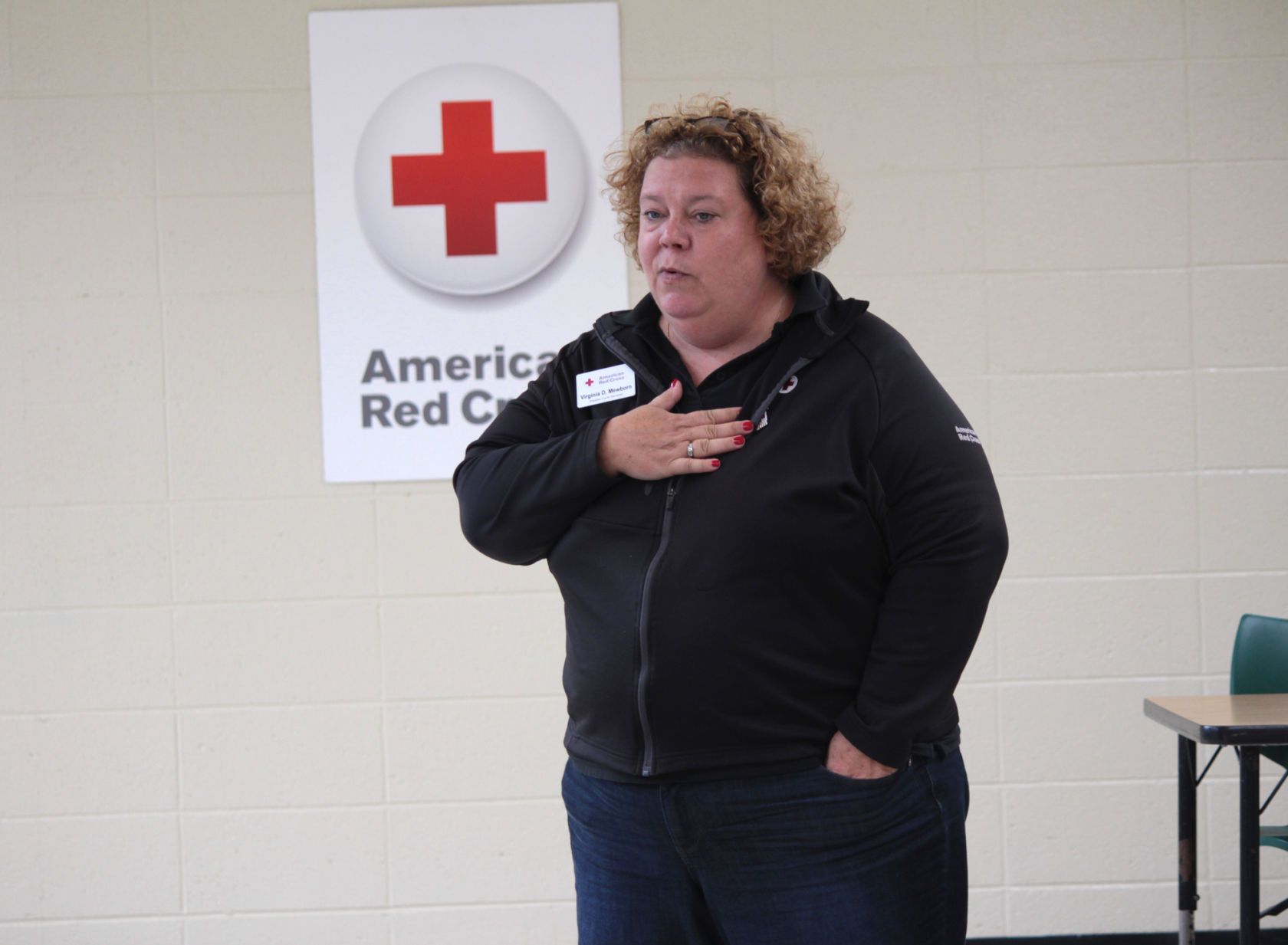
Virginia Mewborn, director of the Hurricane Michael-Georgia disaster relief operation, said that relief from Hurricane Irma and Hurricane Harvey, both of which impacted the U.S. last year, remains ongoing. Recovery from Hurricane Katrina, which hit the U.S. in 2005, lasted up until this year.
Red Cross officials on site demonstrated their analytical network called RC View. A large digital map showed different points of severity on the disaster area. The program collects data from Red Cross members and other disaster relief teams in the target region to more accurately pin down problems such as trees down or power outage.
“We have teams that are out every single day and they’re doing what we call damage assessment, and when they find something, what they do is they drop what we call a pin in the system,” Mewborn said. “It’s a geocode that tells us exactly where it is.”
Mewborn further explained the technology and how it affects the Red Cross’s day-to-day operations on site as well as presented some of the data contained within RC View.
“What we’ve learned so far is we have 226 destroyed homes, 923 major, and then 164 minor and 77 effective, and we’re about 60 percent done with our damage assessment, and that’s on track with what we expected,” Mewborn said.
Brubaker said the Albany area is getting to the point where most people have power, stores have reopened, public service systems are back online and school systems have started back. It is at this point where the Red Cross can begin to hand back the reins to Albany area groups and agencies in the path to long-term recovery.
Related Articles
Congress weighs packaging bill with implications for Albany manufacturers
A congressional hearing this week on proposed national packaging-labeling standards could have implications for several of Southwest Georgia’s largest manufacturers, many of which produce or package products shipped across state lines.

Dougherty County Sheriff’s Office, GBI investigate inmate death
“The sheriff’s office will conduct an administrative investigation to determine if the staff response was appropriate. We have requested that the GBI conduct an investigation.”
Dougherty Jail graduates first class of female GED recipients
“It was an escape. I can say this has been challenging. I want to express my gratitude for being able to attend this program.”
