
Flint Riverkeeper’s annual Lower Flint Paddle takes kayakers on a trip through nature and history
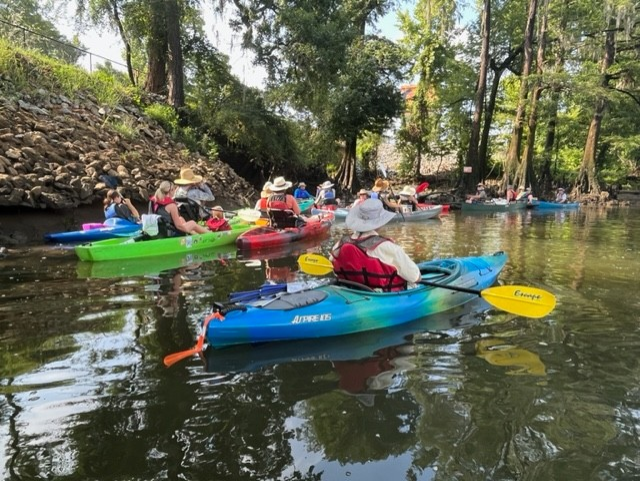
Photo Courtesy of David Dixon
By Lucille Lannigan
[email protected]
ALBANY – The Flint Riverkeeper environmental group is inviting the community to join in its annual summer Lower Flint Paddle trip along the Flint River.
Kayakers will take a five-hour trip from Radium Springs Landing in Dougherty County Saturday all the way to Punks Landing in Mitchell County. Along the way, they’ll see where nature and those who inhabit the space within interact.
Henry Jackson, the Flint Riverkeeper’s outreach and development director, said the trip is held to encourage people to get on the river.
“They’ll learn not only about the Flint River but also the relationship between the river and the community,” he said.
The Riverkeeper has space for about 30 paddlers of all ages and skill levels. Equipment will be provided, but people are welcome to bring their own kayaks, Jackson said. He said the Lower Flint Paddle is a great opportunity for people to meet others with similar interests in being on the water as well as a way for first-timers to learn how to properly use a kayak.
David Dixon, a local historian and former Flint Riverkeeper board president, will lead the trip.
Paddlers will begin at the Radium Springs Landing, and at the first stop they’ll learn about wastewater treatment and how treated wastewater from Albany is discharged into the river.
Dixon said the paddlers will pass several stormwater channels as well, offering the opportunity to talk about the problems facing the Flint from combined sewer overflow. The city of Albany is currently in the process of separating its combined sewer overflow system to prevent harmful discharge into the Flint.
Dixon said that part of the paddle may not be the most upbeat, but that many people aren’t aware of the discharge into the river, so they like to discuss it immediately.
On the second part of the trip, paddlers will see where the cool spring water meets hot summer river water. Dixon said the clear blue water meets the yellow, brown river water in a defined mixing line.
“You can stick your foot in the water and have cold toes and a warm heel at the same time,” he said.
As the trip goes on, paddlers also will get a glimpse of Albany’s steamboat history. As they go through different shoals, they’ll reach cotton boat shoals where they can see the remnants of the 1904 Bessie Clary Steamboat wreck in low water.
The group will stop for lunch and talk about steamboat traffic along the Flint and the age of cotton when the trees lining the Flint were once all removed to power the steamboats.
Glimpses at the once-bustling industry along the Flint also are seen in large rock piles along the side of the River where the Corps of Engineers maintained the channel all the way to Albany or in the remains of Plant Mitchell, the old coal-fired generating plant.
“People learn a lot about the different aspects of the river,” Dixon said. “Right now, it’s mostly used for fishing and paddling, but in its heyday, it was the interstate of the lower Flint River.”
Paddlers will spend time on sandbars, digging for fossils, arrowheads and shark’s teeth and hearing from a mussel specialist on how mussels in the flint were impacted by dredging and the pearl button trade.
The grand finale of the trip takes place in north Mitchell County at a 68-degree, clear blue hole. It’s a perfect spot to escape the hot summer temperatures.
Dixon has gathered this history over the years from oral stories and books.
“This trip gives everybody a historical feel for the river … why we use it … why we keep the water protected, clean and safe for everybody to use,” he said. “It’s educational and fun. You can learn as much as you want or you can just ignore me and paddle on your own.”
To sign up for the trip and/or reserve a kayak, interested persons can email [email protected]. The trip is free for members and $15 to rent a kayak. Non-members pay $45 for the trip, which also includes membership payment.
Author

Related Articles

PHOTOS: Albany State – CISA Executive Exchange
Click the arrow to scroll through the photos.

Months of unresolved records requests leave Dawson taxpayer questions unanswered
The City of Dawson will move ahead with its fiscal year 2027 budget before completing external audits that remain unfinished, city officials told The Dawson News on July 31 — more than three months after the newspaper began requesting the financial records behind the city’s decisions.
Dawson’s $10.2 million sewer project leaves major financial questions unresolved
As Dawson’s finance director resigns and operating pressures mount, records show $10.2 million in sewer funding, frozen loans, missing audits and gaps in the public accounting of project money.
