
BARRY LEVINE: Honoring the working man in song

By Barry Levine
[email protected]
Some people say a man is made outta mud, A poor man’s made outta muscle and blood, Muscle and blood and skin and bones, A mind that’s a weak and a back that’s strong.
— “Sixteen Tons” — “Tennessee” Ernie Ford, 1956
Labor Day generally is considered the last day of summer. It’s a day set aside to honor this country’s work force.
Oregon was the first state to recognize Labor Day, doing so in 1887. President Grover Cleveland made it a national holiday 10 years later.
Not surprisingly, the music industry has played its part in promoting the holiday. More than 100 songs have been recorded with a labor theme.
Here are just a smattering of them:
Ricky Nelson notched his second – and last – No. 1 hit in the summer of 1961 with “Travelin’ Man.” The lyrics – I’m a travelin’ man, made a lot of cash – turned this into a labor song. Nelson’s initial No.1 hit was “Poor Little Fool” in 1958.
Dolly Parton had her only solo No.1 hit with “9 to 5” from the 1980 movie by the same name. She co-starred in the film with Oscar and Emmy winners Jane Fonda and Lily Tomlin. Parton, who wrote the song, played a harassed secretary.
“Tennessee” Ernie Ford had his only chart topper with “Sixteen Tons” in 1956, but what a chart topper it was. Already a major TV personality, Ford quickly developed into a major music star as “Sixteen Tons” became the fastest-selling single in the history of the music business to that point. It remained No.1 for a then-record seven weeks, surpassing Mitch Miller’s instrumental “The Yellow Rose of Texas.”
The Silhouettes, a Doo-Wop quartet from Philadelphia, had their only chart hit in 1958 when “Get a Job” climbed to No. 1. The song focused on an unemployed man looking for work.
Jimmy Dean had his lone No. 1 hit with “Big Bad John” in 1961, eight years following the release of his first single. He wrote the song about a man he met during summer stock, who was 6-foot-5 and thin as a pencil. Dean used to call him “Big John.” The Texas native gained more fame hustling his breakfast sandwiches and sausages than as a country singer.
That’s the sound of the men, working down the chain gang.
— “Chain Gang” — Sam Cooke, 1960
Sam Cooke had 30 Top 40 hits during his career, but only two made it into the Top 5. The first was “You Send Me,” his only No. 1 hit, in 1958. The second was “Chain Gang” in 1960, which was blocked from No. 1 by Larry Verne’s novelty smash “Mr. Custer.” Cooke’s song centers on prisoners working on a chain gang. Cooke got the idea for the tune when he was touring the South and saw men working on a chain gang.
Harry Belafonte brought calypso music to the forefront of the modern rock era during the mid-1950s. The 92-year-old performer had six chart tunes, and the most successful was the “Banana Boat Song” that reached No. 5 in 1957. The song was about a “tally man” counting his bananas so he could get paid. The Tarriers also had a successful version of the song earlier in the year.
Donna Summer, nicknamed the “Queen of Disco,” had 21 Top 40 hits, 10 of which landed in the Top 10. Four reached the top of the charts – “MacArthur Park” in 1978 and three in 1979, “Hot Stuff,” “Bad Girls” and “No More Tears,” a duet with Barbra Streisand. Among her hits was “She Works Hard for the Money,” which peaked at No. 3 in 1983. This was the Boston native’s last Top 5 smash.
Bobby Darin had the last of his nine Top 10 hits in 1966 with “If I Were a Carpenter.” It climbed to No. 8. At this point in his career, Darin was concentrating more on his highly successful nightclub act than doing rock shows. Darin died in 1973 at age 37.
Barrett Strong knew what he wanted – money and lots of it. The R&B singer from Mississippi had his lone hit – “Money” – which crashed the Top 25 in 1960. The opening lyrics of “Money” tell the story: The best things in life are free, but you can give them to the birds and bees. I need money, that’s what I want.
The Highwaymen, a folk quintet from Connecticut, followed their 1961 No. 1 hit “Michael” with “Cotton Fields” later in the year. The tune peaked at No. 13. The song centered on a toddler being rocked in a cradle by the cotton fields, one of which was near his home.
In Greek mythology, Styx was a river in Hades. In rock ‘n’ roll, Styx was a Chicago sextet that produced 16 Top 40 hits, including “Blue Collar Man,” which climbed to No. 21.
Among the other labor songs are “American Made” by the Oak Ridge Boys; “Taking Care of Business,” Bachman-Turner Overdrive; “Take This Job and Shove It,” Johnny Paycheck; “The Ballad of Joe Hill,” Phil Ochs; “Working Girl,” Cher; “Working for a Living,” Huey Lewis and The News; “Working on the Highway,” Bruce Springsteen; “Working in the Coal Mine,” Lee Dorsey; “North to Alaska,” Johnny Horton; “Five O’Clock World,” The Vogues; and “Wichita Lineman,” Glen Campbell.
Related Articles

Annual exhibition showcases southwest Georgia talent, community connections
Now in its 26th year, the exhibition features work by artists from across Southwest Georgia and offers residents an opportunity to engage directly with the area’s creative community.
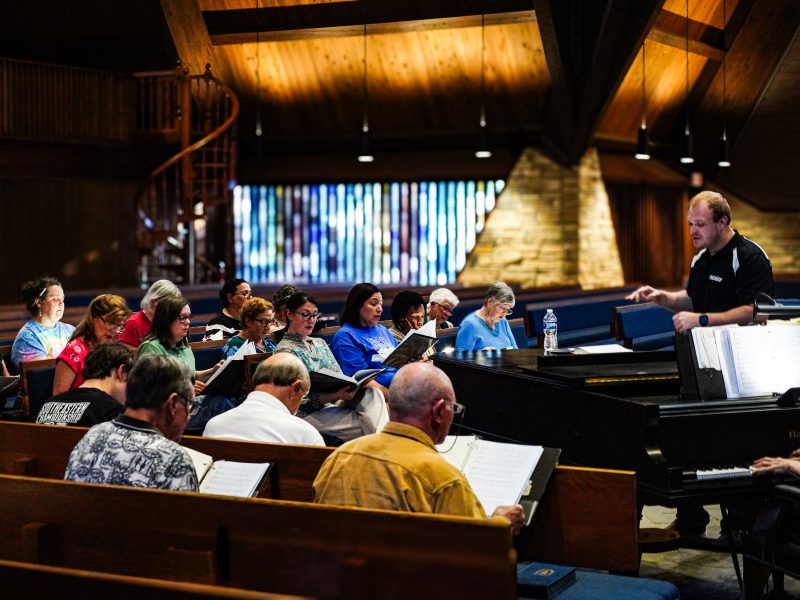
Albany Chorale season finale ‘Time Flies’ to honor legacy of Albany musician
The finale is dedicated to the memory of Steve Parker, a longtime Albany musician and Chorale member who died last year after a terminal illness. Parker, known to many as the owner of Parker Music, spent decades supporting local music — often lending instruments or performing alongside the group.
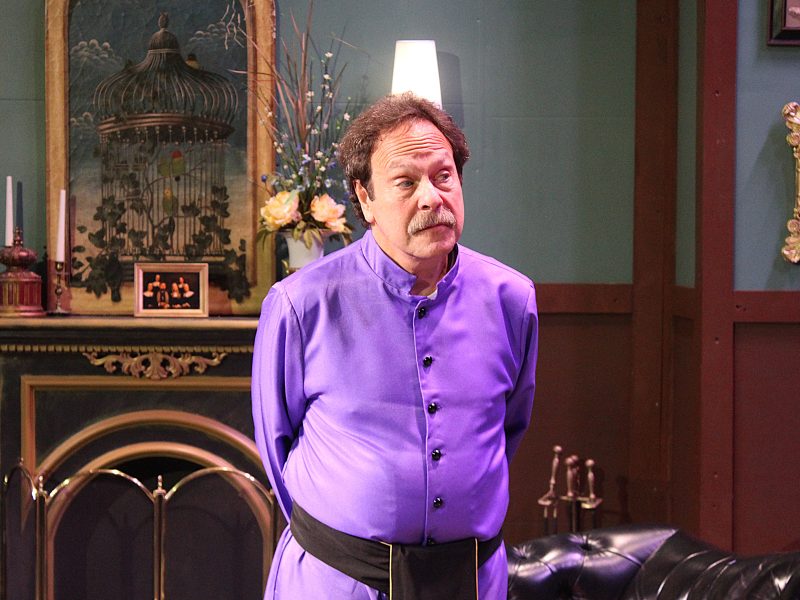
Theatre Albany brings ‘British farce’ to stage
I’ve told the players a million times: ‘If it’s not fast, it’s not funny.

