
KETURAH BUTLER-REED: Census will impact us all, whether we’re counted or not
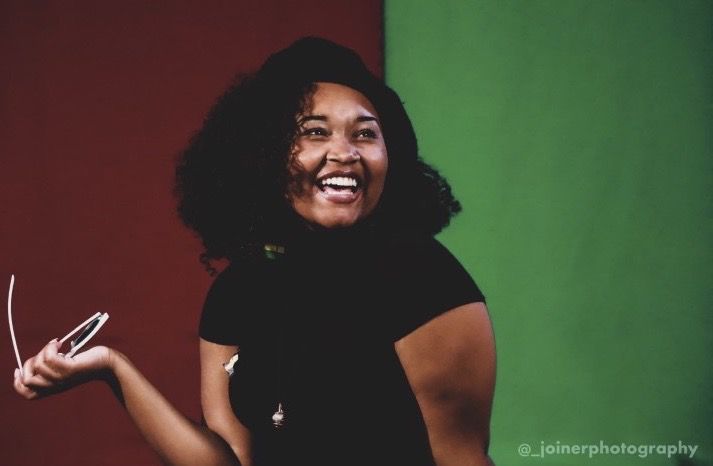
By Keturah Butler-Reed
As young people, we must make an active effort to prioritize the census. We will not be young forever, and the topics addressed in the census will have a direct impact on our futures. At some point, we are going to have families, businesses and community needs. However, if we do not make sure we are counted, we will not have the funding nor the support to take care of our families, businesses or community.
The people most underrepresented in the census have always been minorities. More specifically, there are maps dated back to the census of 1860 showing the distribution of the slavery population in Southern states that show a direct correlation to poverty lines as recent as 2010. No matter how coincidental, this should not be acceptable. The funds that could be allocated to the census should be more dispersed.
The census does not necessarily affect people individually. When people are filling out census forms, they should be thinking about what those results would mean on a broader scale. The census affects the amount of funding each community receives. In simplest terms, if people are not counted for the census, they might have to say goodbye to their local public schools in about 10 years. The government will not see a reason to keep it open if they do not have an accurate number of how many kids really live in that neighborhood.
If people are not counted for the census, they will continue to complain about how far the DMV is from their home. If people are not counted for the census, they can say goodbye to that local pool or recreation center they have been asking the city to build for 30 years. The number of kids that actually live in the community will not accurately be represented when it’s time to distribute funds locally.
The census affects not only the distribution of funds, but it is also a determining factor for legislation. Election season is upon us and, yet again, the census can affect it. The number of congressional districts in a state depends on an accurate count of the census. This affects both congressional representation and state electoral votes.
Because I go to Albany State University, I have somewhat become a recurring local. The longer I have been here, the longer I have grown to love its rich history and culture. I’ve had an amazing time at school, but I have noticed that there is a lack of resources in the actual city. Many people consider settling down in their college towns, but without the resources, it is hard to see a thriving future for this underrepresented town.
There are about 70,000 Albanians, and all I see are food deserts, potholes that don’t get fixed, lack of representation when it comes to legislation, thousands of kids but not enough schools or recreation centers to house them or enough money to pay teachers to educate them. Notice, I did not even include their race or ethnicity. I should not have to. Albany has the numbers, but they don’t have the resources. They have the problems, but we all must be willing to fill out the census to receive better solutions.
This is not just an Albany, Georgia, problem. There is no escaping the census. The census will have an impact on us whether we make sure we are counted or not. The choice to be counted is what makes a difference in your education, legislative power and resources.
Related Articles
CHARLES OCHIE: Let’s finally make Albany the college town it deserves to be
Albany has strengths, the legacy, and the potential to be a true college city.
KING RANDALL: Never giving up on a ‘new day’ in Albany
No matter the challenges, the people of Albany have the strength and perseverance to turn the city around.
JASON ESTEVES: Georgia farmers deserve disaster relief they were promised
Georgia farmers, reeling still from the effects of Hurricane Helene, have not received emergency funds promised them.
