
CARLTON FLETCHER: Mayor’s edict far from city’s best interest

By Carlton Fletcher
[email protected]
“Did you really think about it before you made the rule?”
— Bruce Hornsby & the Range
When I first read the missive, purported to have been written by Albany Mayor Bo Dorough, I did two things.
First, I rubbed my eyes and re-read it to make sure my fuzzy brain hadn’t somehow misunderstood the words. It hadn’t. Then I started checking for authenticity of the message, which had been forwarded to me by two citizens in the community. It was, best I could tell, for real.
The next thing I did was wonder … Is this what we’ve gotten to in the age of the coronavirus?
Here’s what the mayor said in a letter to city officials:
Some municipalities anticipate declines in revenue, for the fourth quarter of FY 20 and the first quarter of FY 21, of more than 20%. The city of Albany could be especially hard hit, as we may be forced to write off millions in bad debt from Albany Utilities. I have learned that any funding for cities under 500,000 allocated under CARES will be strictly earmarked. Efforts are being made to secure up to $250 billion for municipalities which do not meet that threshold. Additionally, the national advocacy group for counties is requesting that most of the CDBG funding available through CARES be disbursed to those counties which have primary responsibility for public health. This would either eliminate or substantially reduce funding for the city.
I am, frankly, unable to evaluate and much less respond to communications from these organizations, though I am participating in the weekly teleconferences sponsored by GMA and the Conference of Mayors. Commissioner Young is following these developments and will, I hope, be in a position to keep us appraised of what decisions are ultimately made, as this will have an impact on the city for years to come.
It’s that last sentence that struck me: Commissioner Young is following these developments and will, I hope, be in a position to keep us appraised of what decisions are ultimately made, as this will have an impact on the city for years to come.
Let’s forget, for the time being, that Commissioner Young — that would be Ward VI’s Demetrius Young — has no experience in government whatsoever and has a very sketchy work history, to say the least. And that’s who the mayor has charged with following developments that could lead to tens of millions of dollars in bad utilities debt?
I have seen no reason to doubt Mayor Dorough’s performance thus far as Albany’s mayor, and I agree with citizens who’ve praised Dorough and Dougherty County Commission Chairman Chris Cohilas for the work they’ve done on the city’s and county’s behalf during the coronavirus pandemic. But the decision to have Young oversee what could be a multimillion-dollar shortfall has what could be disaster written all over it.
Let’s see … now is there a more qualified candidate for such a job in the city’s hierarchy? Like maybe City Manager Sharon Subadan, who with Finance Director Derrick Brown puts together and oversees the city’s quarter-billion-dollar budget every year, and is, after all, the head of the Utilities Authority? Or maybe long-time Commissioners Bob Langstaff and Jon Howard, who were instrumental in efforts to bring the Utilities Authority under strict city oversight?
If Dorough wanted to step outside the box, he might even look at veteran Commissioners Matt Fuller and B.J. Fletcher, who at least have experience as business owners. Even Commissioner Chad Warbington, who, like Young, has exactly four months experience in the city government, is a business owner and once served on the Water, Gas & Light Commission before it was morphed into the city’s Utilities Board.
Young would be, far and away, the least-qualified government official to oversee any function that has the potential for such far-reaching impact. That Dorough would single him out as the person to “keep us appraised of what decisions are ultimately made, as this will have an impact on the city for years to come,” smacks of political payback or solidifying support. It definitely is not in the best interest of the city’s taxpayers.
Author

Related Articles
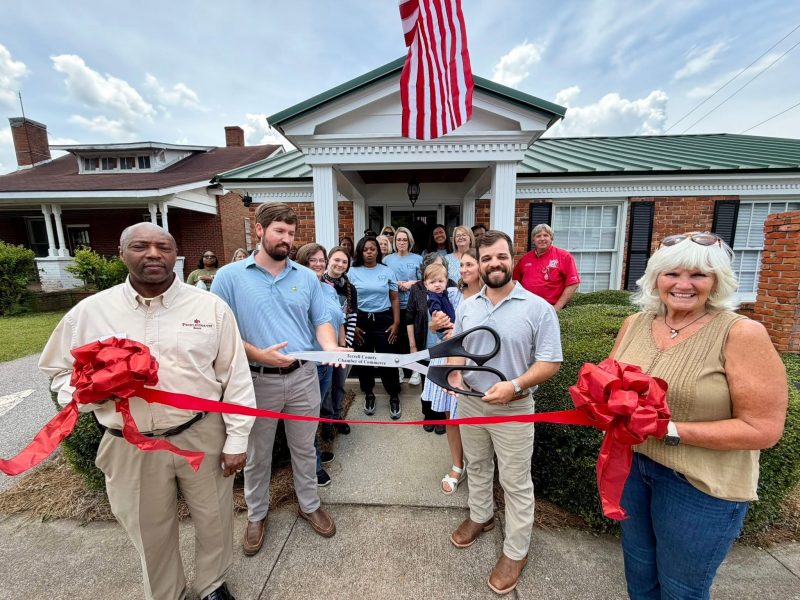
Chamber celebrates new businesses, invites community to Coffee and Connections event
The Terrell County Chamber of Commerce is continuing its efforts to strengthen local business relationships through community celebrations and networking opportunities, recently recognizing two new businesses with ribbon-cutting ceremonies and announcing its next “Coffee & Connections” event in Sasser.

Regional catering business finds new home at Warrior Creek Mercantile
For months, Marchbanks said she had been asking God for an opportunity to serve others. “I just kept praying, ‘God, use me as a servant,'” she recalled. “I didn’t care what it was. I just wanted to be used to help people.”
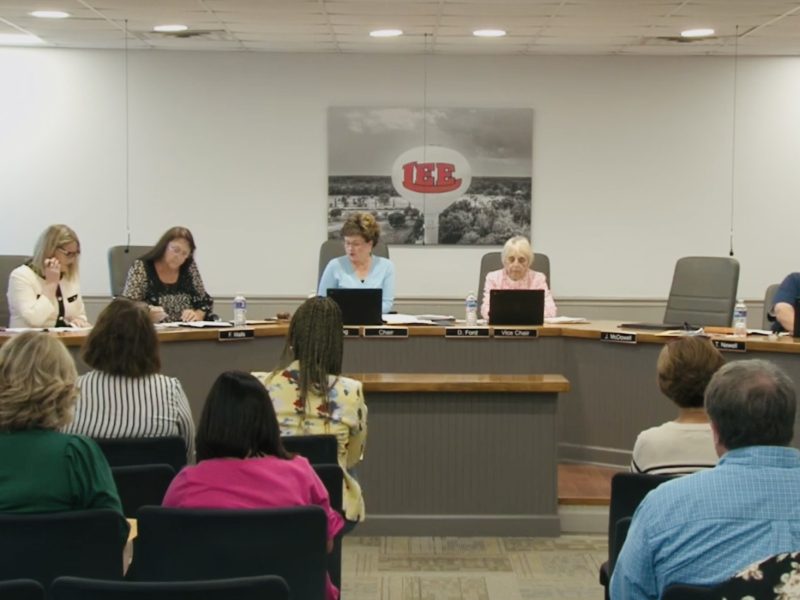
Houston, Ford advance in contentious Lee County school board race
According to unofficial election results, challenger George Parrish Houston led the three-candidate field with 534 votes, or 42%, followed by incumbent Donna Ford with 478 votes, or 37.6%. Candidate Lavendra Shootes received 261 votes, or 20.5%.
