
BearWise website helps people live responsibly with bears
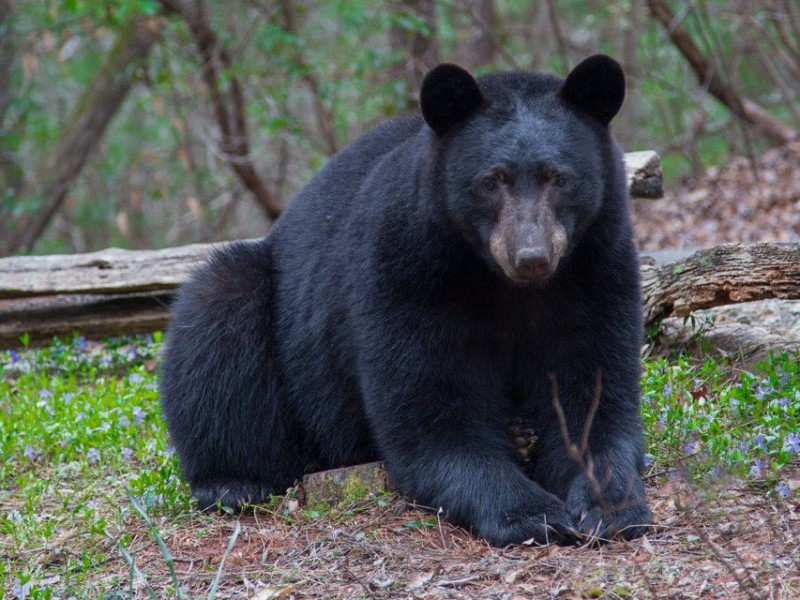
Special Photo: Georgia DNR
From staff reports
SOCIAL CIRCLE – Most human-bear encounters, such as a bear sighting, a bear up on a porch, or a bear in someone’s trash, are minor situations and almost all could be avoided if we become BearWise, according to the Georgia Department of Natural Resources’ Wildlife Resources Division.
“Avoiding problems with bears is usually simple, though it may not always be convenient,” Adam Hammond, WRD’s state bear biologist, said in a news release. “One of the six BearWise Basics is about securing food, garbage and recycling. When bears have access to human-provided foods, regardless of the source or the intent, they will take advantage of them, and that often leads to further problems.”
A bear that repeatedly finds food from garbage cans, bird feeders, and pet food bowls is unlikely to leave and will become bolder in its search for easy food. This can lead to potential property damage of homes, garages, vehicles and more. Once bears have learned bad habits and have come to rely on people for a “free meal,” they never change those behaviors, and this type of behavior progressively gets worse with time and experience. People who care about bears should make the extra effort to ensure that their home and yard are “unattractive” to bears – to protect people, pets and bears.
BearWise is an education program developed by bear biologists from each of the 15 state wildlife agencies that make up the Southeastern Association of Fish and Wildlife Agencies. The program, anchored by the website www.bearwise.org, offers citizen-specific, detailed, and high-quality information to help people live responsibly with bears and to keep bears wild.
The black bear is a symbol of Georgia’s natural diversity, the only bear found in the state and a conservation success story. Though now considered the most common bear in North America, the species was nearly eradicated from Georgia in the 1930s due to unregulated market hunting, illegal harvest — including the killing of bears as “vermin” — and large-scale habitat loss. Sound wildlife management practices have restored Georgia’s black bears to a thriving population estimated at 4,100 statewide.
Black bears may legally be hunted in certain parts of Georgia during the fall (georgiawildlife.com/bear-info). However, the taking of bears during any other time of the year, or the taking of bears illegally during the hunting season, is called poaching. Prevent poaching of bears by reporting any illegal activity. Visit http://gadnrle.org/ranger-hotline for details.
For more information on living responsibly with bears, visit www.bearwise.org.
Related Articles
Congress weighs packaging bill with implications for Albany manufacturers
A congressional hearing this week on proposed national packaging-labeling standards could have implications for several of Southwest Georgia’s largest manufacturers, many of which produce or package products shipped across state lines.

Dougherty County Sheriff’s Office, GBI investigate inmate death
“The sheriff’s office will conduct an administrative investigation to determine if the staff response was appropriate. We have requested that the GBI conduct an investigation.”
Residents’ safety concerns defeat request to privatize Plantation Road
The Terrell County Board of Commissioners rejected a request July 7 to remove Plantation Road from the county road system after nearby residents warned that closing the roadway could leave them without emergency access when adjoining roads flood.
