
Sabal Trail given FERC OK to put compressor station in service
File Photo
From staff reports
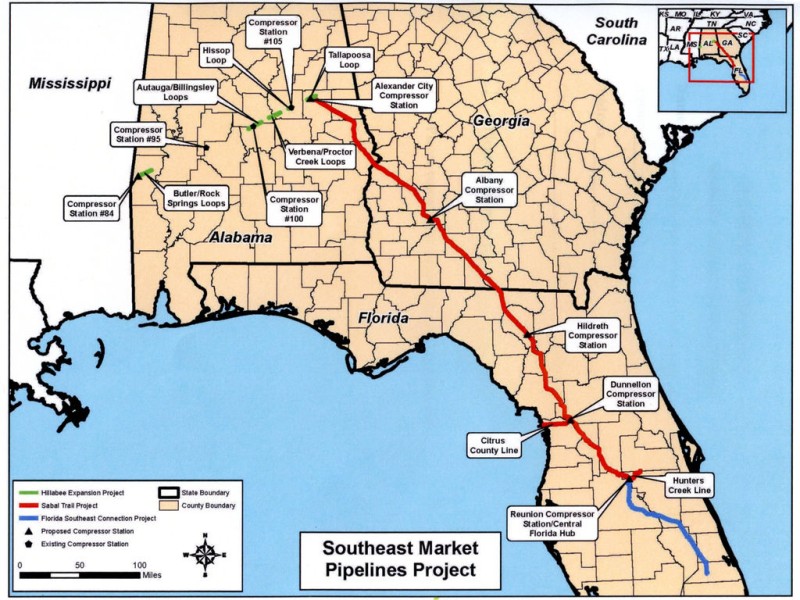
ALBANY — While the protesters have long since moved on, their more-than-two-year efforts to stop development of the Sabal Trail Transmission natural gas pipeline through a densely populated and historic part of Dougherty County thwarted by rulings of the Federal Energy Regulatory Commission in Washington, there was lingering concern among some in southwest Albany recently when J. Rich McGuire, the director of the federal agency’s Division of Gas – Environment and Engineering sent a letter to Sabal Trail officials giving the agency the go-ahead to “place into service the Sabal Trail Project Phase II facilities, specifically the Albany and Dunnellon (Florida) compressor stations.”
The compressor stations, vital components of the movement of natural gas along the pipeline, which runs from central Alabama to north Florida and comes through parts of Dougherty County, were among the most contentious elements of the project, which drew protests in communities all along the path of the pipeline. Sabal Trail and FERC officials assured protesters and local officials that the stations are safe.
The compressor station in Dougherty County is located at the corner of Locket Station Road and Oakridge Drive.
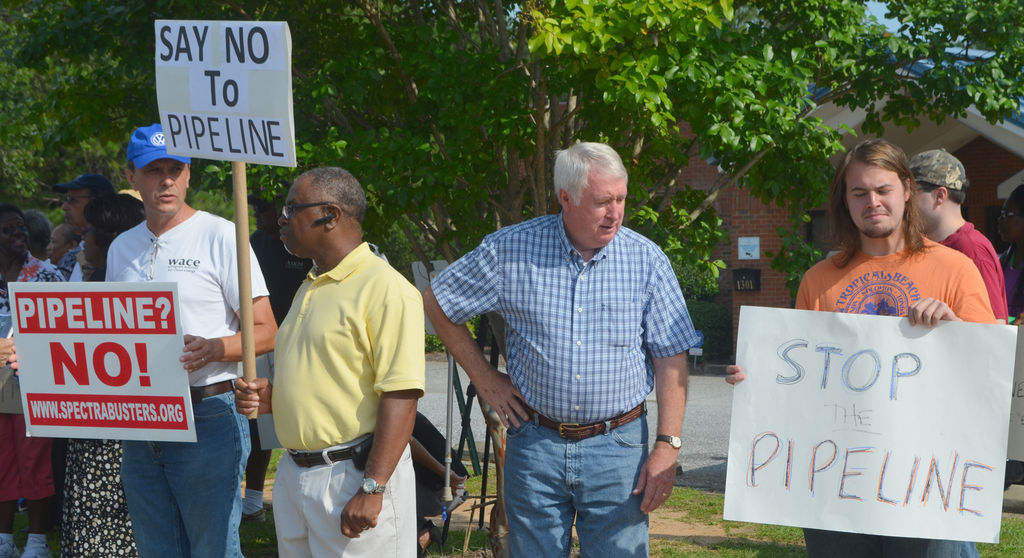
Among the concerns expressed by protesters were environmental issues, noise and air pollution, as well as safety issues. Local and state officials also complained of environmental justice issues because the pipeline was routed through a portion of the community primarily populated by African American citizens.
McGuire’s letter, addressed to Sabal Trail’s Lisa A. Connolly, general manager for rates and certificates, said:
I grant Sabal Trail Transmission LLC’s (Sabal Trail) April 8, 2020 request to place into service the Sabal Trail Project Phase II facilities, specifically the Albany and Dunnellon Compressor Stations located respectively in Dougherty County, Georgia, and Marion County, Florida. Your request complies with environmental condition 9 of the Federal Energy Regulatory Commission’s Feb. 2, 2016 order Issuing Certificates and Approving Abandonment (Order).
Based on our most recent field inspection, Sabal Trail’s construction status reports, and the representative photos attached to your request, rehabilitation and restoration of affected areas is proceeding satisfactorily. As stated in your request, Sabal Trail commits to retaining environmental inspection staff, monitoring lands affected by the Phase II facilities, and addressing any restoration issues, as necessary. It is my expectation that these commitments will be honored and that any restoration issues that should arise will be addressed fully and promptly.
I remind you that Sabal Trail must comply with all applicable remaining terms and conditions of the order. If you have any questions regarding this authorization, please contact Mr. John Peconom, environmental project manager at (202) 502-6352.
The pipeline is a $3.2 billion project that allows Sabal Trail to move up to 1.1 billion cubic feet of natural gas per day from a collection station in Alabama to a site in northeast Florida.
The natural gas will be used to service customers of Florida Power & Light and Duke Energy.
Related Articles

From cotton to cloud: In the data center debate, is rural Georgia once again being asked to carry the cost?
Across much of rural Georgia, the abandoned cotton warehouses and shrinking tax bases remain — enduring reminders that industries built to serve distant markets do not necessarily stay rooted in the communities that first sustained them.

My Grandpa Was Killed in World War II. I Met Him Through His Letters Home
Gina Wolf’s grandfather died before she was born. His letters sent to her grandmother from Europe during World War II made it possible to know what kind of man he was.
‘Sounds Like a Mutiny.’ Secret Recording Exposes Claims of Toxic Leadership After a Marine’s Suicide
This week’s War Horse story follows the systemic failures before and after the death of Cpl. Drew Mobley who was the third in two years at Marine Corps Base Quantico to die by suicide.
