
‘Ghost town’ Palmyra helped shape Albany
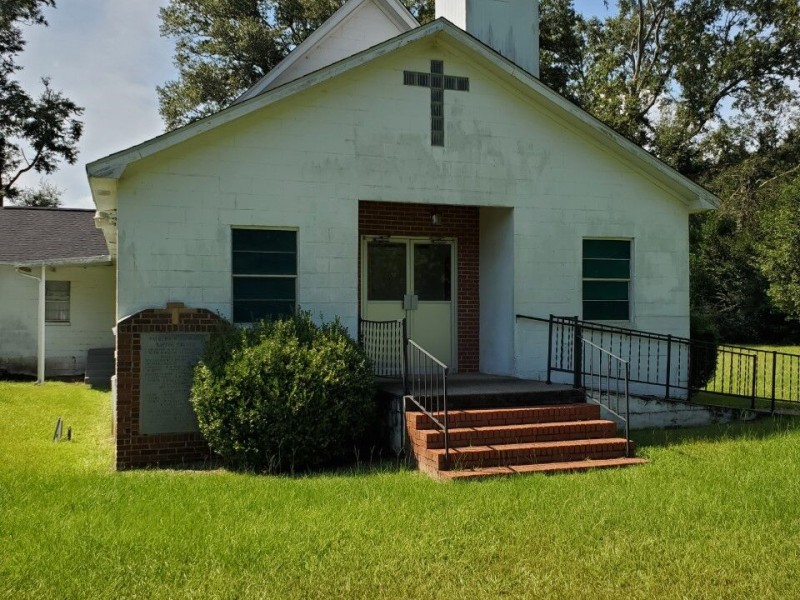
Staff Photos: Tom Seegmueller
By Tom Seegmueller
tom.seegmueller
@albanyherald.com
EDITOR’S NOTE: Second part of an ongoing series about historical markers and places in southwest Georgia.
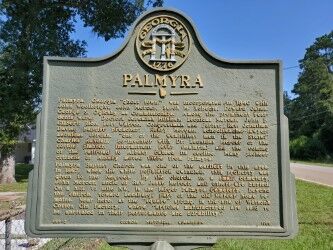
LEESBURG — Palmyra, an authentic Georgia “ghost town,” was incorporated in 1840 with John Woolbright, John Mercer, Burch M. Roberts, Edward Janes and George S. Oglesby as Commissioners. Among the prominent residents were Dr. Jeremiah Hilsman, Leonidas Mercer, the Rev. John B. Gilbert, Congressman Lott Warren and the Rev. Jonathan Davis.
Intermittent fever (malaria) and the coming of the railroad to Albany led to the community’s decline. Many pioneer citizens of Albany moved there from Palmyra.
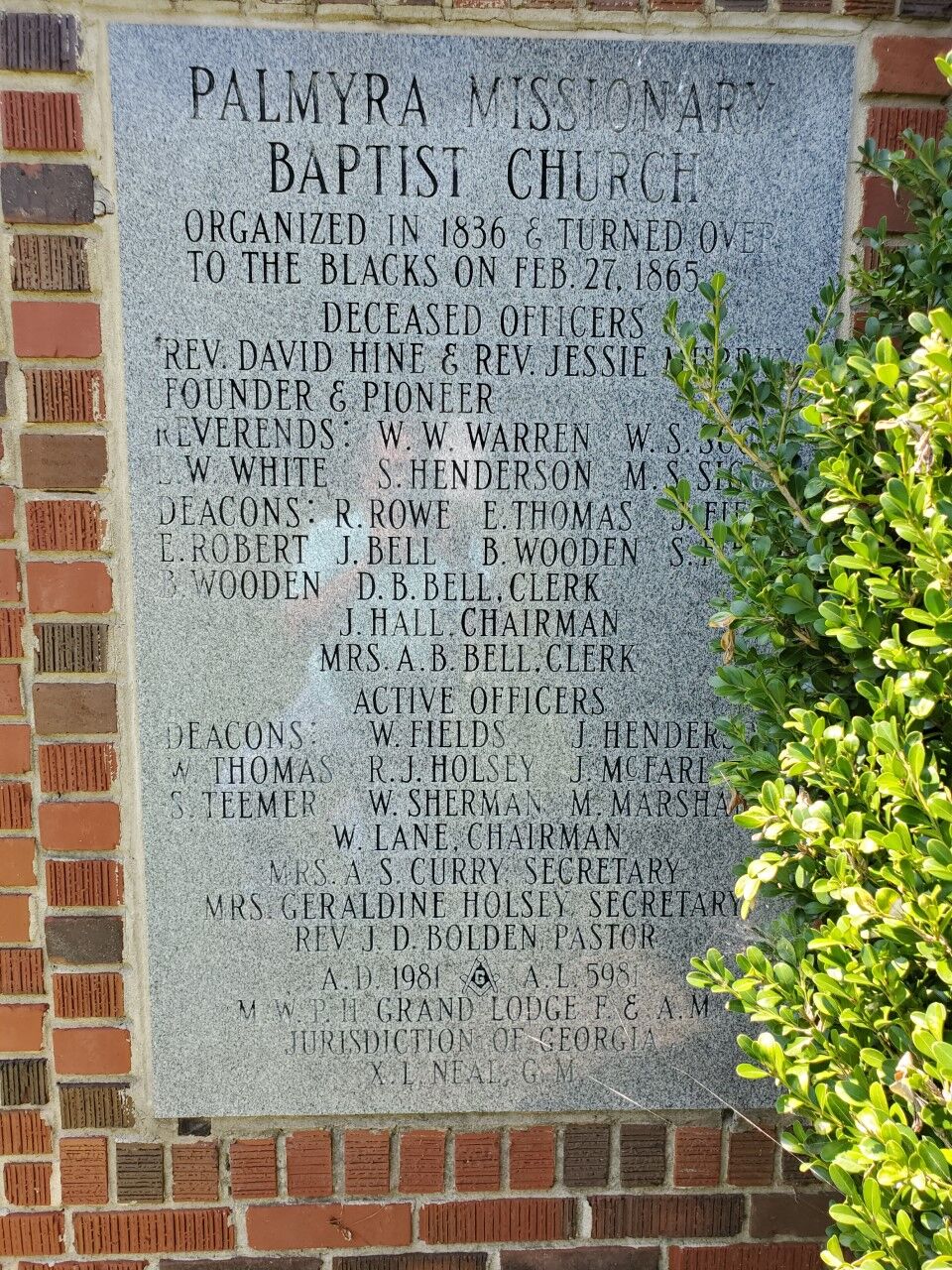
Palmyra Baptist Church was one of the earliest houses of worship in this area. In 1867, when the white population dwindled, the property was given to African American worshipers. By the church in a small Cemetery, John Mercer, an uncle of the Rev. Jesse Mercer, and others are buried. On a hill a half-mile to the northwest is the larger Palmyra Cemetery. Beyond the church, toward Leesburg, part of the old Mercer home remains. Near here, at the “square” spring, is the site of Watson’s Cotton Gin Factory, where “articles manufactured are said to be unrivaled in their performance and durability.”
The roots of Palmyra can be traced back to a Neolithic village first documented in the early second millennium B.C. The Palmyrenes became wealthy trader,s establishing colonies along the Silk Road. The trade route connected East Asia, Africa, China, the Arabian Peninsula, and Southern Europe. In the United States, 20 cities, towns, villages, and a Pacific atoll share the name, presumably in hopes that they too would prosper as centers of trade.
Such was the case for Palmyra, Georgia, in its early years. Interestingly the “square” spring referenced on aa historic marker refers to a box mill. The remains of the mill can be found on the run from a spring to the Kinchafoonee Creek. A “box” was carved into the limestone bedrock where water poured into one corner, falling through a turbine wheel and exiting below the wheel in the opposite corner.
The remains of this wheel, after it was removed from the box, was was bound by an iron band. Amazingly the blades were carved with the same taper and twist of a modern jet turbine, as opposed to the simple flat slats one might expect.
In a special edition of The Albany Herald published in1907, Adelaide E. Jackson, who was at that time Albany’s oldest living resident, living here since 1842 recalled, “The Davises, Hilsmans, and the Gilberts were all Palmyrans, though these and other families moved to Albany and became prominently identified with the community.” This connection leads many early writers to refer to Palmyra as, “Old Albany”.
Dr. John Gilbert was born in Crawfordsville and moved to Palmyra in 1836, living there until moving to Albany in 1840, practicing medicine until his death in 1865. His son, William, who was born in Palmyra, would serve in the Confederate Army from 1861 until My 5, 1864, when he lost a foot at the Battle of Spotsylvania Court House. He would serve as Albany Mayor from 1885-1894. In 1892, under his leadership, Albany would issue its first bond for $100,000 to build water works and sanitary sewers.
The diary of A.J. Swinney notes that, “Today, Nelson Tift, John Jackson and the writer of this diary were baptized in the Flint River by Rev. Jonathan Davis.” (Rev. Davis was the great-grandfather of John A Davis, who worked for The Albany Herald).
Lott Warren was a jurist of renown, a member of Congress in 1840 and served as a second lieutenant in the Seminole War. After leaving the service, he studied law and began practicing in 1820 in Dublin. He served in the state senate and was judge of the Superior Court of the Southern District of Georgia. He died of a stroke in 1861 at the courthouse in Albany.
Although Palmyra is now a “ghost town,” its development and the achievements of its citizens shaped Albany and southwest Georgia.
Author

Related Articles

Property owner removes debris from northwest Albany ‘homeless encampment’
Two large dump trucks, one of them filled to the top with trash, and heavy equipment were in a newly cleared path in woods off Stuart over the last few days, removing a mess that officials said was the result of homeless individuals seeking shelter out of the public eye.

MCLB-Albany to host America’s 250th Birthday celebration
Marine Corps Logistics Base-Albany will celebrate America’s 250th birthday with its annual Independence Day Celebration, uniting service members, families, and the local community for a day of patriotic festivities honoring this historic milestone.

Southwest Georgia artists recognized at packed opening of exhibition
The annual juried exhibition, one of the region’s largest showcases of visual art, features approximately 46 artists and nearly 90 works spanning painting, sculpture, ceramics, photography and mixed media.

