
Grants will help protect wildlife habitat in Georgia, other states
Special Photo
From staff reports
WASHINGTON — The National Fish and Wildlife Foundation announced this week $1.3 million in grants to restore, enhance, and protect shortleaf pine, oak and riparian forests, and in-stream habitats for wildlife in Alabama, Georgia, Kentucky and Tennessee. The grants will generate nearly $1.5 million in matching contributions for a total conservation impact of $2.8 million.
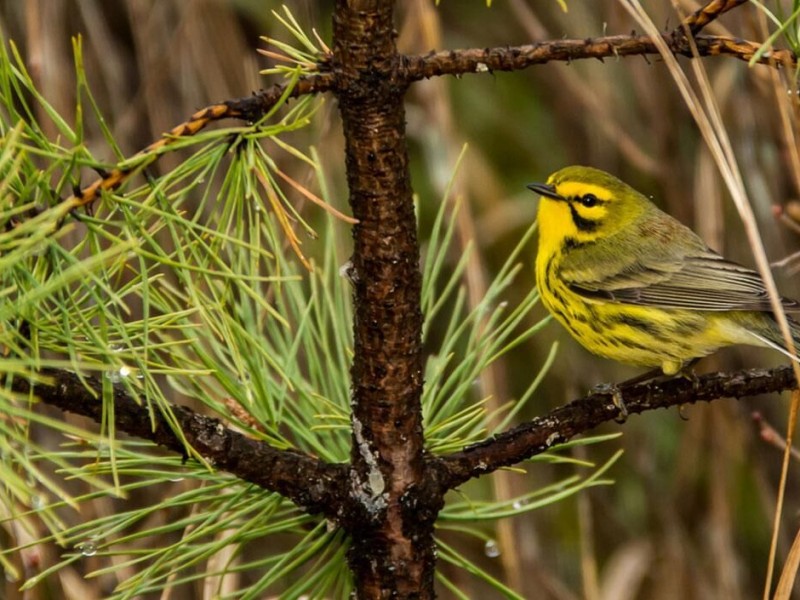
The projects supported by the seven grants will restore shortleaf pine and oak forests to benefit birds including the northern bobwhite, prairie warbler and Bachman’s sparrow. They will also restore aquatic habitats to benefit freshwater mollusks like the Alabama moccasinshell and reptiles like the flattened musk turtle. These projects also will improve soil health and water quality through enhanced forestry and agricultural practices like invasive species removal. This will further enhance the habitats these species rely on and can improve working land productivity, helping landowners to make a living and maintain their way of life.
The grants were awarded through the Cumberland Plateau Stewardship Fund, a public-private partnership between NFWF and the U.S. Department of Agriculture’s Natural Resources Conservation Service, the U.S. Fish and Wildlife Service, International Paper’s Forestland Stewards Partnership, American Forest Foundation’s Southern Woods for At-Risk Wildlife Initiative and Altria Group.
“The Cumberland Plateau is home to species of both ecological and cultural significance, many of which are found only in this region,” said Jeff Trandahl, executive director and CEO of NFWF. “The partnerships fostered through the Cumberland Plateau Stewardship Fund are helping to leverage technical and financial resources that preserve and restore these unique species and the places they inhabit.”
Stretching from northwest Alabama to eastern Kentucky, the Cumberland Plateau consists of unique geology and landforms that create a vast diversity of habitats. The region was once dominated by shortleaf pine and oak communities, but these forest habitats have declined over the past several decades due to conversion of forest type, conversion to other land uses, fire suppression, and disease and pest infestations.
These changes contributed to the decline of multiple wildlife species, including birds such as Bachman’s sparrow, brown-headed nuthatch and prairie warbler, which rely on open-canopy woodlands and grassland habitats. At the same time, sedimentation and runoff from agriculture, as well as development and modification of streams, threaten the region’s freshwater species, such as the federally endangered fish, Laurel dace, and Black Warrior waterdog, a reclusive salamander.
“Restoring the forests, streams and farmlands of the Cumberland Plateau underscores the service’s commitment to large-scale conservation for a variety of habitats,” Leo Miranda, the regional director for the U.S. Fish and Wildlife Service for the South Atlantic-Gulf & Mississippi Basin, said. “Along with our public and private partners, and landowners large and small, we are committed to protecting many at-risk, threatened and endangered species while boosting recreation and local economies.”
“We are proud to contribute to this fund and look forward to the long-lasting impact that these seven grants will have on the forest habitats and water quality of the Cumberland Plateau as well as the landowners who depend on these forests,” Sophie Beckham, International Paper’s chief sustainability officer, said. “Working with other businesses, government and NGOs to find solutions to restore, enhance and protect this important landscape is just one way International Paper can ensure the future of healthy and abundant forests.”
Since 2013, the Cumberland Plateau Stewardship Fund has invested more than $7.6 million in projects that will establish and enhance shortleaf pine, oak and riparian forests, and improve stream habitat to benefit the birds and wildlife that rely on these ecosystems.
The Georgia grant is involved with restoring shortleaf pine and oak habitat in the Georgia Cumberlands:
Grantee: Georgia Forestry Commission
♦ Grant Amount: $150,000
♦ Matching Funds: $150,000
♦ Total Project: $300,000
Restore and enhance shortleaf pine and shortleaf pine-oak savanna habitat on private lands in northwestern Georgia, benefitting northern bobwhite, prairie warbler, pine warbler, Bachman’s sparrow and other forest and savanna-dependent birds. Project will establish 200 acres of shortleaf pine and enhance an additional 2,000 acres of existing shortleaf pine and shortleaf pine-oak savanna with prescribed burning and mid-rotation management techniques.
Chartered by Congress in 1984, the National Fish and Wildlife Foundation protects and restores the nation’s fish, wildlife, plants and habitats. Working with federal, corporate, and individual partners, NFWF has funded more than 5,000 organizations and generated a total conservation impact of $6.1 billion. Learn more at www.nfwf.org.
Since 1935, the Natural Resources Conservation Service has helped America’s private landowners and managers conserve their soil, water, and other natural resources. NRCS provides technical assistance based on sound science and offers financial assistance for many conservation activities.
The mission of the U.S. Fish and Wildlife Service is working with others to conserve, protect, and enhance fish, wildlife, plants, and their habitats for the continuing benefit of the American people. The service is both a leader and trusted partner in fish and wildlife conservation, known for scientific excellence, stewardship of lands and natural resources, dedicated professionals, and commitment to public service. For more information on the agency’s work and the people who make it happen, visit www.fws.gov.
Related Articles

From cotton to cloud: In the data center debate, is rural Georgia once again being asked to carry the cost?
Across much of rural Georgia, the abandoned cotton warehouses and shrinking tax bases remain — enduring reminders that industries built to serve distant markets do not necessarily stay rooted in the communities that first sustained them.

My Grandpa Was Killed in World War II. I Met Him Through His Letters Home
Gina Wolf’s grandfather died before she was born. His letters sent to her grandmother from Europe during World War II made it possible to know what kind of man he was.

‘Sounds Like a Mutiny.’ Secret Recording Exposes Claims of Toxic Leadership After a Marine’s Suicide
This week’s War Horse story follows the systemic failures before and after the death of Cpl. Drew Mobley who was the third in two years at Marine Corps Base Quantico to die by suicide.
