
Robert Clay has a long-held passion for Lee County
Staff Photos: Tom Seegmueller
By Tom Seegmueller
[email protected]
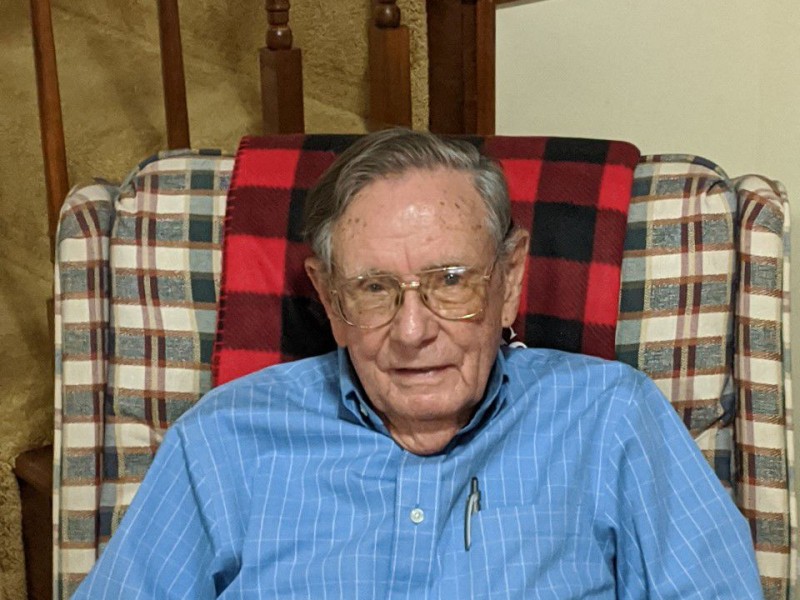
LEESBURG – Most of us are shaped by the community where we grow up. A few rare individuals shape the growth of their community. Robert Clay is one of those rare individuals.
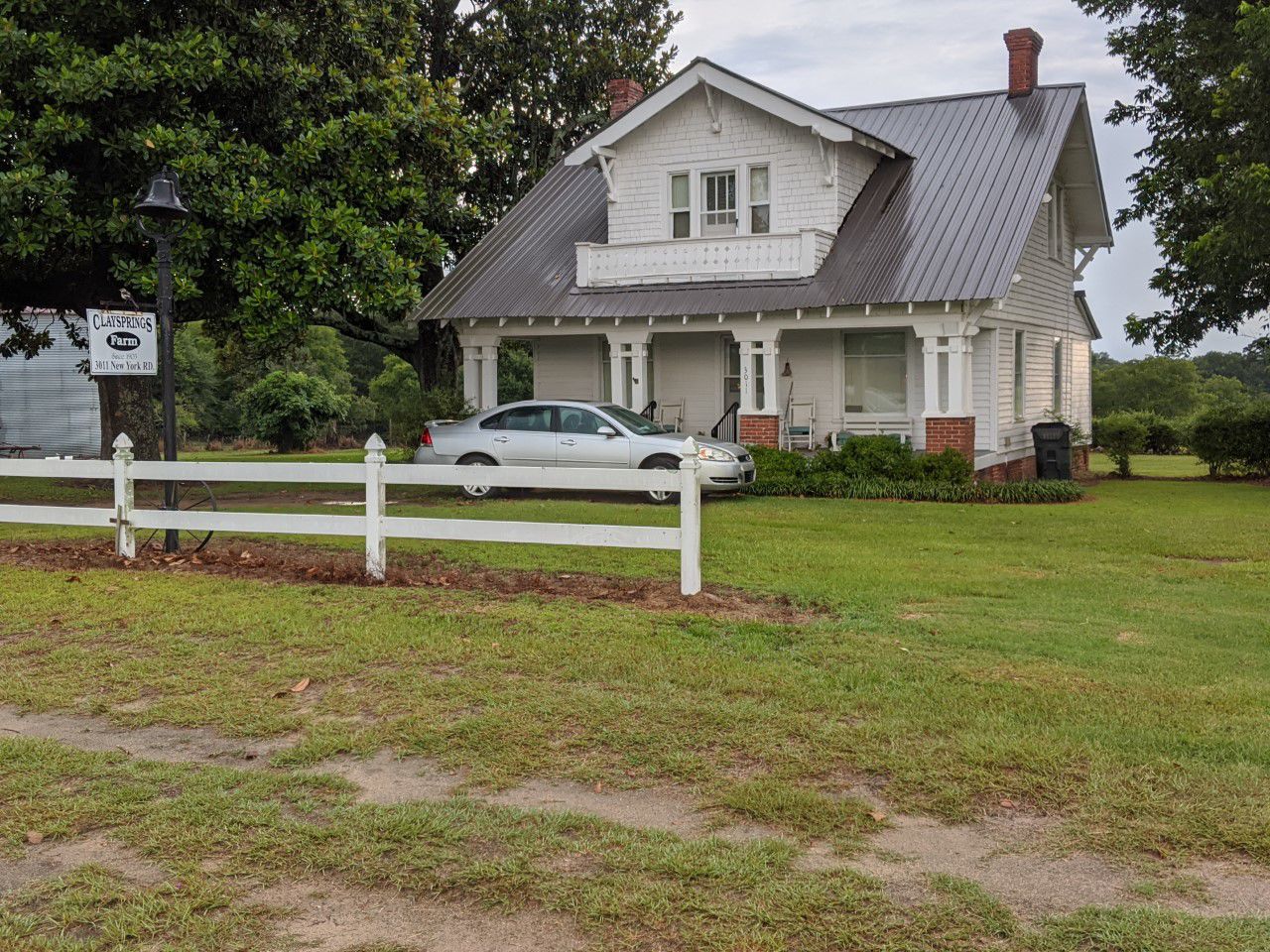
Born in 1928 in a house his grandfather, Ruben Clay, and his father, Robert Augustus Clay, built on Clay Spring Farms, which was established in 1905 by Clay’s grandfather and his brother, Adolphus Clay, from plans they purchased from the Sears & Roebuck Company, the Clay homeplace is recognized as a Centennial Farm, having been in operation by the same family for more than 100 years.
“I grew up during the Depression,” Clay said. “I guess that’s influenced my thinking. But I lived the life of a carefree country boy. Swimming in Chokee Creek, right down the road. Fishing and hunting. I had a brother and two sisters. When I was 13, my father died. I lived with my mother with three children and one on the way. She managed to hold on to the farm and sent us all through college.”
The impact of the Depression on Clay’s life is evident in an article previously published by The Albany Herald, in which he noted: “When I was a small boy, my daddy gave my brother and me 25 cents a week each to feed the mules and hogs.”
His first “real” job came about by happenstance at the age of 15.
“I was in the ninth grade in Leesburg High School,” Clay recalls. “In April, the school bus driver resigned. The superintendent asked me if I knew how to drive. I’d been driving tractors and trucks around here. I was the new school bus driver with no license or any training. I drove the bus until I graduated. When I started, I got $35 a month.”
Setting a pattern of fiscal responsibility at an early age, molded by memories of the Depression and patriotism during WWII, he invested $18.75 every month in a War Bond, which was guaranteed to mature in five years at a value of $25.
Graduating from Lee High School in a class of nine, Clay set his sights on a college degree in finance.
“I got my BA from UGA,” he said. “I actually started at North Georgia College, but I finished my last two years at the University of Georgia. I came home and started operating the farm. My brother and two sisters were very generous and allowed me to buy their part of the property at extremely reasonable rates.”
Clay was appointed to the Lee County School Board at the age of 24, serving in that capacity for nearly 12 years. The schools superintendent came to him and informed him he planned to retire in a few years and said Clay should consider going back to school and get certified so he could then run as his replacement.
After giving it a lot of thought and with the support of his wife, Betty Ann, and his daughters, Clay made the commitment to get the required undergraduate courses and a master’s degree in education from the University of Georgia.
In 1965, Clay replaced Hugh T. Kearse, who had served as superintendent since 1945. For much of the country, and especially in southwest Georgia, these were challenging times for school systems forced by the federal government to deal with integration.
Complimented for shaping what is considered by many to be one of the best public school systems in Georgia, Clay humbly responded, “Well, I had a lot of good help and a lot of good community support, and it takes both. Lee County was fortunate. Integration was traumatic for both races. But somehow or another, we lucked out and were fortunate enough to accomplish it, I think, in a reasonable way. And I think it has paid off for the county since then. If you look around in surrounding counties, in so many ways of measuring it. Lee County exceeds our neighbors.”
Clay did not emphasize the fact that it was under his leadership that, at the beginning of the ’65-’66 school year under the freedom-of-choice plan, three black senior girls enrolled in Lee County High School. The school system began to participate in the Title 1 program, and children with disabilities were admitted into the school system for the first time. Definitely a challenging period to assume a new position.
While serving as superintendent, Clay would pursue and earn a doctorate of education degree in a never-ending effort to better serve his community. He would serve as superintendent for 32 years, taking a short break before coming back as an interim superintendent for five months when his replacement resigned.
“Being school superintendent automatically puts you on the Board of Health, so I served on that the whole time I was school superintendent,” Clay said. “After I retired as superintendent, I was appointed to the Board of Health and served there until I recently resigned.”
For Clay, the dual role of farmer and educator was a great combination.
“I enjoyed my time as superintendent,” he said. “Certainly, like all jobs, it has its stresses and frustrations. But basically, I enjoyed it and I’ve enjoyed my life here on the farm. It’s a way to kind of get away from the routine of being in office. It’s a change that’s good for me, I think.”
Clay has seen many advances in education and farming during his lifetime.
“Farming has gone from mules to GPS farming,” he said. “Schools have gone from very basic operations to expanded curriculums and very expanded extracurricular activities. When I became superintendent, we probably had maybe 1,700 students in the system all told. I think last year they probably had around 6,500.
“When I graduated, there were nine of us in the graduating class of 1945. I think this year, they had 450 or maybe more.”
The citizens of Lee County can only hope that one of those 450 will have the passion for community exhibited by Clay.
Author

Related Articles
My Grandpa Was Killed in World War II. I Met Him Through His Letters Home
Gina Wolf’s grandfather died before she was born. His letters sent to her grandmother from Europe during World War II made it possible to know what kind of man he was.

‘Sounds Like a Mutiny.’ Secret Recording Exposes Claims of Toxic Leadership After a Marine’s Suicide
This week’s War Horse story follows the systemic failures before and after the death of Cpl. Drew Mobley who was the third in two years at Marine Corps Base Quantico to die by suicide.

Southwest Georgia artists recognized at packed opening of exhibition
The annual juried exhibition, one of the region’s largest showcases of visual art, features approximately 46 artists and nearly 90 works spanning painting, sculpture, ceramics, photography and mixed media.
