
The 11th hour of the 11th day of the 11th month …
Special Graphic
By Tom Seegmueller
[email protected]
ALBANY – At 5:45 a.m. on Nov. 11, 1918, an armistice was signed between the Allied forces and Germany to go into effect at 11 a.m. on the “11th hour of the 11th day of the 11th month.”
According to Thomas R. Gowenlock, an intelligence officer attached to the U.S. First Division, shelling by both sides continued until nightfall. The armistice initially called for a 36-day ceasefire and was extended several times until the formal peace agreement was reached at the Treaty of Versailles on June 28, 1919.
Between July 28, 1914 and what become known as Armistice Day on Nov. 11, 1918, an estimated 11 million combatants and 13 million civilians would die from war-related wounds and disease, including the Spanish flu, a death toll so staggering that many believed this was a “war to end all wars.”
In 1919, countries around the world paused to recognize Nov. 11 as Armistice Day. This date would continue to be recognized annually, and in 1926 Congress requested that President Woodrow Wilson issue annual proclamations on that date. In 1938, a Congressional Act made Nov. 11 a national holiday, “dedicated to the cause of world peace and to be thereafter celebrated and known as Armistice Day.”
In 1953, Alvin J. King of Emporia, Kan., proposed that the holiday’s name be changed to Veterans Day in recognition of veterans from all our nation’s wars and conflicts. The citizens of Emporia held a celebration in that name that year, and the following year President Dwight D. Eisenhower would make the change nationally.
Although some calendars and advertisements frequently write the holiday as Veteran’s or Veterans’ Day, the Department of Veterans Affairs states that the attributive rather than possessive case is the official spelling “because it is not a day that ‘belongs’ to veterans, it is a day for honoring all veterans.”
In 1968, under the Uniform Monday Holiday Act, the date of the official celebration was moved to create three-day holidays for federal employees. However, so significant was the celebration’s iconic connection to the, “11th hour, of the 11th day of the 11th month,” many communities continued to celebrate it on the day. In 1978, President, Gerald R. Ford nullified the ratification returning the celebration of Veterans Day to Nov. 11. Interestingly, since the United States Marine Corps celebrates its birthday as Nov. 10, 1775, the Corps celebrate both events with a 96-hour liberty.
John McCrae was a Canadian physician who at the age of 41 joined the Canadian Expeditionary Force, With his medical training, he could have been attached to the medical corps. However, having served in the Boer War as a volunteer, he considered himself a soldier first, “fighting for country and empire.”
This decision led to McCrae fighting in the Flanders region of Belgium, where the German troops launched one of the first chemical weapons attacks in the history of warfare. On April 22, 1915, they dispersed chlorine gas on the French and Canadian troops in the Second Battle of Ypres. However, the Canadians held their line for more than two weeks, preventing a German breakout.
In a letter to his mother, he describes the event:
For 17 days and 17 nights, none of us have had our clothes off, nor our boots even, except occasionally. In all that time, while I was awake, gunfire and rifle fire never ceased for 60 seconds. … And behind it all was the constant background of the sights of the dead, the wounded, the maimed, and a terrible anxiety lest the line should give way.
During the assault, McCrae’s close friend, Alexis Helmer, was killed in action. While McCrae dug his grave and buried his buddy, he notice the poppies that were already growing on the freshly dug graves surrounding him. The next day he would compose this poem:
In Flanders fields the poppies blow, Between the crosses, row on row, That mark our place; and in the sky The larks, still bravely singing, fly; Scarce heard amid the guns below. We are the Dead. Short days ago We lived, felt dawn, saw sunset glow, Loved and were loved, and now we lie in Flanders fields. Take up our quarrel with the foe: To you from failing hands we throw The torch; be yours to hold it high. If ye break faith with us who die We shall not sleep, though poppies grow In Flanders fields.
Two versions of the poem were published in a book of McCrae’s poetry in 1919, In one, the first line reads “blow,” in the other it reads “grow.”
The poem has been the influence for veterans handing out poppies, to be worn in celebration of the day. Traditionally, they are to be worn on the right side with the red representing the blood of those that gave their lives, the black representing the mourning of those whose loved ones did not return.
The green leaf represents the grass and crops that still grow and the hope of prosperity after so much destruction.
The leaf is positioned at 11 o’clock, representing the 11th hour of the 11th day of the 11th month when shooting officially stopped.
Sadly, over a century ago, the war to end all wars would be only a wishful epitaph.
Related Articles
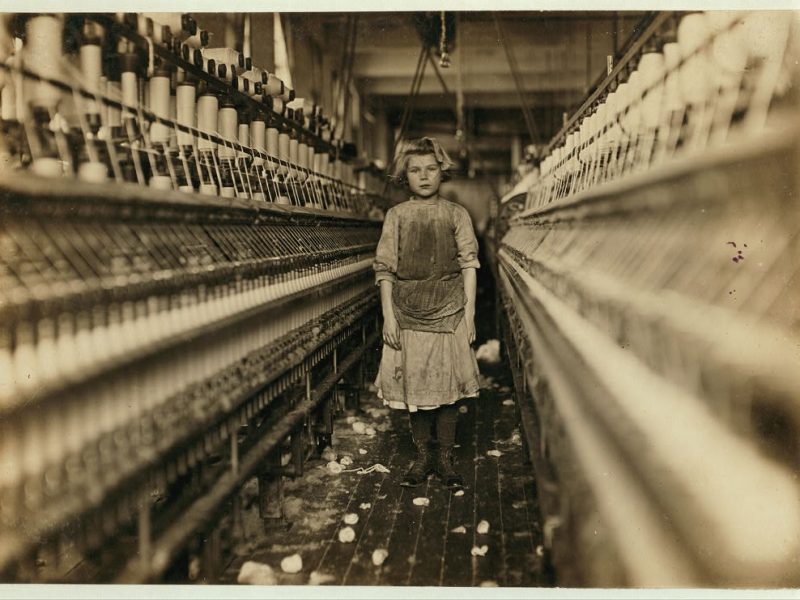
From cotton to cloud: In the data center debate, is rural Georgia once again being asked to carry the cost?
Across much of rural Georgia, the abandoned cotton warehouses and shrinking tax bases remain — enduring reminders that industries built to serve distant markets do not necessarily stay rooted in the communities that first sustained them.
My Grandpa Was Killed in World War II. I Met Him Through His Letters Home
Gina Wolf’s grandfather died before she was born. His letters sent to her grandmother from Europe during World War II made it possible to know what kind of man he was.
‘Sounds Like a Mutiny.’ Secret Recording Exposes Claims of Toxic Leadership After a Marine’s Suicide
This week’s War Horse story follows the systemic failures before and after the death of Cpl. Drew Mobley who was the third in two years at Marine Corps Base Quantico to die by suicide.
