
Albany City Commission approves rules of comportment for meetings in 4-3 vote
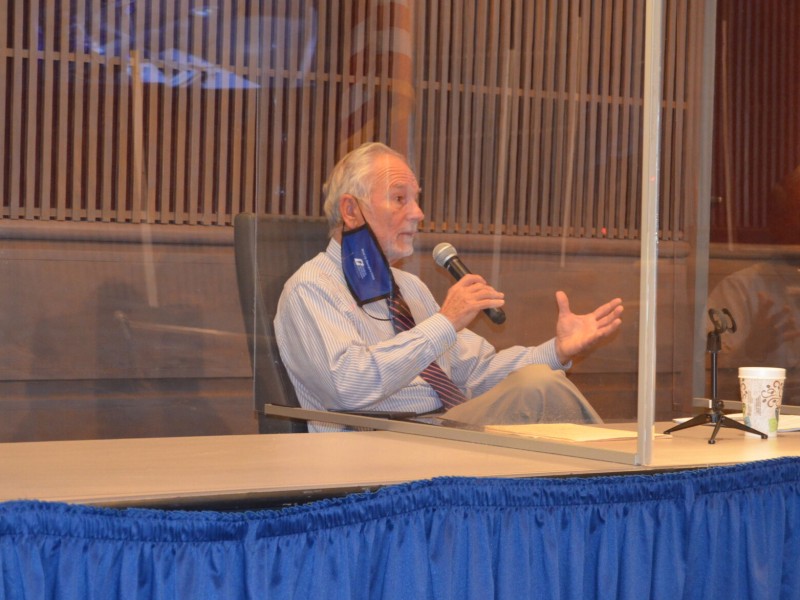
Staff Photo: Alan Mauldin
By Alan Mauldin
[email protected]
ALBANY — After one tie vote and a bit of confusion, the Albany City Commission approved on Thursday an ordinance that will guide how it conducts meetings.
Some of the more significant changes involve the time allotted to speakers and a prohibition of commissioners recording or streaming meetings online during commission sessions.
After initially deadlocking, with Commissioners B.J. Fletcher, Bob Langstaff and Chad Warbington voting in favor, Commissioner Matt Fuller, who was attending virtually, returned to the meeting. At that point, Warbington sought another vote prior to the end of the meeting.
“Absolutely not,” responded Commissioner Demetrius Young, who was joined in opposing the measure by Commissioner Jon Howard and Mayor Bo Dorough. “We have taken a vote on that. He was gone. This is tantamount to going back and changing the vote after it had already failed.”
Fuller participated in an earlier portion of the meeting during which commissioners discussed the selection of a finalist for the city manager’s position.
The spotlight then turned to City Attorney Nathan Davis, who said he knew of no reason commissioners could not vote on Warbington’s motion to reconsider the earlier vote.
“The question is whether … there can be another vote,” Davis said. “(Yes), otherwise it would be depriving him of his vote. He is now in attendance. The meeting has not been adjourned. He’s present.”
Expressing uncertainty with the answer, Dorough turned next to City Clerk Sonja Tolbert. Tolbert told commissioners that she makes note of votes taken when a commissioner is not in the meeting room, such as instances when a commissioner steps out to go to the restroom, when a vote is taken.
However, she said such an absence had not altered the outcome of a vote, to her recollection, in previous instances.
Dorough expressed reservations but allowed the move to reconsider the vote. Fuller joined Fletcher, Langstaff and Warbington in approval and a subsequent re-vote on the rules passed with the same commissioners voting in favor.
Young had previously criticized some of the rules, which he said would silence community voices.
Among the provisions are one that allows a resident speaking on an item not on the commission agenda five minutes to address the commission, with five minutes for commissioners to ask questions of the speaker.
Previously there had been no time limit on the question-and-answer session, and at times a single speaker’s time for comments and answering questions had approached 30 minutes in some instances.
Speakers addressing agenda items are allowed three minutes, with no period given for questions, under the rules outlined in the ordinance.
On Thursday, Young questioned Barry Brooks, assistant to the city manager, on the provisions prohibiting recording and streaming meetings and others that prohibit a commissioner from bringing individuals who are not city employees into the Government Center after business hours or from bringing a non-family member to conferences.
Brooks told Young those provisions were not among the “best practices” he gleaned from other cities’ rules and the Georgia Municipal Association, as was the case with the other provisions. In addition to those sources, Brooks said, he also had two sessions with each commissioner to get their input on the document.
Young has said those prohibitions prevent him from bringing outside experts into the process to assist him to give expertise he needs to make decisions on issues.
Author

Related Articles
Albany Herald – June 6, 2026
The boy who drove the bus and helped,,, Property owner removes debris from northwest… POWERFUL PERFORMANCES DRIVE THEATRE…

Classifieds – June 6, 2026
CLASSIFIEDS: JUNE 6, 2026

Squawkbox – June 6, 2026
SQUAWKBOX: JUNE 6, 2026

