
CAR REVIEW: Hyundai ushers in its EV era with the superb Ioniq 5
David Dewhurst Photography
By JOE PARKER
Hyundai is set to introduce over 20 EVs globally by 2025, and after a week behind the wheel of the new Ioniq 5, I can only hope it’s a harbinger of things to come.
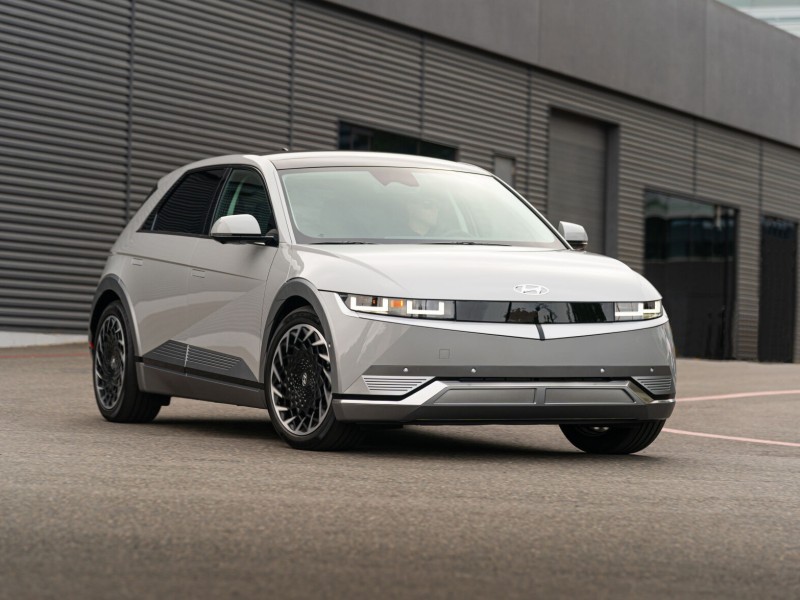
The all new and all-electric Hyundai breaks onto the scene with an eye-catching exterior, top-tier quick charging capability, an estimated range of up to 303 miles, a heavy helping of standard features, a roomy cabin and an overall size that will fit the needs of commuters of families alike.
The newcomer to Hyundai’s stable is based on the “45 Concept” from 2019, which took its cues from the Hyundai Pony Coupe concept designed by Giorgetto Giugiaro in 1974.
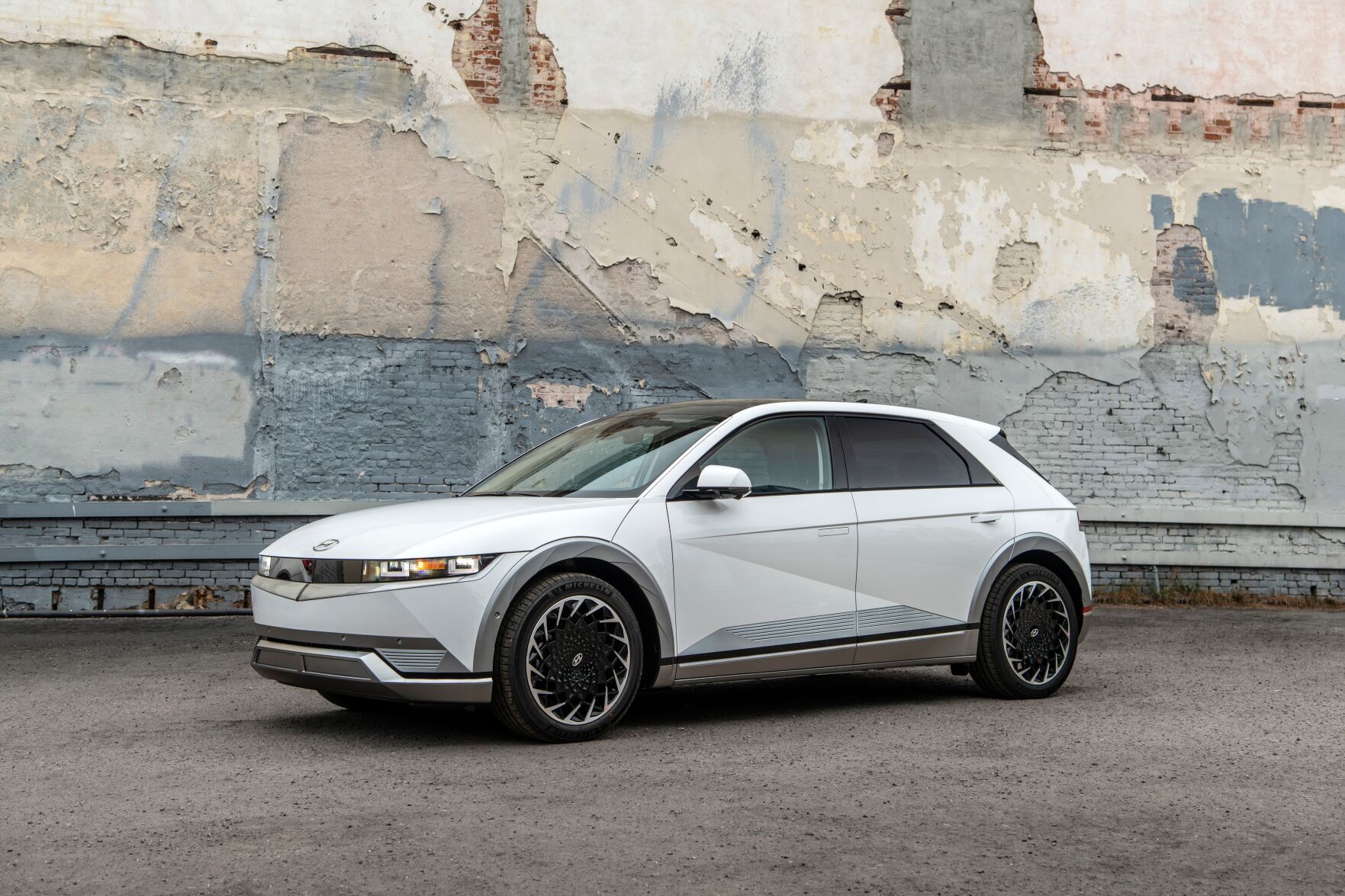
It is never a bad idea to take your inspiration from the man who designed the Maserati Merak, Lotus Esprit, Mk 1 VW Golf and Ferrari 250, and Hyundai’s current team of designers have brought the Concept 45’s futuristic looks and engrained them into the Ioniq 5. While plenty of EVs today attempt to look like “regular,” gas-powered cars that need to include grilles and cumbersome engines, Hyundai’s designers and engineers seemingly said, “If EVs are the future, let’s make ours look it came from tomorrow.”
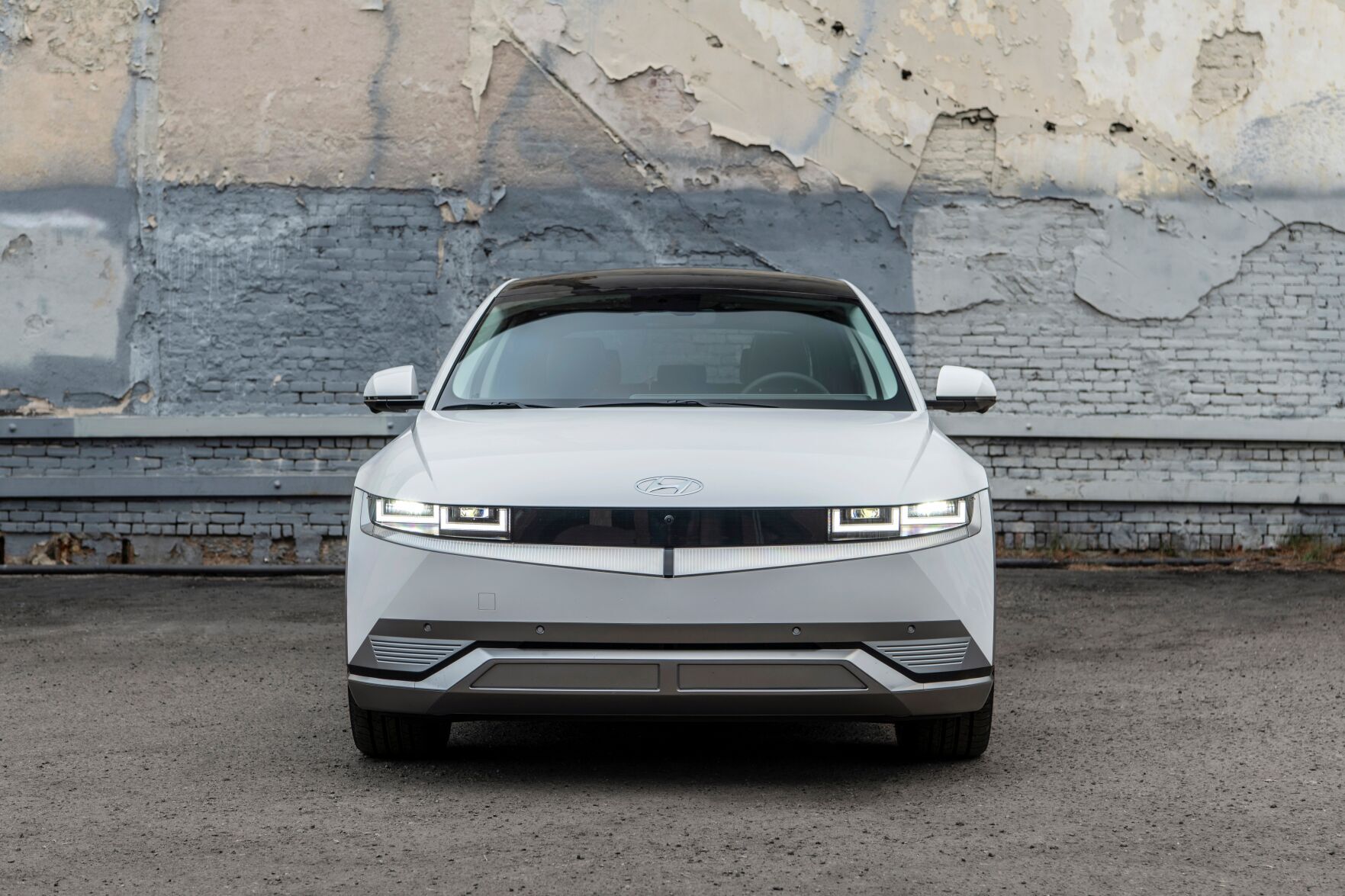
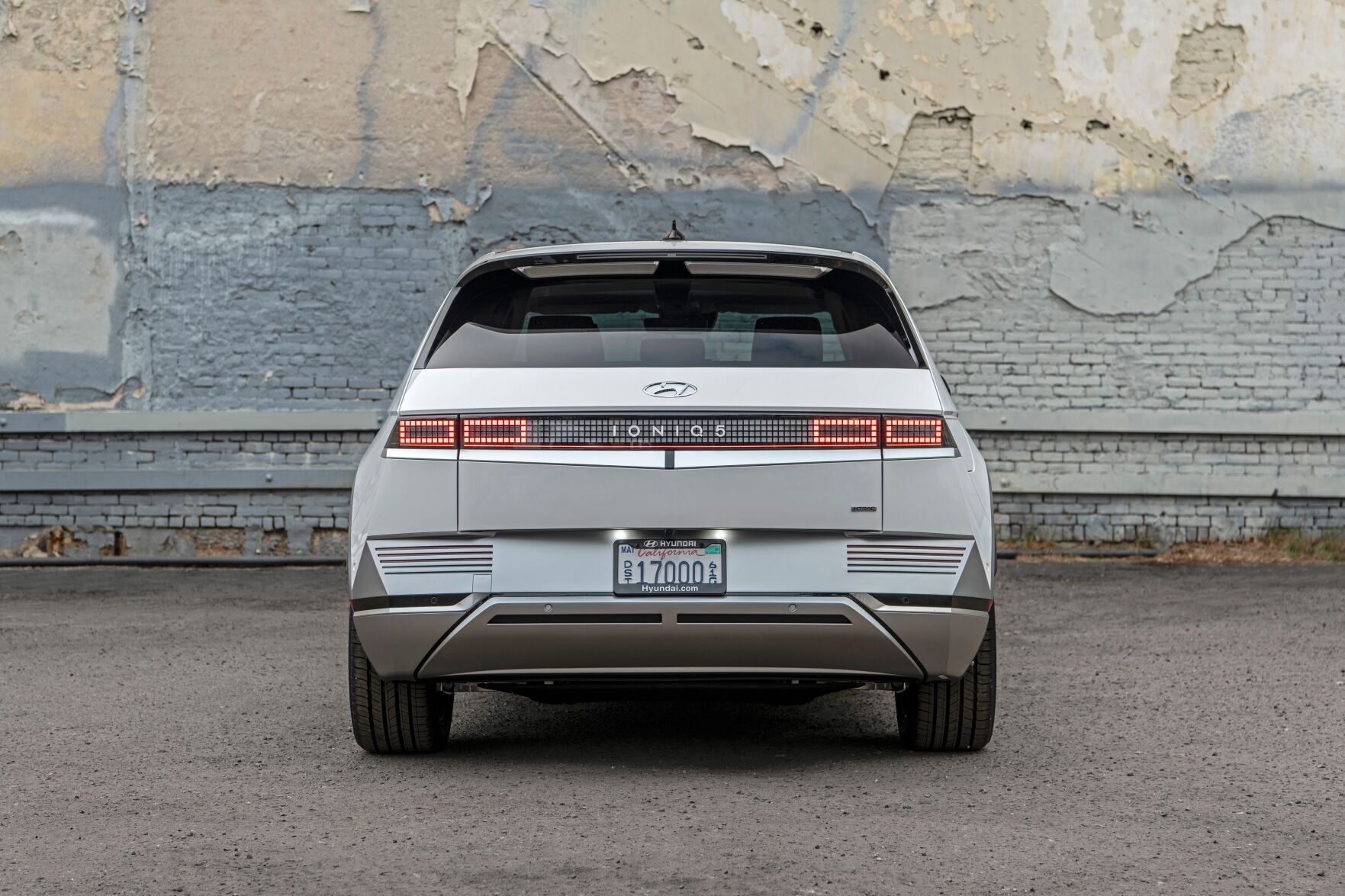
With sharp angles all around, textured wheel arches, a V-shaped front bumper, unique, razor-thin “inlets,” flush door handles and pixel LED rear lighting, the Ioniq 5 bears the look of something out of a sci-fi movie from the 80’s while still looking futuristic by today’s standards. And it is exceptionally striking in “Shooting Star” gray matte paint.
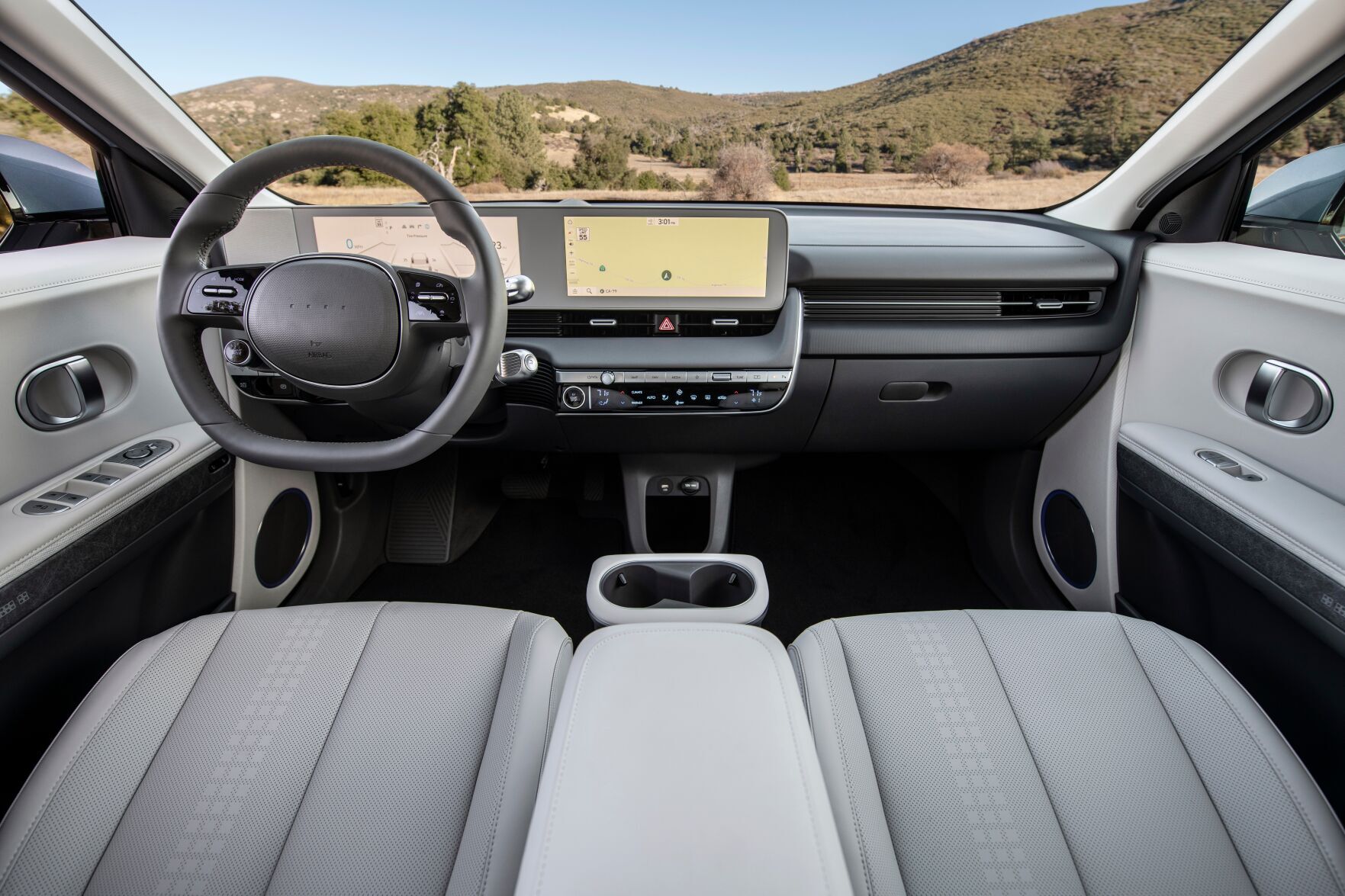
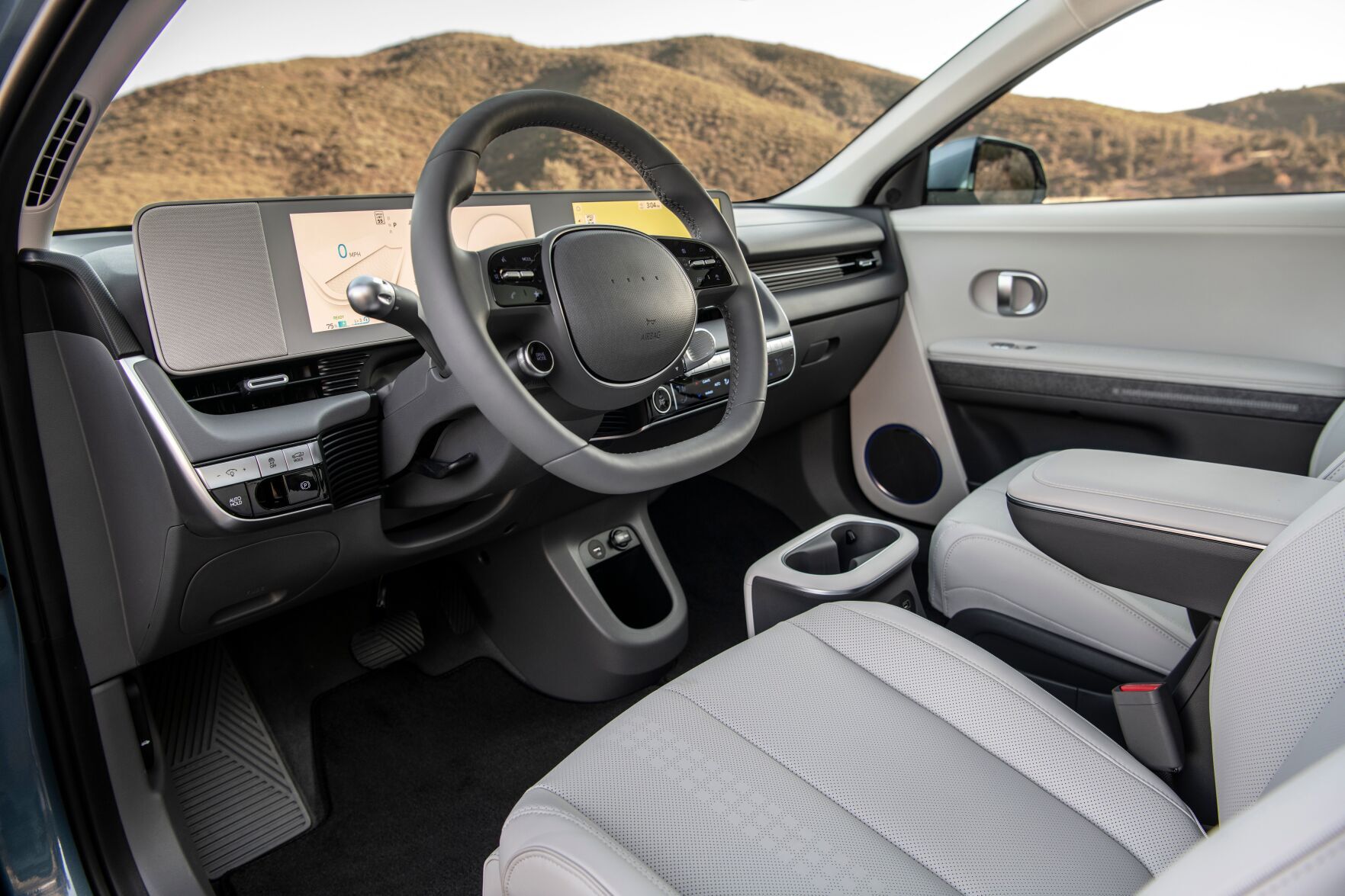
The interior also takes its cues from the Concept 45, though the swiveling chairs and suicide doors were left on the cutting room floor. The cabin isn’t as fetching as the exterior would suggest, think of a modern airport longue with ambient lighting, but it does carry an airiness fitting of an EV with dual, 12.3-inch screens perched on a dash featuring slim vents and capacitive buttons.
The Ioniq 5’s wheelbase is longer than the three-row Hyundai Palisade, but it has a lower height and is shorter overall, hitting a sweet spot of being practical for families without the need to shoehorn it into a garage. Front passenger space is ample with a moveable “island” center console, and those in the back are well accommodated with sliding rear seats.
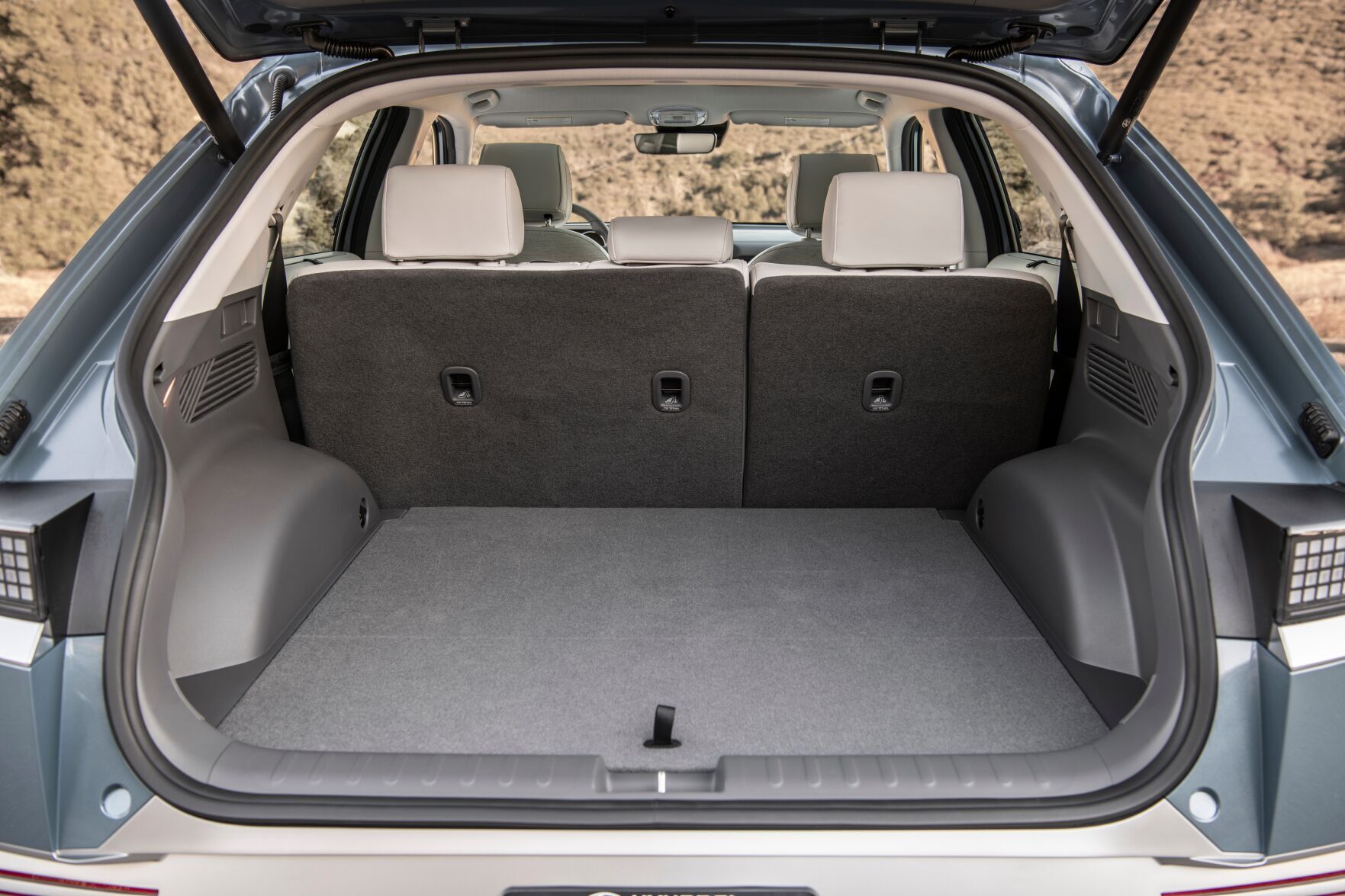
Though the Ioniq 5 offers notably less cargo space than its midsized Tucson stablemate, its 27.2 cubic feet behind the second row and 59-cubes with the rear seats tucked away still provides enough room for most daily needs.
All models are well equipped, but SEL trim provides generous bang for your buck with added features like a hands-free liftgate, leatherette seating, wireless device charging, heated steering wheel and second-level smart cruise control.
Top trim Limited models get a panoramic sunroof, ventilated front seats, a fantastic Bose sound system, surround view monitor and blind-spot view monitor.
Limited trim also receives Remote Smart Parking Assist, which allows users to use the key fob to remotely park or drive the Ioniq 5 out of a tight parking space without the embarrassment of trying to squeeze yourself in when you can’t fully open the door.
The Ioniq 5 debuts with three powertrains. RWD standard range models are fitted with a 125-kW motor good for up to 220 miles on a single charge. Those seeking the most power should consider AWD models powered by dual motors for a total output of 320-hp and up to 256 miles of range.
Road-trippers can get the most distance on a single charge with RWD long-range models. Available in all three trims, these models employ a 168-kW motor that serves up 225-hp and an impressive range of up to 303 miles.
In my experience, road trips are the biggest deterrent for the EV-curious taking the electric plunge. But the Ioniq 5 counters that with ultra-quick charge times, providing you have the fast-charging infrastructure where you need it.
Standard in all models, the Ioniq 5 comes with 400V and 800V charging. Hyundai estimates a 10 percent to 80 percent charge in about 25 minutes at 400V and just 18 minutes at 800V. You can easily spend more time that that ogling the ridiculous things — like a glitter-ridden Last Supper 3D model — sold at roadside truck stops.
At home, the Ioniq 5 will go from 10 percent charge to a full battery in about seven hours with a 240V charge, and there are plenty of ways to control charging and rates, including Hyundai’s Bluelink app.
On the daily drive, the cabin is the kind of whisper quiet this father of a toddler dreams about, and uneven tarmac and potholes are ironed out by the balanced suspension.
My Limited trim tester was fitted with AWD, scooting the Ioniq 5 rapidly from a standstill and through corners. Instant power delivery and a composed ride allows the Hyundai to hustle, and grip is impressive for the AWD’s 2.2-ton curb weight. There is fun to be had, but the steering is feathery and lacks feel.
Lackluster steering feel is one of just a few complaints I can lodge at the Ioniq 5. Overall, it is extremely pragmatic both in everyday use and when its battery needs juicing. It sports engaging looks, a long list of standard features, a quiet and comfortable ride, more-than-sufficient power and cornering ability all at an agreeable price.
The Ioniq 5’s looks suggest “car of the future,” and it is easy to hope its performance and practicality are signs of the EV road ahead.
Pros and cons
Pros: Futuristic looks, roomy cabin, rapid charge rates, up to 300-mile range
Cons: Ride quality can be rough, steering feels disconnected, upper trims surpass $50K
Overall: The Ioniq 5 looks futuristic, and with its fast-charging, extensive range and real-world practicality, there is hope it plays the part of future EVs.
Starting prices
SE standard range: $40,925
SE long range: $44,895
SEL RWD: $47,145
SE AWD: $48,395
SEL AWD: $50,645
Limited RWD: $51,845
Limited AWD: $55,745
EV range
RWD standard range: 220 miles
AWD: 256 miles
RWD: 303 miles
Related Articles

Albany Herald – July 11, 2026
Putting on the Ritz… Food, mini menagerie provide… Albany City Commission set to vote on… Following Lee’s lead, Terrell County hits…

Classifieds – July 11, 2026
Albany Classifieds and Legals: Real Estate; Merchandise, Misc…

Small actions can help save big on utility bills
The high temperatures of July and August can bring scorching utility bills as air conditioners hum to keep houses cool. Albany Utilities Residential Conservation Auditor Willie Jackson offered some tips on making summer cooling bills more manageable.
