
Georgia communities mobilize against expansion of foul-smelling, wood-burning energy
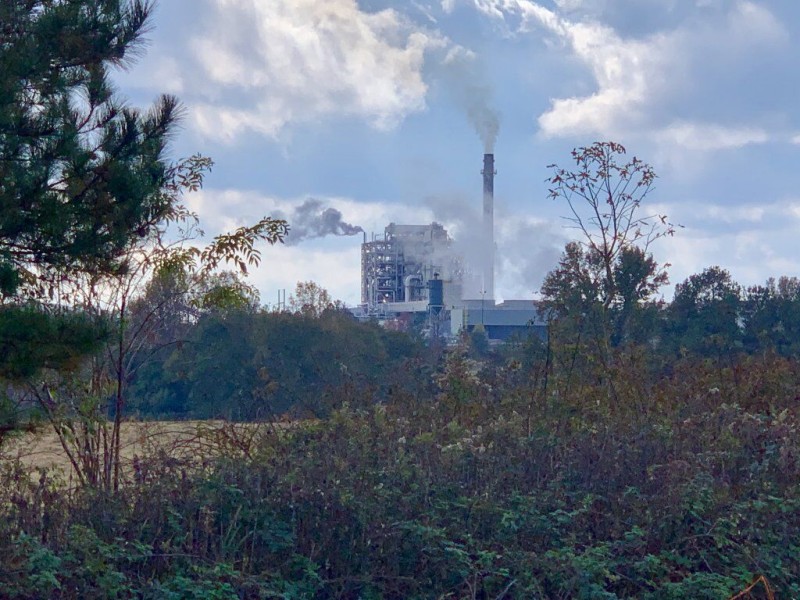
Georgia Recorder (file)
By Stanley Dunlap
Georgia Recorder
ADEL — A group of residents and environmentalists are fighting to prevent the world’s largest wood pellet plant from coming to a predominantly black and Hispanic community in south Georgia.
The Southern Environmental Law Center and Concerned Citizens of Cook County are asking a judge to revoke an air quality permit for the planned Adel plant on the grounds that the state Environmental Protection Division did not take into consideration the serious health risks that the pollution would pose to those living closest to it.
The Georgia Office of State Administrative Hearings could hold a hearing on the appeal before the end of the year for what community advocates say is another industrial project that would perpetuate a legacy of environmental injustice.
The plans call for Georgia-based Spectrum Energy to build a plant capable of producing 1.3 million tons of wood pellets annually, a product that is most commonly shipped overseas where the pellets are burned to generate electricity.
Wood-burning plants have gained support as a source of biomass energy and new jobs that support the forestry industry. Georgia Power, the state’s largest utility provider, has shifted some of its energy capacity away from coal and into the fuel coming from trees.
But its detractors say the plants aren’t worth the potential problems for people who are most vulnerable to the pollution and foul odors.
About a mile away from the proposed Spectrum plant is the future home of another wood pellet manufacturer where Renewable Biomass Group plans to produce 450,000 tons of pellets annually.
“What happens when you’re processing all this wood, it produces a ton of dust in this fine particulate matter that when you breathe it in can be dangerous,” Jennifer Whitfield, an attorney for the environmental law center, said. “(Renewable’s plant) is about a mile out from this sort of dense neighborhood in Adel, but it’s kind of shocking how nestled in the community Spectrum is proposing to be.”
Located about 25 miles north of Valdosta, Adel is a small city with about 5,500 residents and a railroad track separating the white and more affluent east side from the west, where the majority of residents are minorities. The west side has a long history of pollution-producing industrial sites.
Spectrum plans to open its Greenfield pellet plant on the same site of a former particleboard plant that produced large volume of pollutants.
Another biomass company has purchased a neighboring property that was formerly a lumber company where the groundwater was still contaminated in 2015, more than a decade after it closed.
And in 2020, the Adel City Council, in a split vote, approved rezoning property for the Renewable wood pellet facility despite the campaign by the Cook citizens group and other organizations to block the project.
In the petition opposing the Spectrum plans are descriptions from residents about how they are impacted by industrial sites located in their backyards. One woman said she doesn’t like going near a plant because of the amount of exhaust and dust, while another woman who has asthma said she also suffers from chronic migraines that she believes is connected to the nauseating smell of gas emitted from a plant.
And Adel City Councilwoman Celestine Hayes says that the water at her home and church smells like rotten eggs and that she worries about her husband, who suffers from chronic obstructive pulmonary disease, and other neighbors with health problems.
Treva Gear, who founded Concerned Citizens of Cook County in 2020, said the city’s west side is a blue-collar community where residents are already more exposed to the toxins in air and water from living close to smokestacks and warehouses that dot the landscape.
“Clean air is a civil right and the color of an individual’s skin, their economic level or what side of a railroad track they live on should not cause them to be overburdened by pollutants,” Gear said. “Everybody has the right to life, liberty and pursuit of happiness, but how can we pursue happiness when we struggle to breathe?”
Meanwhile, a group that successfully lobbied for a new state law last year to ban energy-producing plants from burning creosote-treated wood continues its fight against two wood-burning operations in Franklin and Madison counties in northeast Georgia.
Gina Ward, a leader of Madison’s clean power group, says this is another way to inform the plant owners and local leaders that the people are keep a watchful eye over the pollution coming from plants. Before the wood pellet plant opens in Cook County, Ward recommends residents get outdoor air quality monitors.
“I know exactly what they’re worrying about and it’s a real threat to their community,” Ward said.
Author

Related Articles

Lee County homeowners have until Aug. 1 to claim property tax exemptions
Lee County homeowners have until Aug. 1 to apply for homestead and other property tax exemptions for the 2026 tax year, a deadline members of the Lee County Board of Tax Assessors highlighted Monday as they encouraged eligible residents to take advantage of available tax relief.

Dawson police arrest wanted suspect after Flock Safety camera alert
According to police, May drove into the yard of a nearby residence instead of complying with officers’ commands. He then exited the vehicle and ran into the home on foot.
Lee County stands alone without E-SPLOST. Here’s what that means for schools, taxpayers and the county’s future
Following the defeat of its referendum, Lee County became just the second of Georgia’s 159 counties without voter approval for an active ESPLOST, leaving the school system without the state’s primary local funding source for major construction, renovations, school buses and other capital improvements.
