
Albany City Commission hears analysis of $316.2 million budget
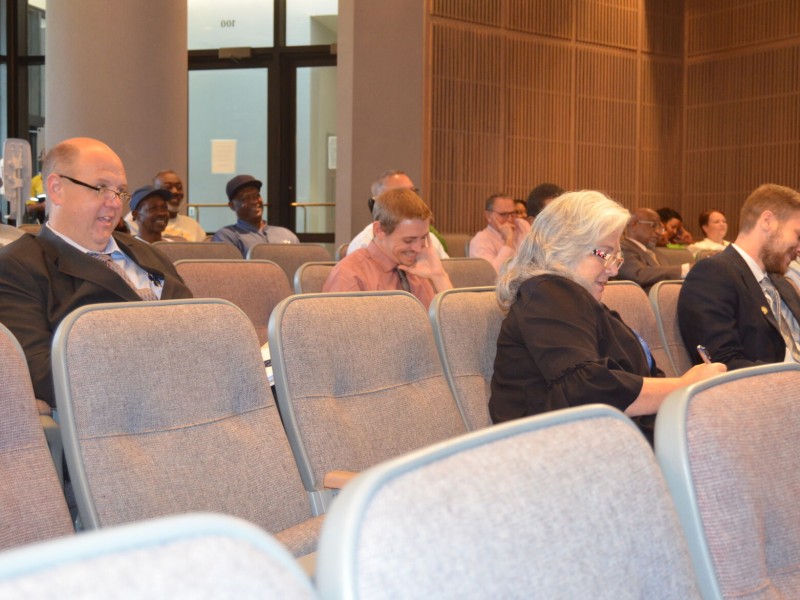
Staff Photo: Alan Mauldin
By Alan Mauldin
[email protected]
ALBANY — Albany City Manager Steven Carter presented a $316.2 million budget to city commissioners on Tuesday, with the spending plan for the 2023-2024 budget year beginning to take final shape before final approval later this month.
The budget includes a 15% pay raise for Albany police officers from the rank of major down, and public safety spending makes up 58% of the $72.1 million, or $41.5 million, of the general fund budget. The police budget is 52.6% of public safety spending at $21.7 million, followed by $17.4 million — 41.5% — for the Albany Fire Department.
All of the city’s employees would receive a 4.5% cost-of-living adjustment under the spending plan presented by staff. The city also is looking at paying workers a one-time bonus at the end of the year, which will come from unspent funds due to some jobs being vacant.
The budget for the Energy Enterprise Fund, which includes utility revenues and expenditures, comes in at $157.9 million in the overall budget recommendations that Carter made to the Albany City Commission during a Tuesday work session.
That includes increases to utilities fees, including the cost of electricity and garbage rates, expected to cost the average household $3.84 more per month.
Commissioner Vilnis Gaines said that the increase will be a hardship for elderly residents of the city, and Carter said that cushioning the blow to the elderly “is one of the things we’re looking at.”
The budget calls for transferring $18 million in funds from the utility fund to the general budget fund. The city does not anticipate increasing property taxes, and the anticipated revenues are expected to cover all costs without using city reserve funds to balance the budget, Carter said.
“We can’t balance the budget on the backs of (ratepayers),” Commissioner Demetrius Young said. “We’ve got to give these people who are struggling with utility rates some relief. What I’m really looking for is some acknowledgement in the budget that we are looking after ratepayers
“We’re making a profit. When will the utility customers receive a break? If it’s not based on consumption, basically it’s a tax.”
The city has programs to help struggling customers with their bills, Carter said.
The city manager said that the city also needs to keep a certain amount of cash on hand to deal with potential disasters, money that can be reimbursed through the Georgia Emergency Management and Homeland Security Agency and the Federal Emergency Management Agency.
“We are a storm-susceptible town,” he said. “The way GEMA and FEMA pays you is they reimburse you. You have to have cash on hand to take care of things before you’re even considered for reimbursement.”
Utility rates have not been increased in seven years, Mayor Bo Dorough said, and at one point last year the city was paying more for natural gas than it was charging to consumers.
“If we weren’t transferring this $18 million, we wouldn’t be giving anybody a raise,” he said. “If we didn’t have this, this city might be in a serious freefall.
“At the end of the day, you can compare our utilities to Mitchell EMC, to Georgia Power. This $3.84 increase per month is less than the increased cost” for the utility fund.
The focus of the 2024 fiscal year that begins on July 1 is to strengthen the city’s infrastructure, Carter told commissioners.
“The biggest thing we’re fixing this year is our infrastructure,” he said.
The 15% pay increase for police officers, which would peg starting salaries for new officers at $51,000, could cause some morale issues, the city manager said.
“Would a 15% pay increase for our officers have a positive effect?” he said. “Absolutely. Would it have a negative effect on the rest of the employees? Absolutely.”
A pay study that would cover other departments is being developed, and Carter said he will bring a plan back to commissioners later that will include recommendations on adjusting pay for other city workers.
Author

Related Articles
Albany Herald – June 6, 2026
The boy who drove the bus and helped,,, Property owner removes debris from northwest… POWERFUL PERFORMANCES DRIVE THEATRE…

Classifieds – June 6, 2026
CLASSIFIEDS: JUNE 6, 2026

Squawkbox – June 6, 2026
SQUAWKBOX: JUNE 6, 2026

