
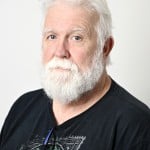
Henry Mathis says he has the vision to bring Albany back to prominence
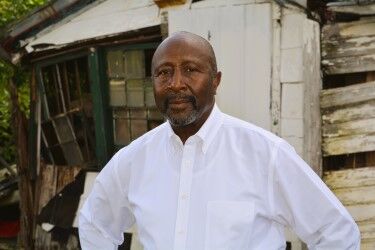
Staff Photo: Carlton Fletcher
By Carlton Fletcher
[email protected]
ALBANY — Henry Mathis has been around long enough to understand the realities of politics. One of them that has morphed into something of a mantra for the man who wants to be Albany’s next mayor is: “In politics, timing is everything.”
Mathis, who served on the Albany City Commission before running into legal issues that have kept him on the outside looking in for the past several years, says he feels the timing is now right for a Mathis administration prepared to return the city to its past glory.
“I admit, I have offered for the mayor’s office prematurely (including four years ago), when it was not my season,” Mathis said of a race in which he barely missed a runoff slot. “I have so much love for this city, I wanted to be in a position to help make it the great city it could be once again. But it just wasn’t my season.”
Now, though, Mathis said he feels the timing is right for his return to the city government.
“Albany is in a position now where it needs leadership with vision,” he said. “If given the opportunity, I think I can bring that vision.”
The educator/pastor said he’s maintained relationships with leaders in the community who’ve helped him stay informed on issues that have impacted the city, which has seen a dramatic decline in population over the past two decades.
“Crime, I don’t see any movement on the crime here,” he said. “The one thing we must do as leaders is provide a community that people feel safe in. Crime is everywhere, but when it reaches the level that it has here, it hampers economic opportunity. People, businesses, they don’t want to come somewhere that is not perceived as safe. A lot of our problems come down to manpower, and that is primarily a money issue.
“A mayor has to have a police force that will serve, protect and interact with the community. I believe we can help do that by re-establishing community-oriented policing. You have people now who don’t feel it’s safe to leave their homes or who fear their family will get caught up in drive-by shootings. We have to do what it takes to make our community safe again.”
In addition to beefing up law enforcement, Mathis said the city’s roughly 1,000 employees should, first, receive adequate pay for the work they perform and, then, be held accountable for providing the kind of customer service that taxpayers expect.
“First of all, a Mathis administration will be fiscally conservative,” he said. “We’ll spend taxpayers’ money wisely, and we will raise expectations of our employees. I checked in April, and the city had around 892 full-time employees. One hundred ninety-two of those people make less than $25,000. And yet we have a mayor in office (Bo Dorough) who just voted himself a 44% raise, even though he works only part-time.
“We have people working in a utilities department that brings millions of dollars into the city each year, and they’re not making a liveable wage. We expect them to do their jobs to the best of their ability, but before we hold them accountable for the services they provide, we need to pay them a decent salary.”
Mathis said part of the divisiveness that exists in Albany and Dougherty County is that the leaders on the three taxing authorities in the county — the Albany and Dougherty County commissions and the Dougherty School Board — work independently rather than as collective representatives of their constituents.
“We have these different groups talking with our legislative delegation about our needs, but I think we could be much more effective, and get a better response from our delegation, if we worked together,” Mathis said. “I believe the leaders of the city commission, the county commission, the school board and the chamber should meet at least quarterly and come up with a truly comprehensive plan that we could present to our representatives.”
Mathis said it was former Albany Mayor James H. Gray who became a “one-man wrecking crew” that led to the demise of the city’s downtown district in the mid-’80s and that Mayor Larry Bays attempted to bring the district back through the public/private Albany Tomorrow development group. But lack of vision saw the impact of Albany Tomorrow gradually dwindle to nothing.
“We have to bring foot traffic to downtown, and we can do that by expanding the footprint of Albany State University in the district,” Mathis said. “We can start the process by expanding residential opportunities in the district. If more people are living in an area, it’s going to attract stores, retail, bars, eateries.
“We have to wrap our arms around Albany State and embrace this institution that has a more than $300 million impact on this community every year. We have to utilize the river that runs through the city. Other such cities come alive at night with activities along the river. Ours shuts down.”
Mathis also said the city should embrace its diversity and elect representatives of all races, not just the majority black population.
“We don’t need all black or all white government agencies,” he said. “We need to embrace all of our people. I have business connections in India and China, and when they’re looking at locating businesses in our area, I need to show them that we embrace their citizens when they ask me how many of their countrymen are involved in our government.”
All of which, Mathis says, comes back to vision.
“Bo (Dorough) and I are friends; we’ve served together on the city commission,” Mathis said. “But my concern is that visionary leadership is lacking in a lot of areas. These conversations about (crumbling) infrastructure, separation of sewer and stormwater, flooding … we’ve been talking about this for more than 20 years. Our mayor should have been in talks with leaders in Atlanta and D.C., seeing how they could help us.
“It’s been a lack of vision. That’s why I want to be mayor. I believe I have the vision that will help us become the greatest city in the South; yes, better than Atlanta and Miami. I’ve got that vision, the kind that will bring people and businesses back to Albany. That’s a good place to start.”
Author
Related Articles

Chehaw looks to future that includes eagles, cougars, outdoor recreation
Chehaw Park & Zoo has plans for new exhibits, a play Park and creating an outdoorforest recreational area in the works.
Downtown Albany RiverQuarium to go through assessment process to address aging animal support system
“It’s not glamorous, but it has to be done. We understand that our place downtown is important, and all the things they have proposed are only going to help us.”

Fawohodie looking to make positive difference for youngsters in Albany area
The Fawohodie organization is looking to make a difference for underserved and at-risk youngsters in Albany.