
Terrell County sees influx of development after decades of stagnancy
Staff Photo: Lucille Lannigan
By Lucille Lannigan
lucille.lannigan@
albanyherald.com
DAWSON — Eighteen new businesses in the last three years, 300 new jobs and about $12 million in business investments are just some of the numbers that emphasize Terrell County’s recent skyrocketing development.
Terrell County Commission Chairman Wilbur T. Gamble said there’s no question the county is growing economically. In fact, Gamble said, it’s the largest growth the county’s seen since the early 1970s.
The economic growth has led to population growth as well, the commission chairman said. Terrell gained 400-500 people from 2015 to 2020, and despite a slight decline in the last U.S. Census, Gamble said he believes the growth will continue.
“If you look at southwest Georgia as a whole, there were only three out of 27 counties that didn’t have a loss in population that was fairly significant,” Gamble said. “We were one of those.”
The southwest Georgia county is neighbored by counties that follow a regional trend of declining population and stagnant development. Dougherty, Randolph and Calhoun counties are just some of its neighbors experiencing this shrinkage. To Terrell’s east, Lee County was named one of Georgia’s fastest-growing communities after the 2000-2010 census. County and city officials in Terrell are hoping their county follows those footsteps.
Ace Hardware, Jack’s Family Restaurant, Subway and a new Albany Area Primary Health Care Center are some of the recent developments the county has seen. Locstop, a new travel center, was the biggest investment in the area so far, an $8 million project by the Brad Lanier Oil Company.
The site of an old Piggly Wiggly was just purchased, and a new grocery store will be built there soon. Negotiations to find a replacement for the old Tyson Plant in Dawson are underway, the chairman said. A fire in 2018 caused the poultry plant to close and cost the city 300 jobs.
A group is interested in putting in a similar plant at the location, Gamble said.
Finding an occupant for the plant could create as many as 300 more jobs — some technical and high-skilled, Tracy Hester, Dawson’s City Manager said. Negotiations could be completed within the year, he said.
Gamble chalks the growth up to several factors.
First, the county boasts the lowest tax millage rate in the region. It hasn’t increased the rate in 20 years, and county officials don’t plan to, he said. For the 2023 tax year, the county millage rate will be set at 13.49 mills, according to a document given to The Albany Herald.
“You come to Terrell County, you build a $300,000 house and then you compare it to what you’ll pay for the surrounding counties of Lee or Dougherty or even from the smaller counties, and you’re probably gonna pay $1,500 to $2,000 a year or more in taxes,” Gamble said.
Next on the list is community and governmental relations, which the chairman said exists a harmony. The city, county and school board work together to benefit the community.
Michael McCoy, who began working as Terrell County’s interim County Administrator in September, said he’s seen effective board leadership all around.
Leaders are community-focused and allow leadership to do what’s necessary to achieve goals, McCoy, the former Dougherty County administrator, said.
“The personnel are allowed the freedom to be creative, to provide input, to do things they haven’t done before, to propose exciting opportunities and events for the community,” he said. “I’m very encouraged by what I’ve seen.”
The community sees it, too, McCoy said. It’s coming together collectively for the first time in years and is excited about the growth, he said. For the first time in about a decade, Gamble said he too is hearing people speak positively about the county.
“I’m seeing … a lot of people talking more in terms of their children coming back and living in Terrell County where 10 years ago … they didn’t really see it as a place you would want to be,” Gamble said. “There’s an enthusiasm I’ve seen from people from all walks of life.”
Third on Gamble’s list is Terrell’s geographic situation. The county sits close to all of the major economic engines in southwest Georgia, he said. It’s about 20 minutes away from major towns.
U.S. 82 links the county to Albany and sees about 15,000 cars a day, Hester said. Now, he says, the challenge is turning Terrell from a road stop to a destination. That focus begins in Dawson — the county seat.
When Hester took on the city manager’s position about four years ago, he entered a city where “there was nothing that didn’t need touching up,” he said.
“Prior to 3 1/2 years ago, nothing had happened here for 20 years,” Hester said. “There was no growth, no improvements of any kind. I came here with a plan, and about 2 to 3 weeks in I threw that out the window — not realizing just how bad the situation was for the city.”
Poor infrastructure, lacking employment opportunities, misappropriations of funds, missing utilities collections and a stagnant Chamber of Commerce were just some of the factors in what Hester called a disaster.
“The council was weak, and the mayor was weak,” Hester said. “Pretty simply it was just poor management and poor administration.”
Dawson’s city leadership history is rocky.
In 2016, former Mayor Christopher Wright was indicted on rape and child molestation charges. In 2018, former City Manager Barney Parnacott was arrested and charged with one count of aggravated sodomy.
These things are in Dawson’s past, Sundie Avery, the city’s code compliance officer and planning and zoning director, said. The city is moving forward, and it’s already seeing major changes.
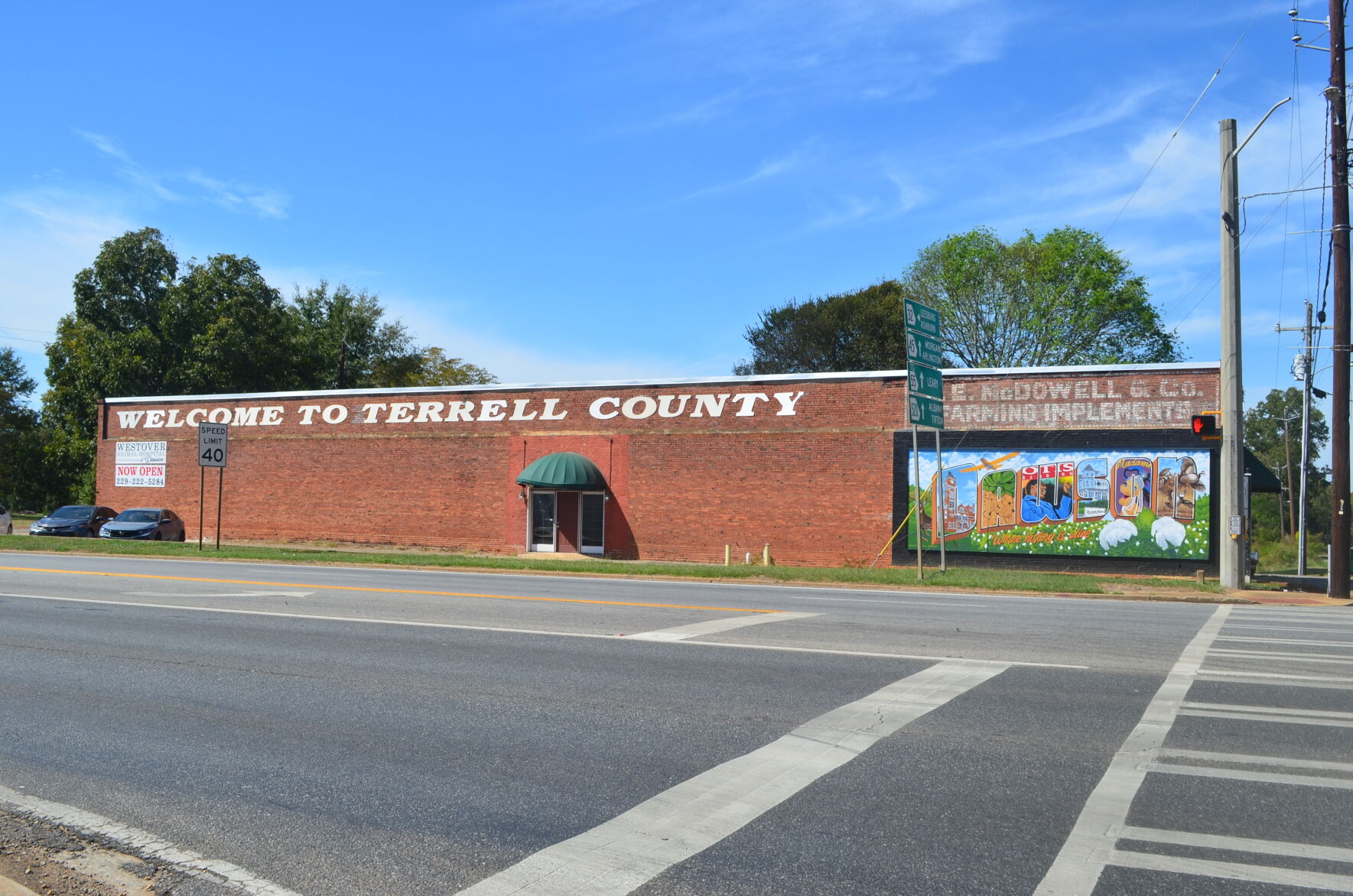
Many of these changes lie in the revitalization of Dawson’s downtown.
Shawn O’Connnor, president of Dawson’s Downtown Development Authority, said he believes the health of a city’s main street reflects the health of the entire community. A healthy Main Street is the key to the whole city — the whole county.
“When you go to visit anywhere, it doesn’t matter how many strip malls or Walmarts or whatever you have outside town … people are always going to come down and look at your main street,” he said.
So, he’s striving for development of the historical downtown.
A key part of this is the Georgia Rural Zone Program. The program, which is run by the state’s Department of Community Affairs, aids in the development of rural zones by offering tax credits to businesses and investors within the zone. The hope is to create an incentive for job creation and private investment in small, rural downtown areas, which are experiencing economic distress, the program’s site reads.
The program awards 10 communities each year. Dawson’s five years with the program began in January. It now allows businesses within the zone to receive a 25% tax credit if they create two new jobs in the historic downtown, a 25% tax credit to buy a building, 30% state income tax credit to renovate the building and a $2,000 employee tax credit, O’Connor said.
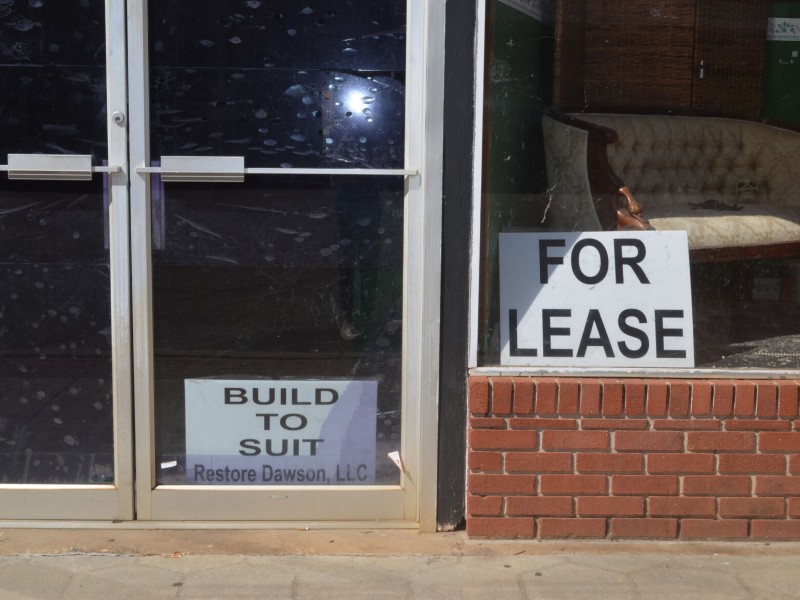
Dawson already has seen 12 properties in its historic downtown sell as a result. Wealthier investors now look beyond just U.S. 82 to invest in property. They are buying up and renovating spaces downtown, he said.
The downtown will look different six months or a year from now, O’Connor said.
“Once you pull onto that main intersection there on Main and Lee, if you can look around and see three bright spots, it’ll be a domino effect,” he said.
Growth in downtown Dawson would have an infectious effect on other Terrell communities, O’Connor said.
“Once we get our Main Street turned around, it will encourage people to not only want to buy one of the old houses here and live here, but once it’s too pricey in our downtown … then they’re going to look at Sasser or Parrot for opportunities,” he said. “It’ll have a trickle-down effect on our smaller communities in the county.”
The next hurdle for Terrell County is housing and infrastructure to prepare for growth. With businesses and potential new industries come the need for housing.
It’s definitely an issue, Hester said. Dawson has a low housing stock, and the city is trying to work with property owners — especially farmers — to purchase land for potential subdivisions. Avery has worked to clean up and tear down dilapidated structures — creating infill housing locations.
With more housing comes the need for expanded water, sewer and gas infrastructure.
“If somebody came in and built 200 houses and needed those services, it would be a struggle for us,” Hester said.
However, he said, it’s a problem he hopes Dawson and Terrell County have to deal with soon.
Author

Related Articles
Albany recycling center enacts material separation rule
Mixed items will no longer be accepted at the Albany recycling center at its 2521 Meredyth Drive facility. Individuals will now be required to separate items befor they will be accepted.

Wild Game Dinner marks 34 years as South Georgia Scouting reaches for next generation
More than a century after organized Scouting first took root in Southwest Georgia, local leaders say the program is working to preserve its traditional mission while adapting to a new generation of young people.
Albany City Commission takes action on proposed downtown hotel, two theater renovation projects
“We’re taking the original building back to, hopefully, it’s glory days. One of the cool things about the project is we are going to restore the balcony. It’s going to have a balcony, so it’s going to be super cool.”
