
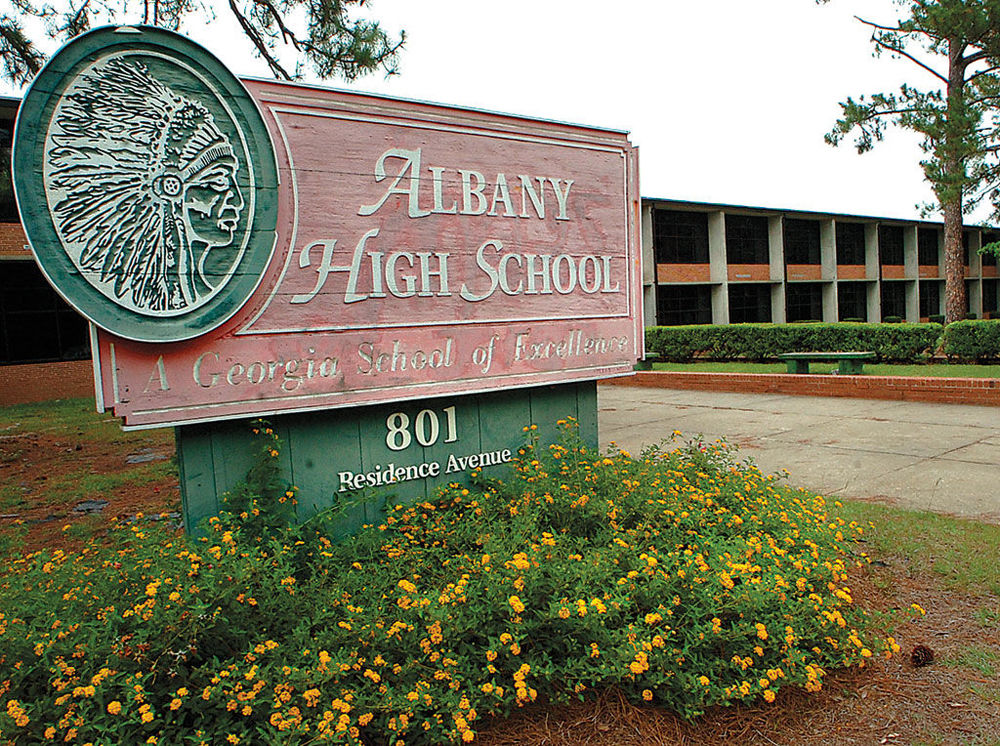
Split Dougherty County School Board votes 4-3 to close Albany High School
Board rejects Melissa Strother’s substitute motion to delay closing for a year

Diane Brown of Albany speaks before the Dougherty County School Board on Tuesday prior to the BOE’s 4-3 decision to approve a resolution to close Albany High School. (Staff Photo: Terry Lewis)
By Terry Lewis
ALBANY — The Dougherty County Board of Education on Tuesday voted 4-3 in favor of a resolution to close and repurpose Albany High School for the 2017-18 school year.
Board member Milton “June Bug” Griffin made the motion to approve the resolution and was seconded by James Bush.
Melissa Strother, in whose district Albany High is located, made a substitute motion to delay the transition until the end of the 2018-19 school year, but her motion was defeated 4-3 with Griffin, Bush, Dean Phinazee and Geraldine Hudley voting against.
The board then moved onto Griffin’s original motion. Griffin, Bush, Phinazee and Hudley voted in favor, with Strother, Robert Youngblood and Velvet Riggins voting against.
“Our job is to recommend what is best for our school system,” superintendent Butch Mosely said. “And we recommend realignment take place at the start of the 2017-18 school year. Any teachers who have contracts, we will honor those contracts.”
DCSS officials say that declines in student enrollment, underutilization of system facilities and increased financial challenges prompted them to develop a school consolidation and rezoning plan that will result in systemwide modifications.
Numbers were a significant factor in the proposal. Albany High, which has a student capacity of 1,064, had a December 2016 enrollment of 782. By comparison, Dougherty High had a capacity of 1,288 and an enrollment of 894, Monroe High had a capacity of 1,288 and an enrollment of 953 and Westover High had a capacity of 1,400 and an enrollment of 1,208.
System officials said the target is to get school capacity at 90 percent. Westover is the only school close to that, according to the December numbers, with 86 percent occupancy. Monroe was at 74 percent, Albany High at 73 percent and Dougherty at 69 percent.
The occupancy for the four high schools combined is 76 percent of capacity. If the school system had had the students in the three high schools that will remain under the proposal — Westover, Monroe and Dougherty — the combined occupancy percentage would have been at 96.5 percent last December.
“I don’t think anybody in this room wants to close Albany High,” Bush said. “But since 2004, we have lost $90 million from the state. We have $11 million in reserves from last year, and closing Albany High will save us $1.6 million a year. I don’t want to raise taxes, and we need to move on this today.”
Strother and Youngblood cited the cost savings in opposition to immediate closure.
“I don’t think we will immediately realize a cost savings of $1.6 million,” Strother said. “I thought we needed to wait a year to make the transition smoother.”
Youngblood agreed.
“There is no doubt Albany High needs to close; I just don’t think we will realize the immediate cost savings,” he said.
In April, the School Board agreed to consider a proposal recommended by Superintendent-designate Ken Dyer and staff to close and repurpose Albany High, dividing the students who would attend AHS among the district’s three other high schools. Southside Middle School also is to be closed and repurposed for the Commodore Conyers College and Career Academy under the plan, which would establish a direct feeder system for the three high schools.
The plan consolidates the administrative programs currently housed at the Walter Judge Academy and the Exceptional Students Program/Georgia Learning Resources System Complex on Corn Avenue into the repurposed Albany High building.
Dyer’s plan will utilize the facility’s auditorium, cafeteria and unused classrooms as a conference and meeting center.
Related Articles

Albany teen, 16, makes bodybuilding debut at Atlanta OCB Pro/Am
Crockett, an Albany resident and student at Albany Technical College Academy, placed second in the teen bikini division this weekend at the OCB Immortal Muscle Pro/Am Bodybuilding Competition in Atlanta, becoming the youngest competitor across all categories at the event.
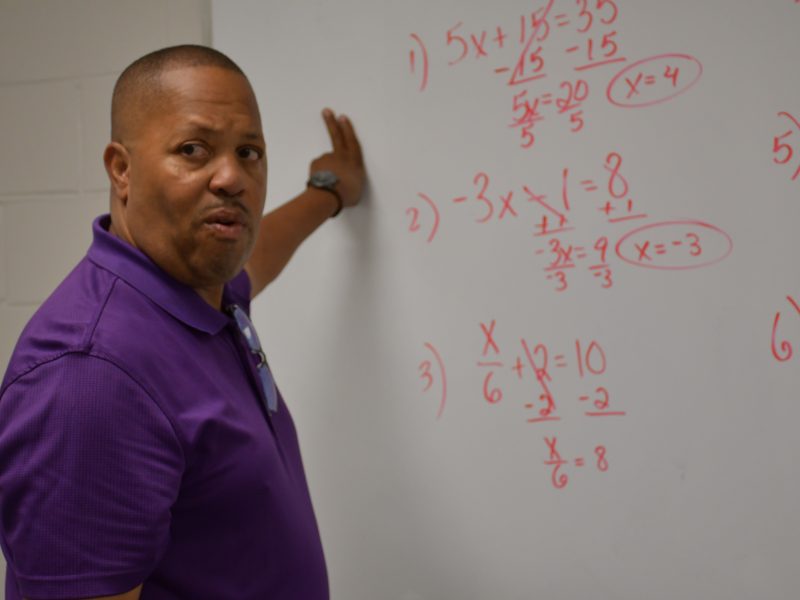
Retired Albany educator makes an impact as jail school instructor
Shortly after taking office in January 2025, Dougherty County Sheriff Terron Hayes initiated the “Jail to Jobs” program that helps students prepare for the GED exams, and Benjamin Johnson was tapped as the inaugural instructor.
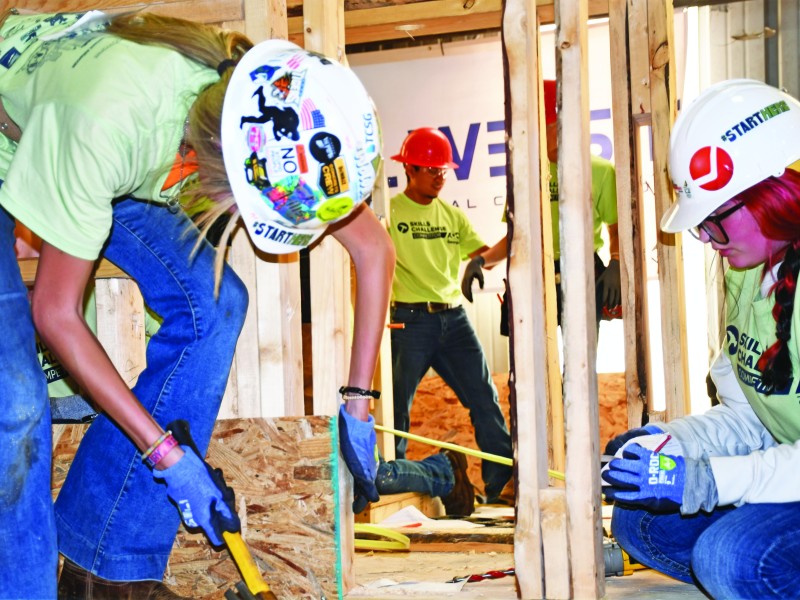
Skills Challenge attracts more than 250 high school construction students
For hundreds of area students, the 2025 AGC South + Southwest Georgia Skills Challenge was a chance to display their talents in construction skills and get a look at what a career in one of those fields could mean.

