Weather, prices have been a damper for southwest Georgia’s 2023 cotton crop
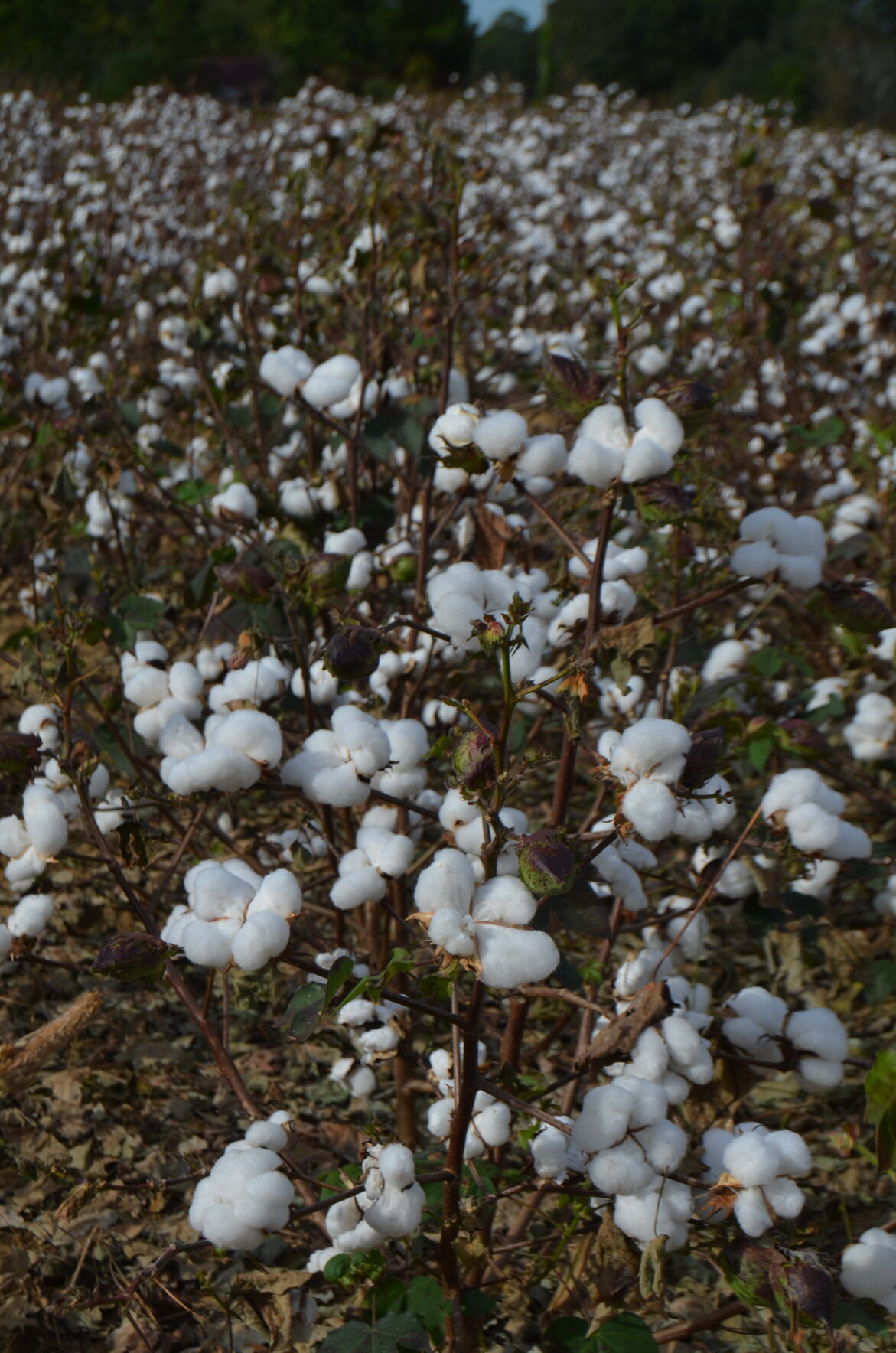
A wet, cool spring and baking summer temperatures impacted the cotton growing season for southwest Georgia farmers this year.
File PhotoBy Alan Mauldin
[email protected]
MOULTRIE — It’s been a tough year for the state’s farmers weather-wise, and the cotton harvest that is winding down for the year in southwest Georgia is no exception to that sad reality.
“We’ve had different weather challenges for sure,” Colquitt County Extension Agent Jeremy Kichler said. “We had it up front where it was cool and wet (in the spring), and we slap burned up in the summer.”
Despite those challenges, the crop for 2023 turned out “pretty good” for the year, Kichler said. Some farmers in the county had yields of 2.5 and 3 bales per acre, which is considered good.
“I’ve heard of ones that were not as (good),” the agent said.
Colquitt County is traditionally one of the top cotton-growing counties in the state, and in 2021 farmers there planted more than 53,000 acres and earned $46.4 million, ranking it No. 2 behind Dooly County that year, according to the University of Georgia’s most recent annual Farm Gate Value.
Colquitt was followed by Worth County, with a farm gate value of $46.4 million, and Mitchell County at $39.74 million.
Bulloch, Crisp, Early and Thomas counties also were in the top 10 in the state.
Later planting due to the cold weather earlier in the year also meant cotton was harvested later, Kichler said. One silver lining there is that the dry weather in the fall reduced the boll rot that can impact the value of cotton that gets wet.
“Long story short, we didn’t see the boll rot we had in years past,” Kichler said. “The bottom bolls are where your money’s at.”
The issue facing cotton growers more than the weather at the moment is prices, which are at about 80 cents per pound.
“It’s kind of hard to cash flow at 80-cent cotton,” Kichler said.
About 85% of the cotton in the county had been harvested as of Monday, and growers will have to schedule picking the remaining crop in the fields around the normal fall pattern of sporadic rain showers, he said.
One impact that the late harvest has had is on delaying the planting of winter grazing for livestock.
Cotton was the state’s second-largest crop in direct payments to farmers in 2021, at $1 billion, eclipsed by the $4.21 billion of income from broiler chickens, according to the Farm Gate report for that year. Peanuts were third at $77.67 million, with the top five for agriculture rounded out with timber at $660.6 million and beef at $658.6 million.
Author

Related Articles

Regional catering business finds new home at Warrior Creek Mercantile
For months, Marchbanks said she had been asking God for an opportunity to serve others. “I just kept praying, ‘God, use me as a servant,'” she recalled. “I didn’t care what it was. I just wanted to be used to help people.”