
Change Center celebrates seven years helping people on recovery journey
“Hope is that spark that can ignite so many other things. I think if you can see someone else get to the other side and live successfully, I think it gives hope.”
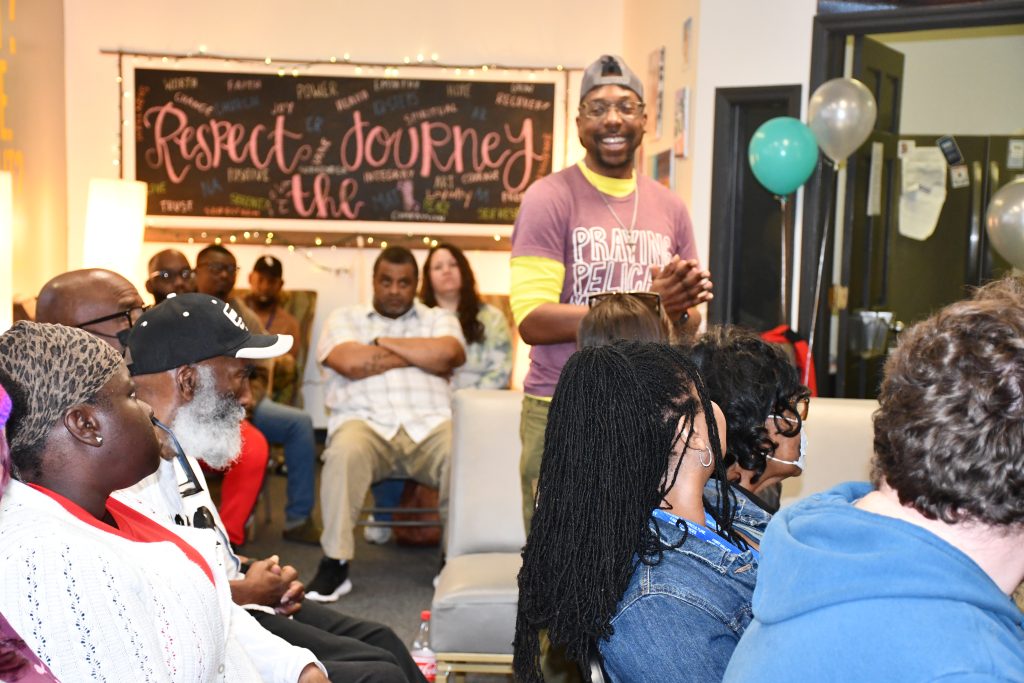
Staff Photo: Alan Mauldin
ALBANY – For seven years, the Change Center has been assisting area residents in keeping on the straight and sober path, and this week the addiction-recovery center celebrated that milestone with some of the hundreds of people it has helped along the way.
The 500 Pine Ave. building that houses the Change Center was nearly filled to capacity with some of the participants standing along the walls.
Among them was Travis Howard. While going through a tough time, the 40-year-old left his home in Pensacola, Fla., on his bicycle and pedaled his way north.
“I was looking for a change,” he told an Albany Herald reporter, and that change started with finding the Change Center by accident. “I was just riding my bike. I just wanted a different atmosphere, a different way of life, just a different mindset. I was just passing through, and I just happened to pass by here, and I said, “What’s this?”
Howard’s story doesn’t include addiction, but the Change Center is a location where Aspire Behavioral Health & Developmental Disability Services, which operates the Change Center, hosts meetings. Howard’s issues included anxiety, depression and grief.
“They helped me with a lot of mental health issues,” he said.. “They helped with taking my medicine, getting back on track. I’m glad to be here. I’m just getting back on track and seeing what’s next.”
In addition to hosting Aspire meetings, the Pine Avenue location also hosts meetings of Narcotics Anonymous, the National Alliance on Mental Illness Albany and the local Multiple Sclerosis Society, Program Director Alesha Burgman said. It is best known for being a place where people in the early stages of recovery can receive guidance during a particularly difficult period.
“It’s a safe space in the community where we can meet people who have experience in recovery and learn how to do new things in a safe and welcoming environment,” Burgan, who is herself in recovery, as are the other three staff members, said. “We’re a hub for all things recovery-related.”
The center provides between 2,500 and 3,500 recovery supports each month, which can be anything from helping with a job application to recovery counseling. The facility also has a clothing closet where individuals who need to add to their wardrobe for a job interview or to walk on the recovery journey can find something new to wear.
One unique element that Burman said he thinks the Change Center provides is hope.
“Hope is that spark that can ignite so many other things,” she said. “I think if you can see someone else get to the other side and live successfully, I think it gives hope.”
Author

Related Articles

New commander takes helm as Marine Corps logistics adapts to evolving battlefield
Brig. Gen. Kevin G. Collins assumed command of Marine Corps Logistics Command during a change of command ceremony at Marine Corps Logistics Base Albany, succeeding Maj. Gen. Keith D. Reventlow after four years leading the organization responsible for sustaining Marine forces around the globe.

Classifieds – July 2, 2026
Cemetery lots for sale: 5 burial plots in Riverside Cemetary… Health: Private Caregiver…Full-Time Job: Irrigation Tech needed…

Albany Herald – July 2, 2026
Dougherty schools prepare for bell-to-bell… From Ledo to Coston, Lee County’s summer road… Lee County moves another step closer to issuing…
