
On Cedar Avenue, history lingers — and so does the divide
The story of the structure at 914 Cedar Ave. is not just about a house falling into disrepair.
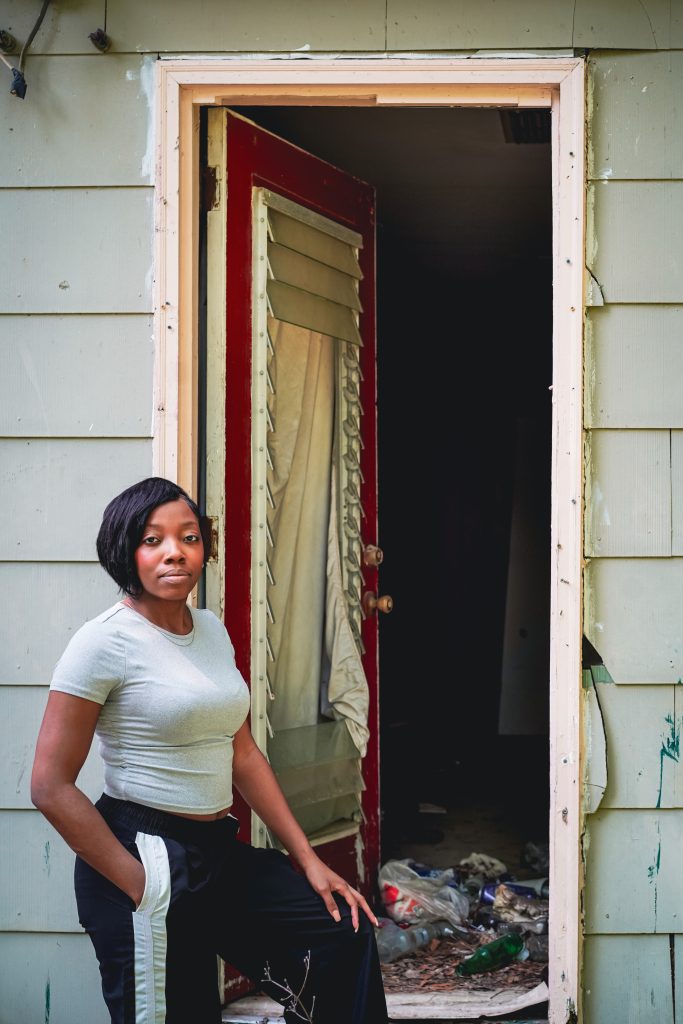
Char Deariso stands at the entrance of the home at 914 Cedar Ave. where community advocates say civil rights leaders once gathered during the Albany Movement. Staff Photo: Kathryn Crockett
ALBANY — The story of the structure at 914 Cedar Ave. is not just about a house falling into disrepair. It is about how history itself can fade — especially when it belongs to those whose lives and contributions were never fully documented to begin with.
For a site tied to William G. Anderson, a founder of the Albany Movement and a key local figure alongside Martin Luther King Jr., the historical record is strikingly thin.
And that, preservation advocates say, is not an accident.
Across the country, historians have long noted a pattern: Properties tied to black leaders and movements often lack the documentation needed to secure formal recognition.
In Albany, that gap is now playing out in real time as researcher and campaign organizer Char Deariso and a rapidly growing group of community members work to save what they believe is one of the most significant remaining physical links to the city’s role in the Civil Rights Movement.
“There’s not a lot about it, considering how significant it is,” Deariso said after combing through property records, deed books and archival material.
The Albany Movement, begun in 1961, was one of the earliest large-scale attempts to dismantle segregation across an entire city.
Organized by activists including Charles Sherrod and Cordell Reagon, the coalition brought together the Student Nonviolent Coordinating Committee, Southern Christian Leadership Conference and NAACP in a unified campaign.
When King joined the effort in December 1961, the movement drew national attention, but not in the way other civil rights campaigns would.
Under the direction of Albany Police Chief Laurie Pritchett, law enforcement avoided the violent confrontations that had previously generated national outrage.
Instead, officers carried out mass arrests — more than 1,000 over the course of the campaign — while quietly dispersing detainees throughout surrounding counties to prevent overcrowding.
Without the images of brutality that had fueled coverage in places like Birmingham and Selma, Albany failed to capture sustained national media attention.
King would later leave the city in 1962 without achieving immediate desegregation goals, and the campaign has often been labeled a tactical setback, though historians now point to the lessons learned there as foundational to later successes. That lack of visibility has had lasting consequences, especially when it comes to preserving the places where the movement unfolded.
Private homes, often used as organizing hubs, rarely appeared in official records. Without widespread media coverage or formal documentation, many were never recognized as historically significant.
That appears to be the case at 914 Cedar Ave.
Deariso said her research turned up fragments, but not a complete narrative. She searched city records, deed filings and library archives, hoping to find more direct references.
“I just didn’t know a lot about it, to be honest,” she said. “It’s one of those things that’s a hidden gem for sure.”
The gaps are striking, but not surprising. Still, the physical space tells its own story.
Standing in the backyard of the deteriorating home on the property, Deariso pointed to what she believes was once a central gathering place during the movement.
“Right here in the backyard is where Tom Brokaw held a press conference with Dr. Martin Luther King, when they spearheaded the Albany Movement,” she said.
Inside, the house shows years of neglect: water damage, structural wear and overgrowth pressing in from the outside. But those involved in the effort say it is not beyond saving.
“We did an assessment. We believe it can be saved … we’ve seen properties in worse condition,” Deariso said.
The immediate challenge is stabilizing the property and addressing outstanding issues, including unpaid property taxes, while attempting to identify and contact the current owner.
From there, the longer process of seeking historic designation could begin.
For Deariso, the connection to the site began with a question, and a sense that something important had been overlooked.
“I’ve always heard rumors that Dr. King was here … and I went down a rabbit hole to research it,” she said. “I was like, ‘This can’t be the house — but actually, this is the house.”
She now visits frequently, drawn by what she describes as the presence of the place itself.
“I’ve been coming like every two to three days, because the energy here is just amazing,” she said.
Saving it, she said, will require far more than individual effort.
“It’s going to be a community effort; it’s not something that I would be able to do by myself,” Deariso said.
And yet, even as support builds around preserving the home, the setting raises harder questions, ones that extend beyond history.
As a nearby school let out, the street filled with cars, parents and children walking home. The neighborhood was active, lived-in and tightly connected.
But it was also largely uniform.
More than 60 years after the Albany Movement sought to dismantle segregation, the visible reality of the neighborhood still reflects patterns of separation, though no longer enforced by law, and shaped by a mix of history, economics and circumstance.
Today, Albany is governed largely by black leadership. Federal and state funding continues to flow into the community. Opportunities, at least in theory, are broader than they were in 1961. And yet, poverty remains entrenched in many neighborhoods. Crime persists. Health outcomes lag. Economic mobility remains uneven.
There is no single explanation, and accountability is as fragmented as the house’s history.
Which makes the question harder, not easier: What does it mean to restore a place from 1961, when its immediate surroundings still reflect many of the same inequities the movement sought to dismantle?
Restoring 914 Cedar Ave. could represent more than a preservation project. It is, of course, a reflection of how history is recorded, and how easily it can be lost when it is not.
Those working to save it believe the house may finally have a chance to tell its story.
“I’m so sad to see it in this condition, but we still have time to do something here,” Deariso said.
If preserved, that story may no longer depend on fragments, but may stand, finally, on its own.
But even that leaves a tension that cannot be easily resolved.
How does anyone honor a movement built to demand change when the outcomes of that change remain blatantly uneven?
Perhaps the value of saving the house is not that it answers that question but that it refuses to let it be forgotten.
Related Articles
Albany Herald – July 11, 2026
Putting on the Ritz… Food, mini menagerie provide… Albany City Commission set to vote on… Following Lee’s lead, Terrell County hits…

Classifieds – July 11, 2026
Albany Classifieds and Legals: Real Estate; Merchandise, Misc…
Small actions can help save big on utility bills
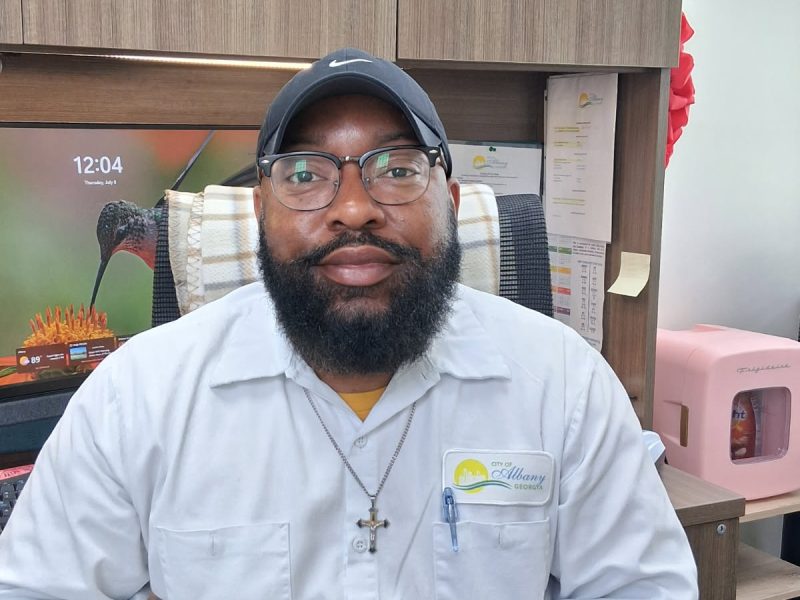
The high temperatures of July and August can bring scorching utility bills as air conditioners hum to keep houses cool. Albany Utilities Residential Conservation Auditor Willie Jackson offered some tips on making summer cooling bills more manageable.
