
Public opposition sinks proposed Lee County solar farm
The proposal, submitted by Atlanta-based Inman Solar on behalf of the Stovall family, would have allowed construction of a 15.75-megawatt solar energy system on roughly 69 acres of the property. County planning staff and the Planning Commission had both recommended denial before the matter reached commissioners for final consideration.
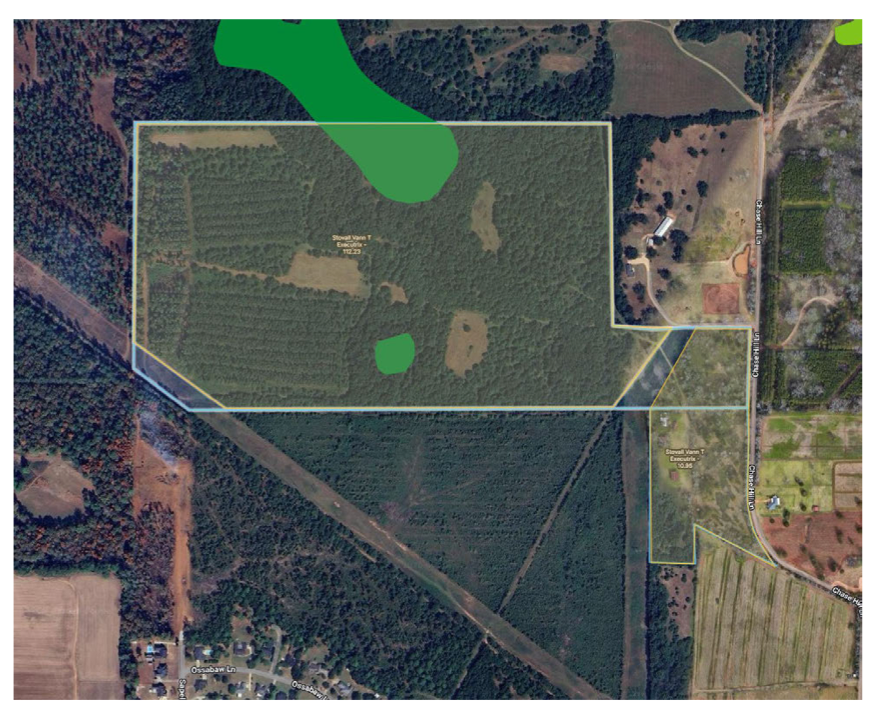
LEESBURG — Following a public hearing that drew overwhelming opposition from nearby residents, the Lee County Board of Commissioners voted Tuesday night to deny a request for a utility-scale solar facility proposed on approximately 123 acres off Fussell Road and Chase Hill Lane.
The proposal, submitted by Atlanta-based Inman Solar on behalf of the Stovall family, would have allowed construction of a 15.75-megawatt solar energy system on roughly 69 acres of the property. County planning staff and the Planning Commission had both recommended denial before the matter reached commissioners for final consideration.
The motion to deny passed with support from Chairman Luke Singletary and Commissioners Chris Guarnieri, Billy Mathis and George Walls. Commissioner Dennis Roland cast the lone vote against the denial, effectively supporting the application.
The vote followed various public comments dominated by concerns over stormwater runoff, environmental impacts, private road access, property rights and the long-term industrialization of an area many residents described as increasingly residential in character.
The proposal became one of the most contentious land-use debates to come before county officials this year, reflecting broader conversations taking place across rural Georgia as utility-scale solar developers seek sites for renewable energy projects.
According to a staff report prepared by the Lee County Planning Department, the project met several technical requirements of the county’s solar ordinance but raised concerns related to wetlands, compatibility with surrounding land uses, potential nuisance impacts and access issues associated with Chase Hill Lane.
Planning officials noted the site contains approximately 2.23 acres of isolated wetlands proposed for disturbance and identified concerns regarding impacts to mesic hardwood wetland areas containing some of the healthiest sections of forest on the property. Staff also noted that no property value analysis had been submitted and that no operational noise study was included in the application materials.
The report further concluded that the project was not compatible with the established and developing character of the surrounding area, citing nearby homes, future residential growth associated with Palmyra Subdivision Section XII and the planned Albany-to-Sasser multi-use trail corridor.
While residents raised a variety of concerns, stormwater runoff emerged as the dominant theme throughout the hearing.
Online public sentiment preceding the public hearing referenced ongoing drainage complaints surrounding Silicon Ranch’s existing solar development in Lee County and questioned whether another large-scale installation should be approved before those issues are fully resolved.
One neighboring Chase Hill Lane resident argued the proposed development was inconsistent with the area’s current land-use pattern and expressed concern about the impact that a large concentration of solar panels could have on local drainage systems.
“A hundred acres of solar panels is essentially the equivalent of adding a large impervious surface,” the resident said. “When you concentrate that much runoff, it has to go somewhere.”
The resident described the surrounding watershed as environmentally sensitive, noting that a seasonal slough on the property drains into Fowltown Creek, which eventually feeds the Kinchafoonee Creek watershed.
“We have sinkholes throughout this area,” he said. “When we get heavy rains, water comes up out of the ground. The water here is crystal clear, and any development in this area has the potential to impact that system.”
The citizen’s concerns mirror findings from a growing body of research examining stormwater behavior at utility-scale solar facilities.

Studies have found that large solar arrays can alter natural hydrology because smooth panel surfaces concentrate rainfall and accelerate its movement toward the ground. Researchers have documented instances where this concentrated runoff contributes to erosion and increased stormwater flows if not adequately managed.
A preliminary 2025 study by researchers at Virginia Tech found that catchments within utility-scale solar developments can produce rapid and, in some cases, substantially greater runoff volumes during storm events than comparable undeveloped land. A 2023 study published in the journal Hydrological Processes found solar installations could increase peak runoff discharge rates compared with natural reference hillslopes while significantly reducing the time required for stormwater to begin flowing across a site. Earlier erosion studies identified concentrated discharge at panel drip lines as capable of causing soil detachment, transport and rill erosion.
Supporters of utility-scale solar projects frequently note that modern stormwater management practices, vegetative ground cover requirements and engineered drainage controls are specifically designed to address those concerns. Inman Solar representatives repeatedly emphasized that the proposed project would comply with state and local stormwater regulations and include erosion-control measures.
Road access was another major issue raised during the hearing.
Residents noted that Chase Hill Lane is a privately maintained road serving nearby property owners and questioned how construction traffic would affect the roadway.
“I can’t get to my house without using Chase Hill Lane,” one resident said. “The residents maintain that road. We trim the trees, pick up litter, grade the road and installed the gate ourselves.”
According to residents, the road was offered to Lee County for acceptance into the county road system approximately 20 years ago but was declined.
Several speakers expressed concern that heavy equipment associated with construction could damage the roadway and create long-term maintenance challenges for nearby property owners.
Josh White, who lives on Chase Hill Lane, said his primary concerns involved both runoff and road usage.
“How often is that road going to be used? How long is construction actually going to take? How long are they going to be bringing large equipment through there?” White asked.
Representatives from the Stovall family, which owns the land, urged commissioners to consider the project as an alternative to residential development.
Brad Stovall argued the facility would have minimal impact on county services while generating new tax revenue and preserving more open space than a subdivision.
He said the project would include a 150-foot vegetative buffer and would not increase utility costs for county residents.
Vann Stovall, the family matriarch who said she is 85 years old and has owned the property for approximately 20 years, told commissioners that revenue from the solar lease would help offset rising expenses during retirement.
“If the property were sold for residential development, the traffic, the clear-cutting and the population growth would change the area considerably,” she said. “I believe using the land for a solar farm is the best option for preserving it into the future.”
Nick Stein, representing Inman Solar, said the company has spent nearly two decades developing solar projects throughout Georgia and emphasized the project’s economic benefits.
Stein estimated the facility would generate approximately $700,000 in tax revenue during its first five years and roughly $2 million over its operational lifespan.
He also said the company would pay for water testing for nearby well owners before and after construction, contribute approximately $200,000 toward road improvements and establish a $30,000 road maintenance fund.
The company further pledged to maintain a decommissioning bond required under state law to ensure the site could be restored at the end of the project’s useful life.
The debate also renewed scrutiny surrounding Commissioner Dennis Roland’s support for solar development.
During the hearing, Roland acknowledged that his family previously sold land for a solar project and said he had “fought this battle before.” He argued that while solar facilities may not be everyone’s preferred land use, private property owners should retain the right to determine how their land is used.
His comments drew attention because the former Roland family land is now occupied by portions of the Silicon Ranch solar development.
Some residents have publicly questioned whether Roland’s previous involvement with solar-related land transactions creates a conflict of interest when voting on similar projects. Others argue that his experience provides perspective on private property rights and agricultural land-use decisions.
The denial means the conditional-use request will not move forward unless the applicant pursues future action through the county’s zoning process.
The outcome highlights the increasingly difficult balancing act facing local governments across Georgia. Utility-scale solar projects often promise tax revenue, private-property income and renewable-energy generation, but they frequently encounter resistance from residents concerned about environmental impacts, infrastructure strain and the preservation of rural character.
In Lee County, those concerns ultimately proved decisive.
Despite promises of economic benefits and stormwater safeguards, commissioners sided with residents and planning officials who argued the proposed site was not an appropriate location for a utility-scale solar facility.
Related Articles

Dawson approves $6,500 gas safety settlement; penalty figures conflict
The Dawson City Council approved a $6,500 settlement Oct. 8 in a natural gas safety case involving 13 alleged violations, including failure to promptly repair a hazardous leak and inadequate protection against excessive pipeline pressure.

Albany State hosts Lane for Homecoming with postseason hopes alive
The math is messy. David Bowser’s message is not.

Twice as Nice: Jin Chung captures second Georgia PGA Championship
Jin Chung, PGA of America Teaching Professional at Chateau Elan Golf Club, captured his second Georgia PGA Championship on Wednesday at Champions Retreat Golf Club, finishing at 5-under-par 211to add the 2026 title to his 2024 victory.
