
Small actions can help save big on utility bills
The high temperatures of July and August can bring scorching utility bills as air conditioners hum to keep houses cool. Albany Utilities Residential Conservation Auditor Willie Jackson offered some tips on making summer cooling bills more manageable.

ALBANY – It’s the time of year when some utility customers are seeing red when they realize how much green they will have to shell out to pay the price of keeping cool during a southwest Georgia summer.
As the residential conservation auditor for Albany Utilities, Willie Jackson hears those complaints and also inspects residences to provide advice on how to lower those bills.
It’s no secret that southwest Georgia heats up significantly in July and August, and some small steps now could prevent overheating when those bills arrive.
June brought 16 days when the mercury topped 90 degrees in Albany, according to the University of Georgia Weather Network, which has a monitoring station at Marine Corps Logistics Base-Albany. That included four days when the high was 95 or greater, with the June 13 high coming in at 97.2 degrees.
So far in July, the high has been at least 92.8 degrees every day and hit the 97-degree Mark on July 5.
When it comes to cutting energy costs, the first thing is to think big, according to Jackson, and the biggest user of electricity for residential users is the heating, ventilation and air conditioning (HVAC) system.
“Heating and cooling is going to take up 50% of your utility bill,” he said.
Keeping the thermostat at 78 degrees instead of dropping it down to cooler temperatures is the best way to cut down on costs.
“Make sure during the summer it is set on 78 degrees, auto,” Jackson said.
Residents can bump it up to a little warmer while away at work, if they prefer, but not so much that the unit has to work hard when they get home to cool it back down to 78, the auditor said.
Keeping with the theme of the cooling system, Jackson said that changing filters once a month prevents the air conditioner from struggling to suck air through a clogged filter. The thin filters work best as the system has to work less to pull air through them..
“The system has to breathe,” he said. “If it’s clogged up, it’s going to make the unit pull more power. They can get the cheapest ones. The cheapest ones are made thinner. The more expensive ones are best for allergies and people with pets.”
Using ceiling fans also helps as they can reduce the temperature in a residence by a degree and use a small amount of electricity compared to air conditioning. Keeping them spinning also helps lower bills. Using curtains and blinds to block the sun also makes it easier for air conditioners to keep things cool.
Next on the list in terms of impact is keeping an eye on the clock for customers whose utility company charges extra for using power during peak usage hours during the day. Customers can check with their provider about peak hours.
The takeaway is to use big appliances during non-peak time, Jackson said.
“You want to wash clothes during the earlier parts of the day or the later parts of the day,” he said. “You don’t want to use those large appliances during the peak hours because you’re paying a higher rate.”
Another way to reduce energy usage is to check water heater thermostats and set them at 120 degrees. Renters may need to request maintenance to perform that task, Jackson said.
“I went out to a house where he had it set at 150,” he said. “It messed his bill up.”
Homeowners also can have a licensed electrician install a timer on water heaters so that they’re not heating water while the residents are not at home.
Placing weather stripping is another relatively inexpensive way to boost savings.
“They can look at the entrances, all of the exteriors, to see if there’s any air leaks,” Jackson said. “Every air leak they can find they need to (install weather stripping).”
Even small measures can make a difference, like unplugging power strips/surge protectors or anything that has a light that is still on and burning electricity, even when the appliance plugged into it is not in use, Jackson said.
Other potential ways to cut costs include installing an attic vent to prevent cooler air from escaping into the attic during the summer, switching out incandescent light bulbs for energy-saving LEDs and fixing leaks.
A water leak may appear small, Jackson said, but over time that drip adds up to gallons, and it is even more expensive if the leak is hot water.
And, of course, bump the thermostat up while on vacation, he said.
Author

Related Articles
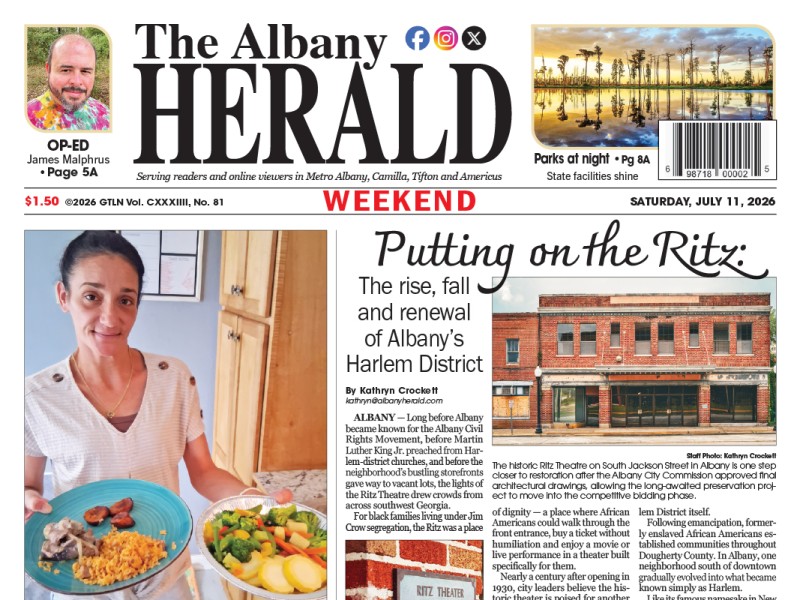
Albany Herald – July 11, 2026
Putting on the Ritz… Food, mini menagerie provide… Albany City Commission set to vote on… Following Lee’s lead, Terrell County hits…

Classifieds – July 11, 2026
Albany Classifieds and Legals: Real Estate; Merchandise, Misc…

Bigger budget will mean improvements at Dougherty County’s landfill
“It’s certainly an opportunity where we can grow and make this very beneficial for years to the community. It’s a service that we provide for the community and I want to prolong that resource for the community. It’s not just fill it up and close it.”
