
Dawson approves $6,500 gas safety settlement; penalty figures conflict
The Dawson City Council approved a $6,500 settlement Oct. 8 in a natural gas safety case involving 13 alleged violations, including failure to promptly repair a hazardous leak and inadequate protection against excessive pipeline pressure.
Council authorizes payment after inspectors flag hazardous leak repairs and pressure safeguards; agreement says problems are corrected but still requires state approval.
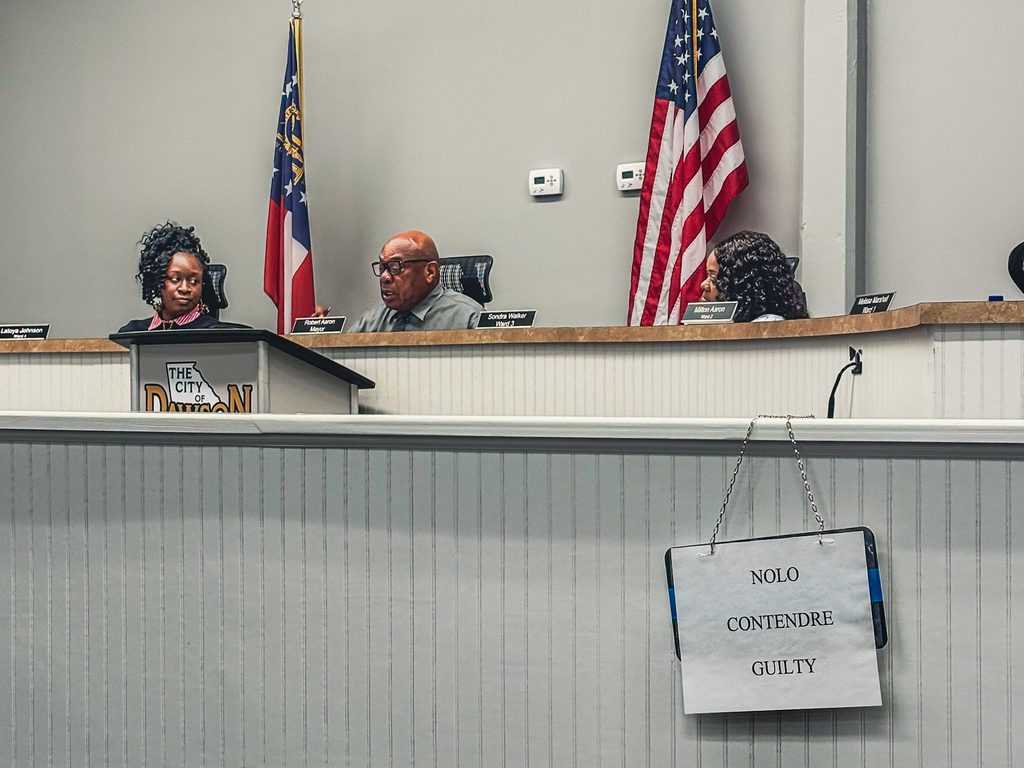
DAWSON — The Dawson City Council approved a $6,500 settlement Oct. 8 in a natural gas safety case involving 13 alleged violations, including failure to promptly repair a hazardous leak and inadequate protection against excessive pipeline pressure.
The proposed consent agreement with the Georgia Public Service Commission staff says all listed violations have been corrected. It requires commission approval before taking effect.
The payment approved by the council matches the agreement, but the original penalty described during the meeting does not.
City Administrator and Clerk Roxie Powell told council members the fine had been reduced from $115,000 to $6,500. The agreement in their packet lists 13 proposed penalties of $5,000 each, totaling $65,000. The proposed settlement is 10% of that amount.
Powell did not explain the discrepancy during the meeting.
When a council member asked whether the problems had been corrected, Powell said, “Yes, ma’am. All of them, and the report has been submitted. The only thing that we have left to do is pay the $6,500 fine.”
The commission’s pipeline safety division enforces federal minimum safety standards for gas pipelines within its jurisdiction in Georgia. The proposed agreement identifies problems involving emergency planning, welding, corrosion prevention, leak repairs, records and pressure protection.
Inspectors alleged that Dawson failed to carry out emergency-plan requirements for coordinating with fire, police and other public officials. They also found that the city lacked a properly recorded, qualified welding procedure and had not ensured that a person welding its steel pipeline was qualified.
Another finding concerned failure to install required excess flow valves on customer service lines.
Six findings involved corrosion control, including inadequate cathodic protection — a system used to help prevent buried steel pipe from corroding. Inspectors cited unsecured test wires, inadequate electrical isolation from metal casings and other buried structures, failure to perform required testing and failure to promptly correct deficiencies.
The agreement also lists failure to promptly repair a hazardous leak, retain required pressure-test records and provide protection against the system exceeding its maximum allowable operating pressure.
It does not identify the hazardous leak’s location or explain how long it remained unrepaired.
The proposed settlement credits Dawson with correcting the problems. Its penalty table identifies follow-up inspection reports in which each finding was cleared.
The document says Dawson requested an informal conference with commission staff on Feb. 26, 2025. It leaves the date of the conference itself blank.
During that conference, according to the agreement, the parties agreed that reducing the recommended penalty was in the public interest. The proposed reduction cites the circumstances of the inspection and Dawson’s progress toward compliance.
Under the agreement, Dawson would admit no fault or liability and waive its right to a hearing. The settlement would cover only the listed violations, leaving other past or future violations subject to separate action.
The city would have to submit a certified check to the commission within 30 days of commission approval.
The packet copy contains several inconsistencies and unfinished entries. Its first page lists Docket No. 56377, while subsequent page footers list Docket No. 37043. Most references identify Inspection Report AT19-013, but one settlement paragraph names Report JB25-048.
Another paragraph refers to a June 9 “incident investigation” with the year printed as “20258.” The conference date appears as “xxxxx,” and the unsigned city signature block retains the placeholder “Name and Title.”
Those entries leave the inspection chronology and some case identifiers unclear. The packet does not establish whether the reference to an incident investigation concerns an actual gas incident.
Powell did not identify which city fund would cover the payment. Dawson separately approved temporary spending authority through November as officials continue working on a budget for the fiscal year that began Sept. 1.
The council’s vote authorizes the $6,500 payment, but the agreement states that the settlement cannot take effect without the Public Service Commission’s approval.
Related Articles

Albany State hosts Lane for Homecoming with postseason hopes alive
The math is messy. David Bowser’s message is not.

Twice as Nice: Jin Chung captures second Georgia PGA Championship
Jin Chung, PGA of America Teaching Professional at Chateau Elan Golf Club, captured his second Georgia PGA Championship on Wednesday at Champions Retreat Golf Club, finishing at 5-under-par 211to add the 2026 title to his 2024 victory.

The 2026 Georgia ballot will include a lengthy list of statewide and local races
Having so many elections for some of the top jobs without an incumbent in the mix is a rarity.
