
Albany City Commission gets a first glimpse of proposed downtown master plan
Brad McEwen
ALBANY — Albany city commissioners on Tuesday got their first view of a proposed master plan for downtown Albany at a called meeting of the City Commission where some concerns were raised over the cost of many of the items highlighted in the proposal.
The master plan, which was developed by Strategic Advisory Group (SAG) for the Downtown Development Authority, looks at ways for the city to redevelop and revitalize the 100 block of Broad Avenue, bordered by Washington Street, Pine Avenue, Front Street and Oglethorpe Boulevard.
“The impetus of this particular process that we were charged with began in 1996 when the riverfront development plan,” said Anthony Peterman of SAG. “We were charged with coming in and looking at the financial and market feasibility of the uses of downtown: residential, retail, mixed-use, conventions, hospitality, office, some others.
“We tried to identify additional partners, outline the timing, put the financial estimates together and, really, the key was how to move forward together to efficiently and effectively look at what the city has and what pulls you out as a community, and how do we maximize those.”
According to Peterman, the brief synopsis given to the city commissioners on Tuesday covered the highlights of the plan and not the details that went into formulating it, which may have contributed to the skepticism of some commissioners.
The highlights shared by Peterman included building a sports complex at the current site of the Albany James H. Gray Sr. Civic Center, building a pedestrian bridge over Oglethorpe Boulevard that would connect the sports park to the 100 block area, the conversion of the Holman Mule Barn on Broad Avenue into event space, fostering retail expansion along Front Street, and developing residential rental space in the Albany Exchange and Albany Heights buildings.
“The key here is the combination of public enhancements and private investments that would complement one another and stimulate downtown,” said Peterman. “Our study area was the 100 block, but to really do a good job we had to go beyond that, which we did.”
One of the suggestions that fell outside the 100 block area was building a sports complex on the property where the Civic Center is located. Peterman explained that the sports park would serve as an anchor for the downtown area, drawing in people who otherwise would not come downtown.
“We would strongly recommend that the community consider putting the sports park here and taking down the Civic Center,” Peterman said. “I think the sports park is a wonderful thing and I think the closer it is to the 100 block the better the community will benefit from it. Everyone who gets in their car to go out the mall and eat and shop, we lose that opportunity (to keep them downtown).”
The master plan also called for construction of a pedestrian bridge that would allow those using the sports park to easily walk to the 100 block, which would include a mixture of retail, dining and civic spaces. SAG officials said the the Holman Mule Barn should be converted for that purpose.
“Given the unique location and feel of the mule barn, that would be an ideal space for civic-oriented events,” Peterman said. “What we recommended was we keep the skin to preserve the historic look to the downtown’s benefit.”
The mule barn idea drew the first negative comments from the board. Commissioner Tommy Postell noted that the city had been advised that restoring the mule barn would be a costly endeavor due to environmental concerns.
“I don’t agree with that recommendation,” Postell said. “I don’t know who entertained you to do this, but I don’t think they came back and looked at the mule barn. The barn mule don’t mean nothing to us.”
The idea of tearing down the Civic Center also did not sit well with Postell, nor was it supported by Mayor Pro-Tem Bobby Coleman, who said he felt the Civic Center was still a viable resource for the community that needed better management.
“I’m concerned … that’s been an effort to get rid of the Civic Center over the last few years,” said Coleman. “You know, the last two events at the Civic Center, those 24-35 year-olds we’re targeting that’s going to be downtown in the next 10 to 15 years packed the Civic Center. It will happen again when you let the right people run the Civic Center with what they see as entertainment as opposed to us telling them what to have down there.”
Another point of contention for some of the commissioners was the proposed cost projections Peterman shared for bringing the ideas in the master plan to life. Excluding the cost of tearing down the Civic Center and building the sports park and excluding the cost of renovating Albany Heights for rental space, which would presumably be done by private investors, the cost to make the plan a reality was given as $16 million dollars.
That figure drew the attention of commissioners Roger Marietta, Jon Howard and Postell, who all voiced concern over the city spending that amount of money on a project that they weren’t convinced was well thought out.
“Your longterm vision makes sense to me. I see that, but it’s going to take a lot of money to do all of this,” said Postell. “If I’m here, I live that long, I will not spend $16 million dollars for one block of Broad; that’s one block. The whole downtown of Albany is actually five blocks.”
Marietta echoed Postell’s sentiments, saying that he felt the plan was overly ambitious and that he’d like to see more thought go into the study.
“I’m not trying to throw water on your idea. I like the concepts. I’m just saying I think we need to be more conservative,” said Marietta, who informed Peterman he had done planning when he was in the military. “My planning was always based on worst-case scenarios and this seems like it’s maybe overly optimistic. I would like to see more conservative view on it.”
In response to concerns raised by the commissioners Peterman again reiterated the point of not only the study but of the brief synopsis given at the commission meeting, and encouraged the commissioners to see the entire presentation at a later time.
“The 100 block is not going to fix itself,” Peterman said. “The city has been waiting since 1996 now its 2016 and there’s not a magic bullet that’s going to solve the problem. Our charge was look at what you have and tell you what we think you should do.”
He said it was “challenging” to try to condense onto a single slide information that normally takes an hour to go over.
The City Commission, Dougherty County Commission and the Dougherty County School Board were given a much more involved presentation Tuesday night at a public meeting at the Government Center.
Related Articles
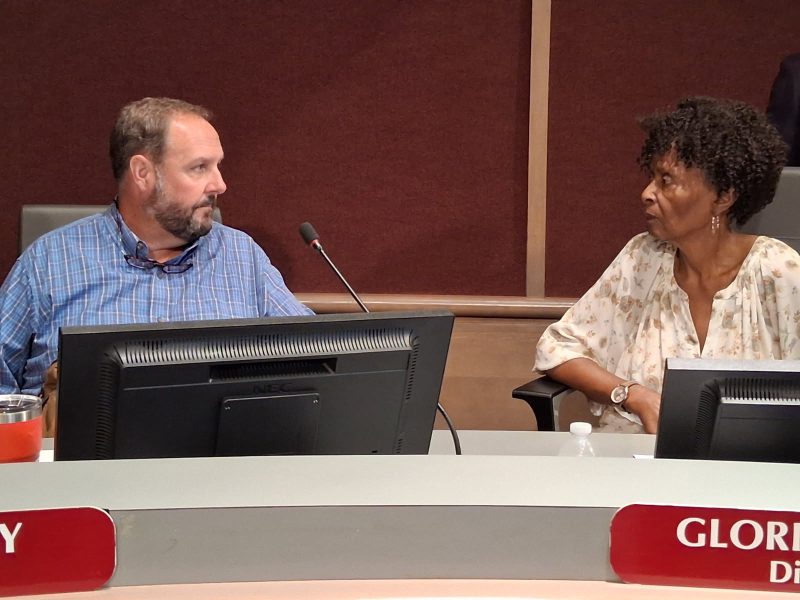
Dougherty Commission considers $104 million budget for 2026-2027 budget year
“The other side of the coin is you could have higher revenues than projected. We’re very conservative in budgeting revenues. That also reduces the need to use fund balance”
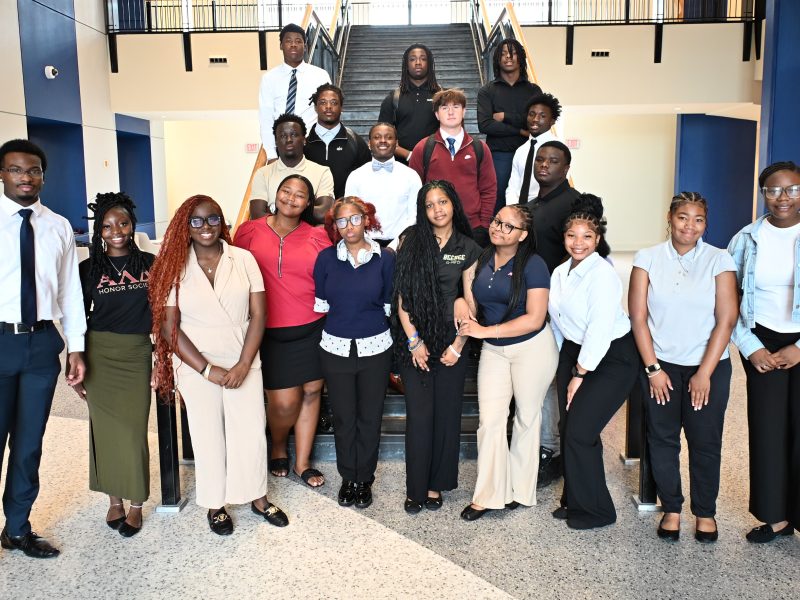
PHOTOS: Albany State Summer Success Academy
Photos by Reginald Christian, Albany State University
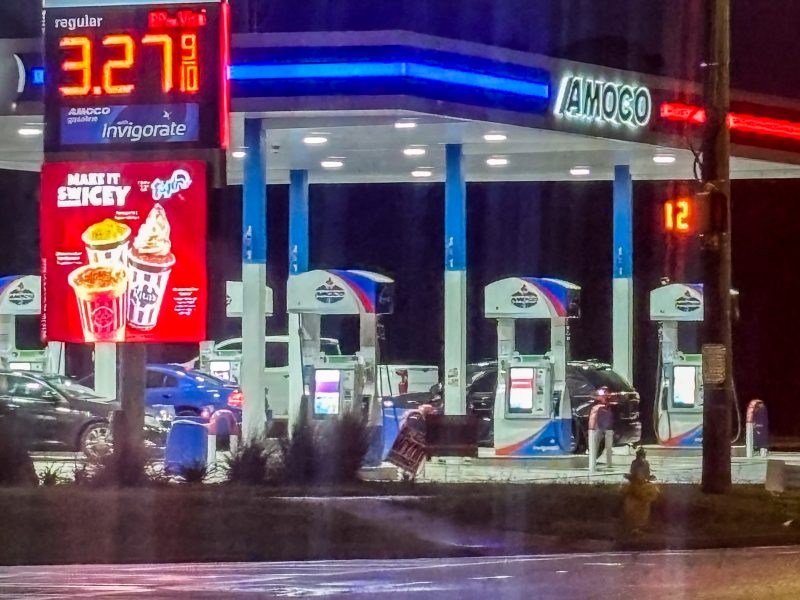
Albany gas prices among Georgia’s lowest as summer fuel costs decline
According to AAA, the average price for a gallon of regular gasoline in the Albany metro area was approximately $3.45 this week, making Albany the second-least expensive metro market in Georgia behind Dalton at $3.41 and slightly ahead of Brunswick at $3.48.
