
State Supreme Court: Judges can’t allocate tax proceeds
Jim Hendricks
ATLANTA — In an opinion released this morning on a case from Turner County, the Georgia Supreme Court has ruled that courts cannot settle disputes between county and municipal governments on the distribution percentages of local option sales tax revenue.
In its unanimous decision, the state’s highest court ruled that an amendment passed by the Legislature in 2010 authorizing courts to resolve those disputes between cities and counties is unconstitutional.
The case involved Turner County and three municipalities within it that were at odds on how the LOST funds should be distributed among the political subdivisions. The cities took the case to Turner County Superior Court, and the case was assigned to a judge outside the circuit. The judge chose the cities’ plan for distribution.
Today’s decision vacates that ruling.
In a release this morning, the Supreme Court said:
“The scheme set forth in the 2010 amendment improperly authorizes judicial resolution of the allocation and distribution of tax proceeds, an exclusively legislative power,” Justice Robert Benham writes for the Court.
“In this case, we hold that, absent an abuse of discretion or other showing of illegality, the allocation of tax proceeds by and among the political subdivisions of a LOST special district is left to the discretion of those entities and is not a matter for judicial determination.”
The case began when Turner County and the cities of Ashburn, Rebecca and Sycamore, GA reached an impasse over how LOST proceeds should be divided. A Georgia statute (Official Code of Georgia
Related Articles
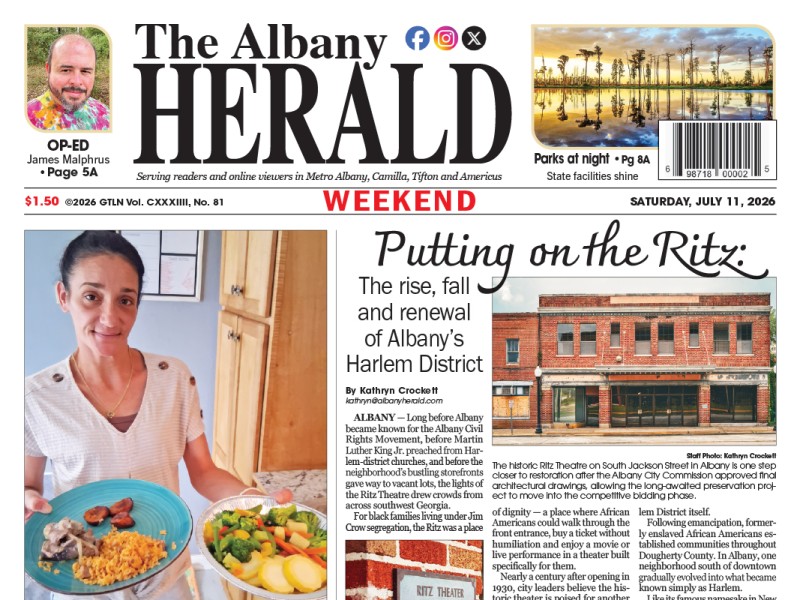
Albany Herald – July 11, 2026
Putting on the Ritz… Food, mini menagerie provide… Albany City Commission set to vote on… Following Lee’s lead, Terrell County hits…

Classifieds – July 11, 2026
Albany Classifieds and Legals: Real Estate; Merchandise, Misc…

Small actions can help save big on utility bills
The high temperatures of July and August can bring scorching utility bills as air conditioners hum to keep houses cool. Albany Utilities Residential Conservation Auditor Willie Jackson offered some tips on making summer cooling bills more manageable.
