
10 Questions with singer David Phelps
David Phelps has performed at all the world’s great venues: the Sydney Opera House in Australia, the O2 Arena in Great Britain, and the Kennedy Center for the Performing Arts and the Grand Ole Opry in this country.
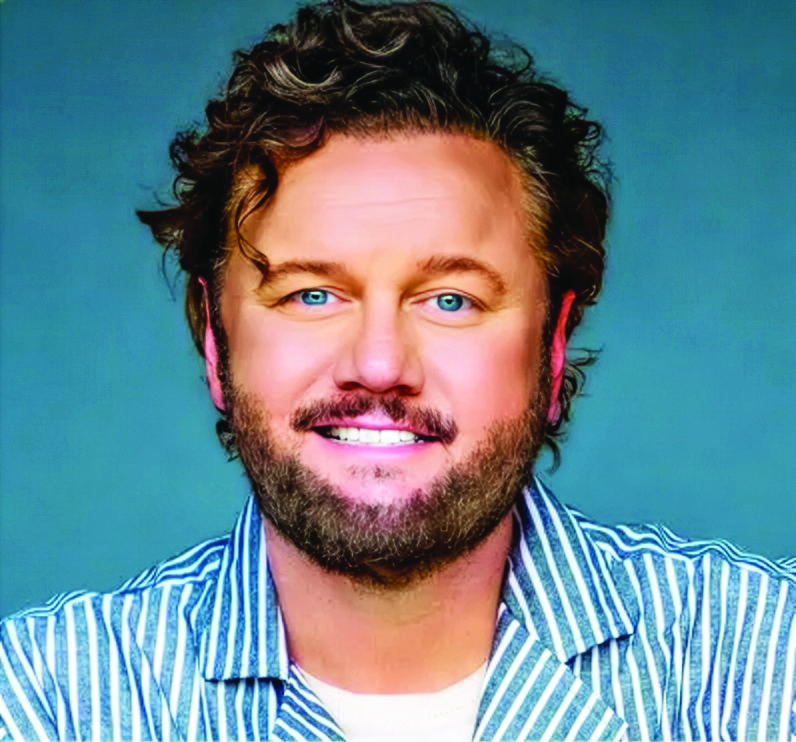
DAVID PHELPS
ALBANY – David Phelps has performed at all the world’s great venues: the Sydney Opera House in Australia, the O2 Arena in Great Britain, and the Kennedy Center for the Performing Arts and the Grand Ole Opry in this country.
But the renowned performer says he’s just as psyched to play smaller venues during his “Speak of Love Tour,” which will bring him to First Free Will Baptist Church in Albany Friday evening.
“There’s an intimacy in smaller venues that you don’t get in large arenas,” Phelps said during a conversation with The Albany Herald. “There are things – mostly technical things – that you might do in a larger venue that you can’t do in a more intimate setting, but what’s important to me is the song.”
The Grammy and Dove award winner, whose rare three-octave-plus voice – the kind of voice only artists like Roy Orbison and Freddie Mercury possess – will be on display at the 420 N. Westover Blvd. church, took a few minutes from his hectic touring schedule to talk with the Herald about his career and his show in Albany.
Here, then, are 10 Questions with David Phelps:
ALBANY HERALD: Your musical style and taste touches so many genres. Do you plan each show on the tour to fit a specific venue or is your show basically the same at each stop?
DAVID PHELPS: Every night is different for me. The band and I generally go on stage with a “skeleton” set list, but that can change according to the reaction of the audience. Sometimes, production forces you to do some of the same things, but we tend to gauge what our audience is in the mood for and react to them. That’s what we’re there for, to share with the audience.
AH: Very few artists can do what you do vocally. Does it maybe eat at you that some singers reach that “mega star” level when they can’t come close to what you do musically?
DP: I think … well, no, that doesn’t bug me. I feel blessed to be making music; that’s what I grew up wanting to do. I don’t begrudge anyone the opportunity to do that.
AH: You can do any kind of music. Is it a “mood” or some other factor that determines what you sing on a given night?

DP: It’s a little about how the band and I feel on a given night, but I can’t say enough about how the audience affects what we do. If they’re with us, they can pull things out of us. And,conversely, if they’re not into it, we try to sense the temperature and respond to it.
AH: Music, to me, brings joy to a listener. Are there particular songs you perform that bring you joy?
DP: There’s a song I’ve done for years – “No More Night” – a song that’s full of hope. People have latched onto it, and I find great joy in that song. There’s another, “Trouble,” that has a great brass part. Songs like that are joyful.
AH: When it comes to performing, do you get more out of performing songs you’ve written, or is that a factor?
DP: There definitely is more of a depth of connection with a song I’ve written, because I know the place it came from. I love performing great songs, but there’s more of a connection with the ones I’ve written.
AH: Musically, who inspires you and who inspired you early in your career?
DP: Initially, it was singing with my family that inspired me. Music was always very important in my family. I’ve also had some great mentors that helped me along the way. As for other artists, I’m eclectic. I grew up in a house listening to all kinds of music. I like everything: Christian music, rock, opera, some country, artists like Queen and Journey. I find myself drawn to great vocals, from Pavarotti to Freddie Mercury, Celine Dionne, Tina Turner, Tony Bennett, Whitney Houston …
AH: You’ve accomplished a lot in your career, won just about every award you can win. What career highlights stand out?
DP: Really, it’s the amazing places around the world that stand out, the stages where I’ve been allowed to sing. I grew up in a little town in Texas at a time when there was no internet. To reach a point where I’m performing in Germany, Australia, Brazil … that’s just amazing.
AH: Was there a specific time in your life growing up when you realized your gift was something special?
DP: My singing voice came to me early in life, and I started singing with my family when I was very young. But I remember singing a solo in ninth grade – what is that, 14 or 15? – and when I finished I got a standing ovation. I told my dad on the way home, “I want to do that for the rest of my life.”
AH: When you prepare for a specific show like the one here in Albany Friday, are there goals you and the band try to reach or is it just a matter of performing?
DP: We try to stay aware of the audience. For some of them, we’ve been told over the years, coming to a show like this is a bucket-list item. This is their moment. So we try to look at every performance with fresh eyes and deliver something that is special to them.
AH: You’ve performed in the world’s greatest venues. What’s it like to play a smaller venue like First Free Will Baptist Church in Albany, Ga.?
DP: We love the intimacy of smaller venues. Sure, there are things you can’t do that you could in a larger venue, but there is an opportunity to interact more intimately with the audience. But, bottom line, no matter where we perform, the most important thing is to perform as great a song as possible.
Phelps’ performance at First Free Will Friday starts at 7 p.m.
Author
Related Articles
Theatre Albany brings ‘British farce’ to stage
I’ve told the players a million times: ‘If it’s not fast, it’s not funny.
Dwindling group of area musicians always searching for a place to play
Unlike a recent “golden era” of local music, today no more than a handful of local bands performs at a much-smaller number of clubs and venues that offer live music.
ALBANY’S MUSIC SCENE … THEN AND NOW
If you’re looking for a cool “origin story,” few bands can match popular Albany-based late-’90s/2000s alternative rockers Holly Drive.
