
Arlington trying to make its downtown a ‘Rural Zone’ with hopes of a boosting business development
Staff Photo: Lucille Lannigan
Staff Photo: Lucille Lannigan
Staff Photo: Lucille Lannigan
Staff Photo: Lucille Lannigan
By Lucille Lannigan
[email protected]
ARLINGTON – Arlington is ready for a change in its downtown, and city leaders are hoping a Rural Zone designation could help bring about change.
Ten Georgia cities per year are designated “Rural Zones” or rural downtown areas that have economic development incentives. In the upcoming year, the city of Arlington plans to apply to receive the designation.
Barbara Reddick, the deputy director of the Southwest Georgia Regional Commission, said the designation transforms some communities. She said Bainbridge’s five-year development is the model.
“When you have a Rural Zone in your community, you create a zone that favors business,” she said. “You tell businesses ‘this is the area you want to come to.’”
The Rural Zone program targets rural downtown areas that have been adversely impacted by local economic conditions. The program, offered by the Georgia Department of Community Affairs, creates multiple tax credits to incentivize new business investments and job creation in the designated zone.
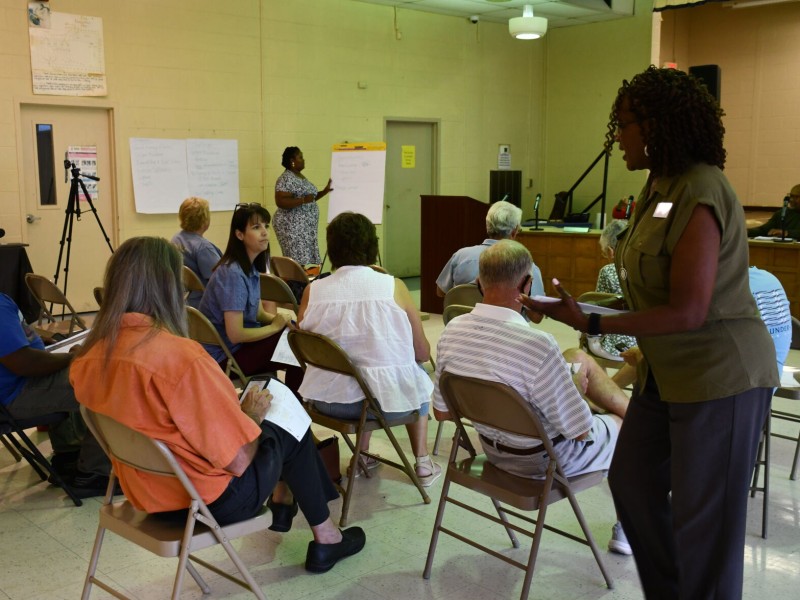
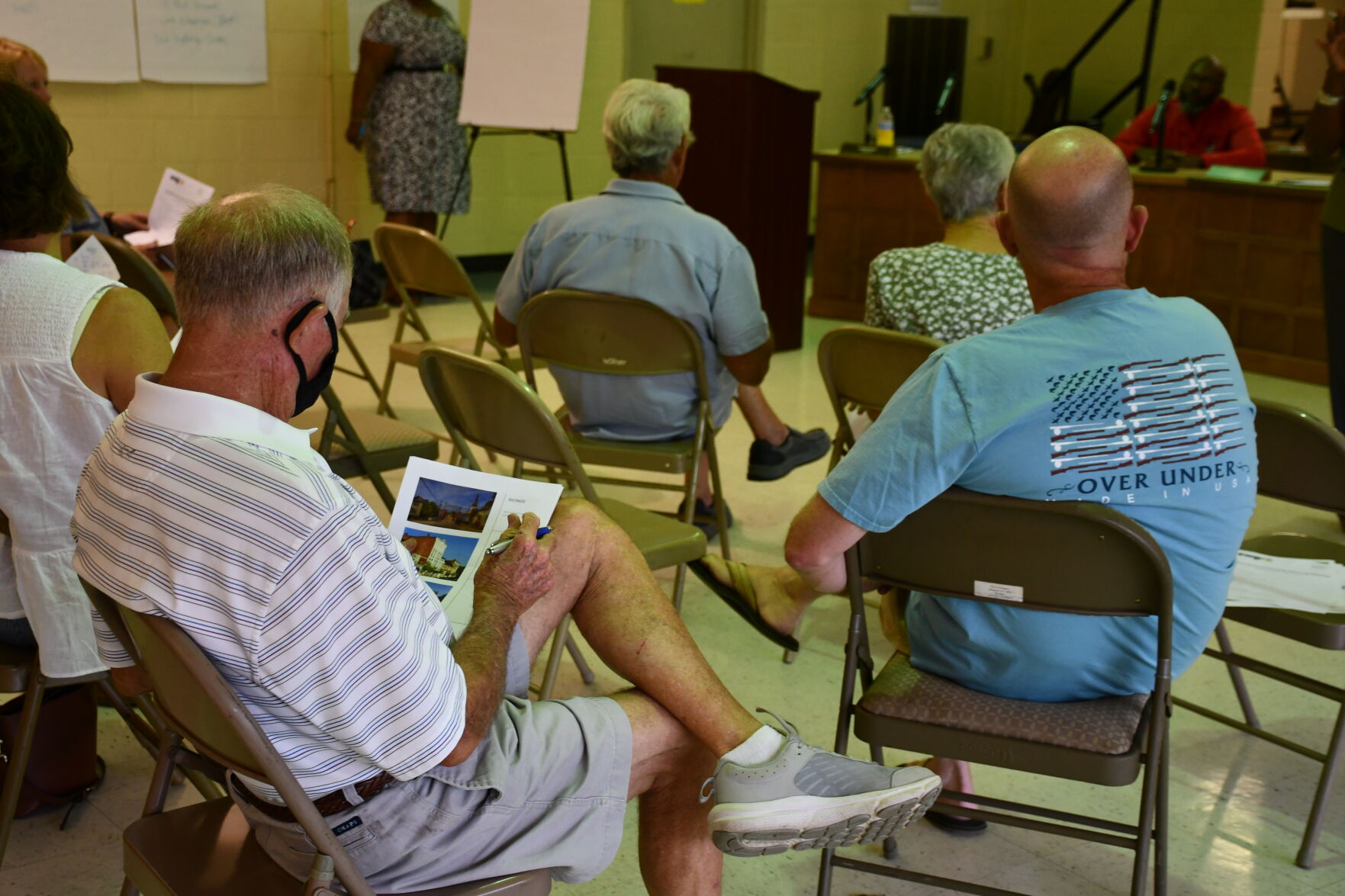
City leaders and community members attended a workshop hosted by the Regional Commission on July 24 to brainstorm what downtown Arlington’s future could look like. Residents said they want a fitness center, a truck stop, a sports bar and more public outdoor space.
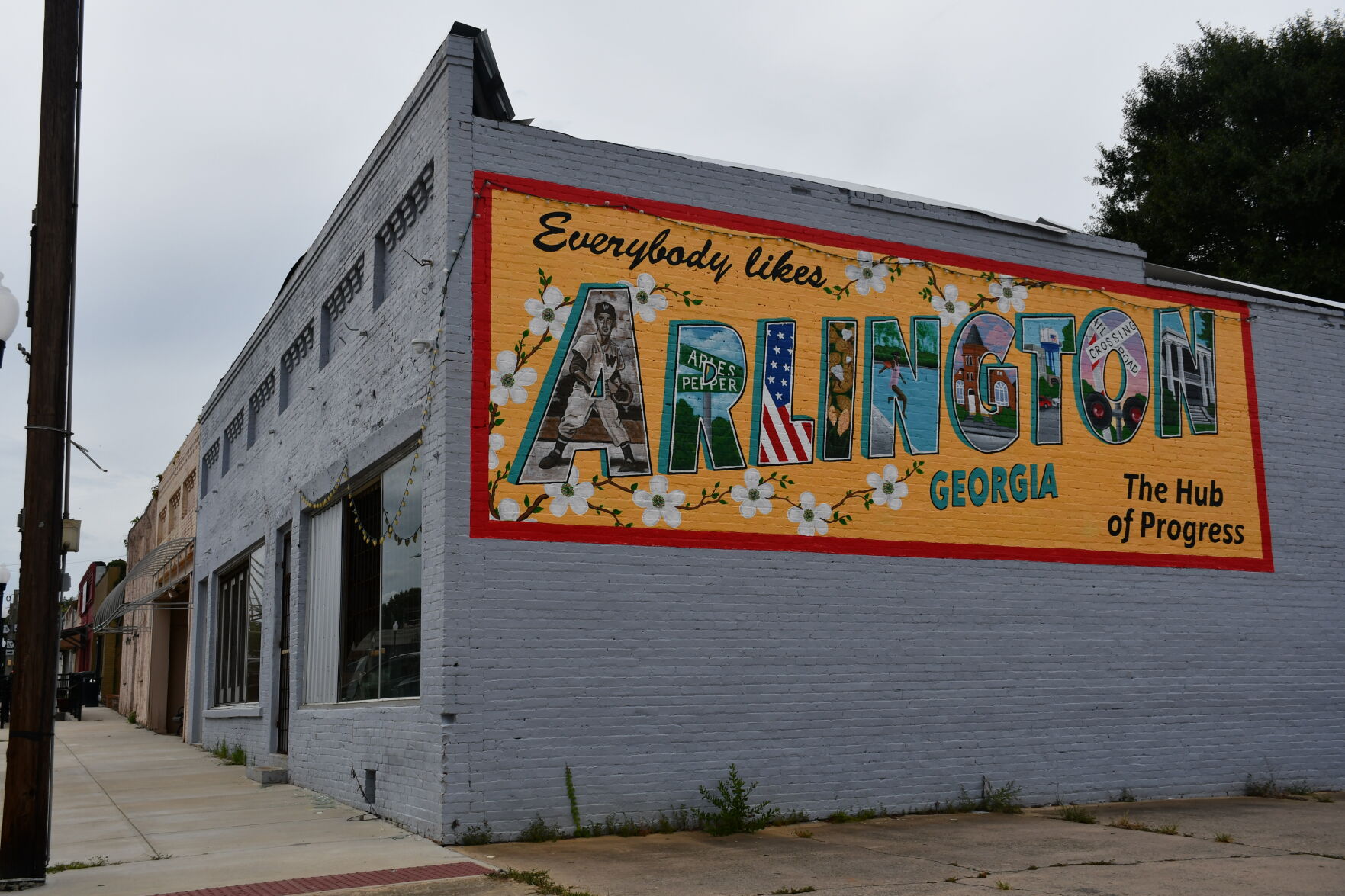
Arlington’s population was about 1,200 during the 2022 Census count, a number that has slowly declined since 2000. Its downtown rests on Highland Avenue and was once deemed “Arlington: The Hub of Progress.”
Today, Arlington’s old, vacant downtown buildings need renovations. The town lacks a grocery store and other outlets for entertainment that would maintain a younger population. However, in the last decade, the city’s invested in new sidewalks and street lights. Two grants revitalized the Arlington Depot as a space for community events.
A few restaurants and beauty parlors have popped up in town by hopeful business owners who see opportunity in the old buildings.
Becoming a Rural Zone could help turn this hope into a reality. However, it’s a competitive application. Reddick said having prior business commitments to show makes an application stronger.
Arlington’s mayor, Jerome Brackins, said he’s had conversations with two prospective business owners who would be interested in developing within the zone. The city also has plans for a new recreational park, which a grant will help design. Brackins said the park will offer space for activities like pickleball and have pavilions for sitting. The city will have a meeting Aug. 16 to talk about moving the plan forward.
The mayor said attracting businesses with the Rural Zone designation on top of this planned project will give Arlington’s residents something to do. When Brackins thinks about downtown Arlington’s future, he said he pictures a space where people can safely walk through town, grab something to eat and sit in the park.
“We’ve had some separation, and I want to bring both sides together,” Brackins said. “I think we can do that with the Rural Zone designation.”
Another one of downtown Arlington’s strengths is its intersection with the U.S. Highway 62, which is heavily trafficked by semi-trucks. Brackins said it’s the busiest road in Calhoun and Early counties.
Arlington Councilman Tyron George said the city should look into increased signage to let drivers know what food and shopping options are available in town.
“We’re kind of shooting our businesses in the foot by not having some kind of signage to help them,” he said. “If they (drivers) don’t know it’s there, they’ll probably go elsewhere else for food.”
Susanne Reynolds, the Development Authority of Early County’s director, said another one of the city’s strengths is its vacant historic buildings.
“Arlington has a good central business district that can be brought back to life and become a tourist attraction,” she said. “A lot of folks, they want to come here to see these little Southern towns because of the architecture and hometown feel.”
Reynolds worked for the past year to get Blakely approved for Rural Zone designation. She said because Arlington is a shared city between Calhoun and Early counties, she has a vested interest in helping revitalize Arlington and wants to be a resource as the city moves through its application process.
While Blakely is in the very early stages of the five-year designation, Reynolds said it’s progressing with prospective business owners beginning to rehabilitate buildings and an existing business creating two full-time positions.
The Rural Zone designation creates a Job Tax Credit that is $2,000 per new full-time equivalent job per year for up to five years without exceeding $40,000 per year or $200,000 total.
“It takes some time to get things going and unlock those tax credits because the key is the job creation component,” Reynolds said. “If you have somebody who purchases a building downtown … it’s going to take time to rehabilitate the building to get the business in there and then create the jobs.”
Still, she said the time to invest in these rural downtowns is now.
“We need to work really hard to preserve and protect those downtowns and get businesses and foot traffic in them,” Reynolds said. “They’re gems. They just got a little bit of peanut dust on them and need some polishing.”
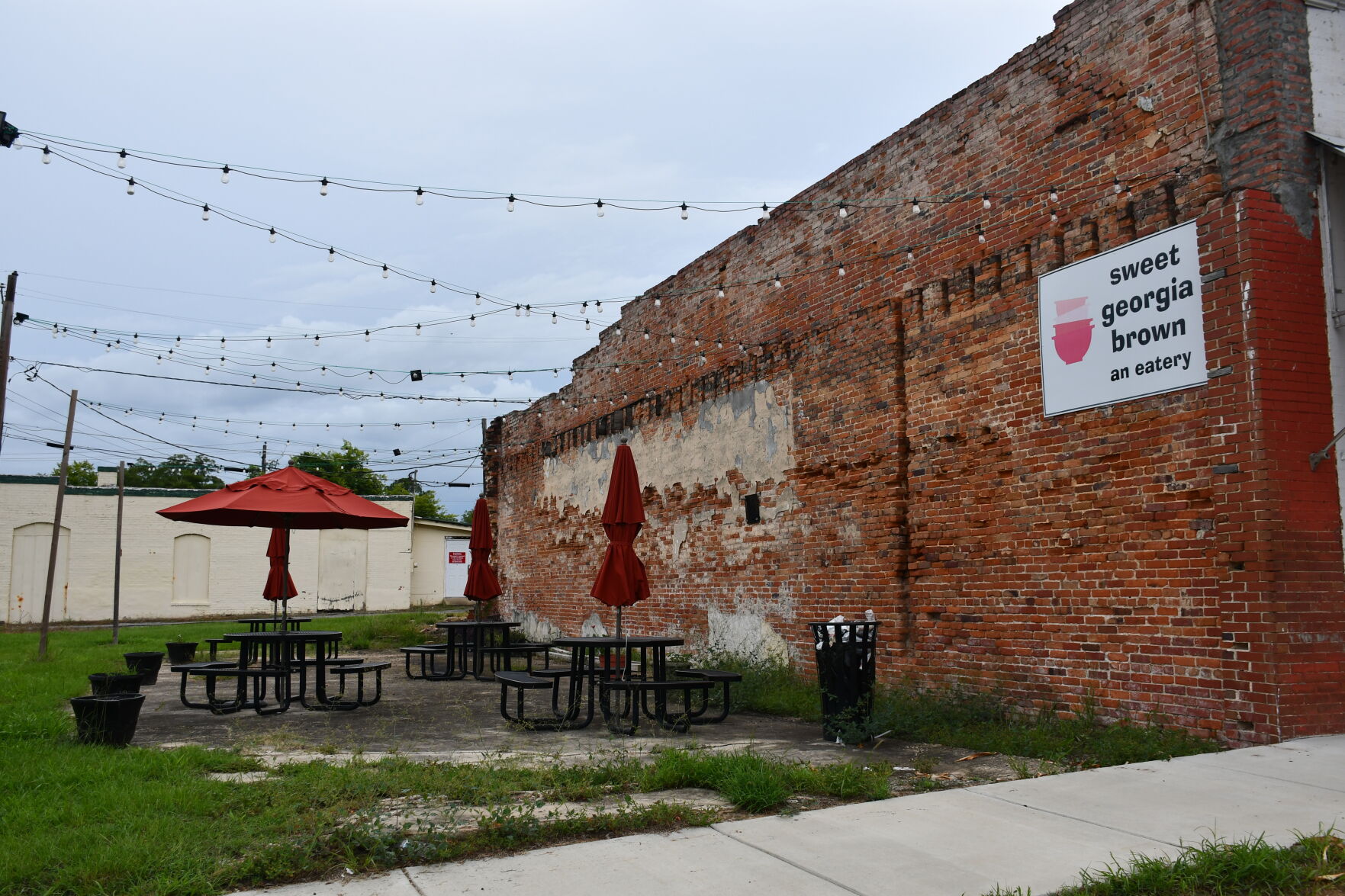
Brooke Odom, an Arlington native, owns Sweet Georgia Brown, one of the handful of restaurants operating in Arlington’s downtown. She started the business with her husband about eight years ago.
“I wanted a business where I was born, and if I could do something here, it was more important than doing something in a larger town,” she said.
Odom said she is ready to see Arlington prosper and to provide new visitors with friendly hospitality.
“I see Arlington downsizing, and it’s kind of drying up,” she said. “I would love to see more traffic, more commerce, more visitors – people coming through here who maybe normally would not.”
She said one of the biggest challenges of being a business owner in Arlington is the small labor pool.
Reynolds said towns like Arlington can tap into resources like nearby technical colleges and its young people and involve them in the revitalization process.
“All this stuff we’re doing is for the future,” Reynolds said. “A lot of these young people … it’s preparing a place for them to live with their families. The more we get their input on revitalization, the more likely they’ll stay here and help improve the community.”
Betty Murdock, head of Arlington’s Downtown Development Authority, said at lunch time Arlington’s downtown parking is packed on both sides with people stopping in for lunch. She said the beauty salon attracts customers from around the region.
“I hope people are excited about our businesses we have downtown because they do provide a function for us,” she said. “If we can just capitalize on their success with some more new businesses, I think we could see a little change.”
Murdock said she hopes with the Rural Zone designation, Arlington can turn the needle, attracting new economic development that will lead to further development opportunities.
Arlington, like much of the region, struggles with a housing shortage.
“I’m hoping that people will say, ‘Oh my gosh, look, their downtown is so vibrant. Let’s go in there and see if we can’t build some housing for these people,’” Murdock said. “We need housing.”
Arlington would be the first city in Calhoun County with the designation. Reynolds said it could have a ripple effect across the region.
“We would really be back to the ‘Hub of Progress,’” Murdock said.
Author

Related Articles
That ATV you drive around might not be legal. Edison, GA, looks into passing local ordinances
The use of golf carts, UTVs and ATVs and low speed vehicles has grown in popularity in recent years. Some cities have specific ordinances, allowing these different vehicles. Others, like Edison, never developed any local laws to address them, but Edison Councilman Curtis Adams said he’s noticed more and more on the streets. This prompted discussion on potential ordinances during Edison’s council meeting,
Arlington business owner accuses Police Department of failing to make arrests for repeated robberies
An Arlington business owner plans to close two of his businesses in the city next Wednesday in protest of what he said is “unequal protection under the law.”

No. 2-ranked Calhoun County wins thriller over Monroe, 63-60
The No. 2-ranked Calhoun County Cougars (8-0) remained undefeated Friday night with a hard-fought 63-60 victory over Monroe in front of a packed home crowd in Edison.
