
Calhoun County leaders strategize disaster recovery plans using funding boost from HUD
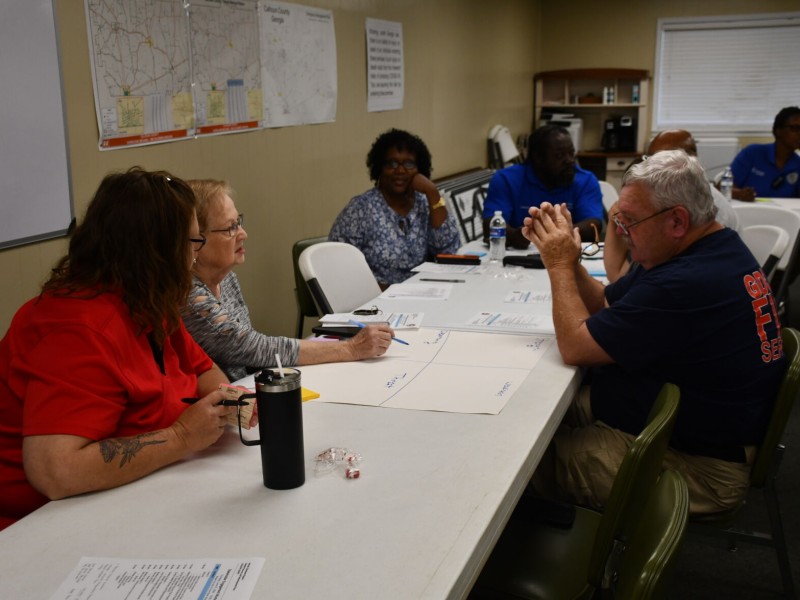
Staff Photo: Lucille Lannigan
By Lucille Lannigan
[email protected]
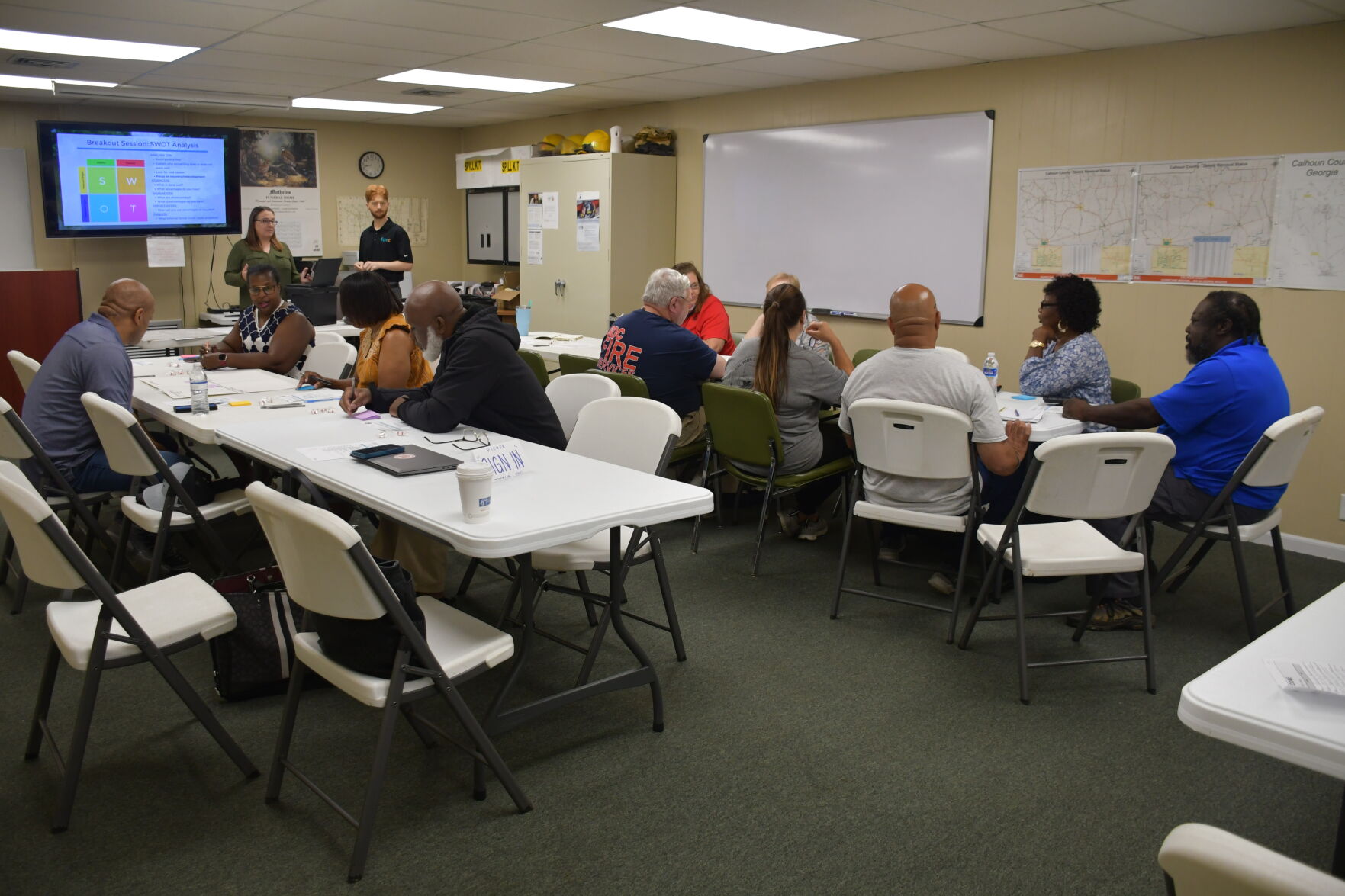
MORGAN – Calhoun County leaders had their first of three discussions on potential disaster recovery plans with GEMA Thursday morning.
Calhoun is among 20 southwest Georgia counties approved for a grant through the Community Development Block Grant Disaster Recovery Program. This program works to rebuild areas affected by disaster by providing grants that support housing, infrastructure and business needs. The Department of Housing and Urban Development allocates the funding.
Dani Landry, the project specialist for FCMC Management Consulting, said Beatrice Soler, the Individual Assistance Program Manager for GEMA, saw large amounts of aid distributed to southeast Georgia and noticed a lack in the state’s southwest region. Landry said Soler worked hard to get funding for the region, which saw extensive damage and loss of crops during Hurricane Michael.
“We are excited to be over here,” Landry said.
The meeting Thursday included leadership from each of Calhoun County’s four cities. Each mayor was in attendance except Leary Mayor Calvin Cox. City law enforcement officials, school officers and a representative with the Salvation Army attended. Landry said they would like to see more stakeholders from each county at the next meetings.
Landry said the focus of the workshops is to discuss recovery in infrastructure and economic development and implementing long-term, sustainable housing.
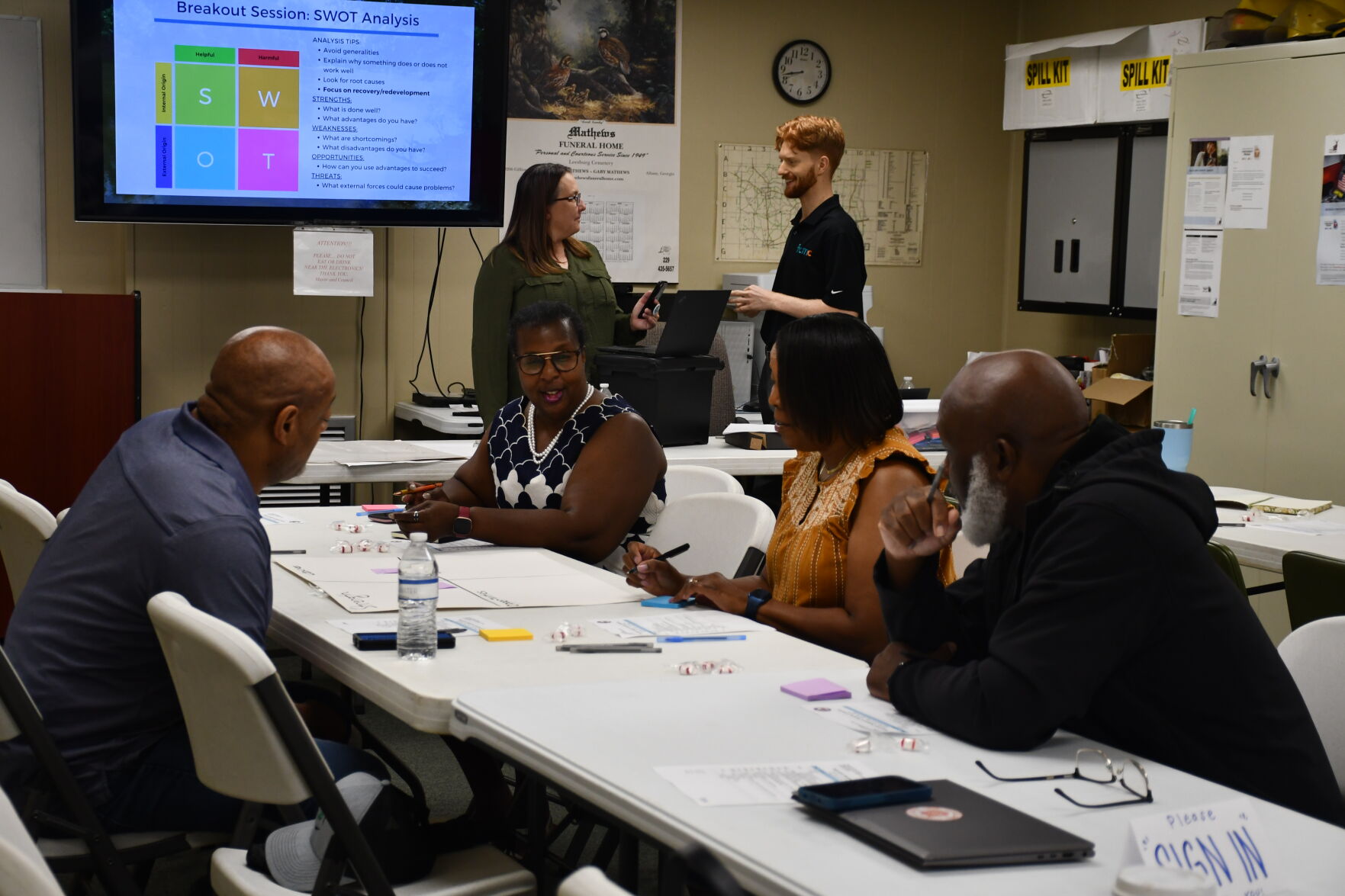
The group discussed strengths and weaknesses within Calhoun County that would either help or inhibit it during a disaster.
When Hurricane Michael hit Calhoun County in 2018, it took trees, power lines and the county’s line of communication down in its wake. Richard Martin, Morgan’s mayor and the county’s EMS director, said there was virtually no way for emergency services to communicate with the public. 9-1-1 calls couldn’t even be made.
Martin said there was extensive crop damage and loss.
“We had groves of pecan trees that were blown over,” he said.
Leaders agreed that there was confusion as to who would take on recovery roles in the aftermath and an overall lack of organization. They pinpointed other weaknesses like a lack of housing and shelter and an insufficient number of generators to restore power at essential county and city buildings. Martin said Hurricane Michael revealed how buildings throughout the county were lacking in proper insurance coverage.
Mayor Shirley Worthy brought up how Edison has another layer to its weaknesses being ineligible for state grants due to its failure to file city audits since 2018. Landry made note of this and said they would look into how to approach that situation.
As far as strengths, the group brought up unity and strong emergency services leadership.
In the aftermath of Hurricane Michael, each city was able to set up a “pod” where people could pick up ice and MREs provided by GEMA.
The county also recently updated its 9-1-1 and EMA radio system, which had been severely outdated. These systems are more capable in the case of an emergency and also allow for quicker response times.
“It’s taken us a little while to get to this point,” Martin said. “We couldn’t do it all at once.”
The group also identified areas of concern and critical importance to the communities within Calhoun County.
Landry encouraged attendees to think of other county entities that may be important to the county’s recovery support. She said they are trying to expand communications to those individuals and groups.
Author

Related Articles
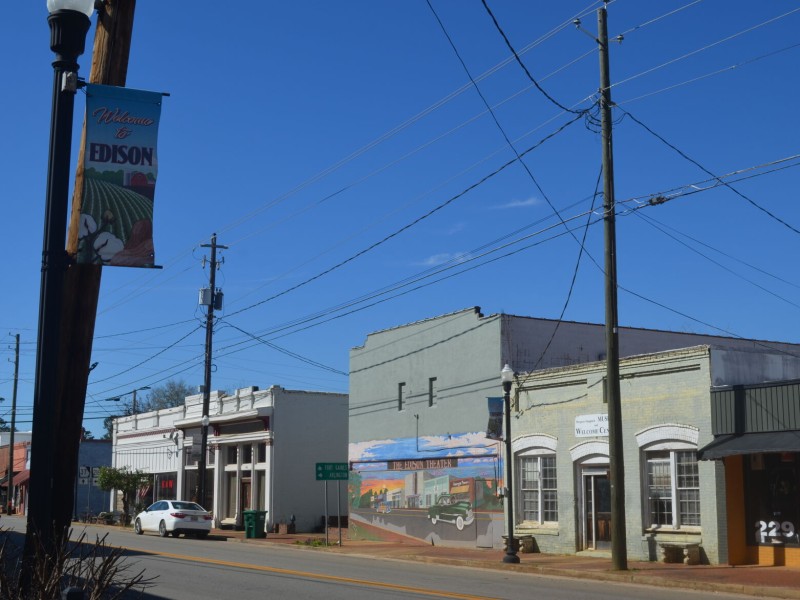
That ATV you drive around might not be legal. Edison, GA, looks into passing local ordinances
The use of golf carts, UTVs and ATVs and low speed vehicles has grown in popularity in recent years. Some cities have specific ordinances, allowing these different vehicles. Others, like Edison, never developed any local laws to address them, but Edison Councilman Curtis Adams said he’s noticed more and more on the streets. This prompted discussion on potential ordinances during Edison’s council meeting,
Arlington business owner accuses Police Department of failing to make arrests for repeated robberies
An Arlington business owner plans to close two of his businesses in the city next Wednesday in protest of what he said is “unequal protection under the law.”

No. 2-ranked Calhoun County wins thriller over Monroe, 63-60
The No. 2-ranked Calhoun County Cougars (8-0) remained undefeated Friday night with a hard-fought 63-60 victory over Monroe in front of a packed home crowd in Edison.
