
Some hundred Georgia cities are noncompliant in filing audits; Edison, GA’s, financial crisis serves as a warning
Staff Photo: Lucille Lannigan
Staff Photo: Lucille Lannigan
By Lucille Lannigan
[email protected]
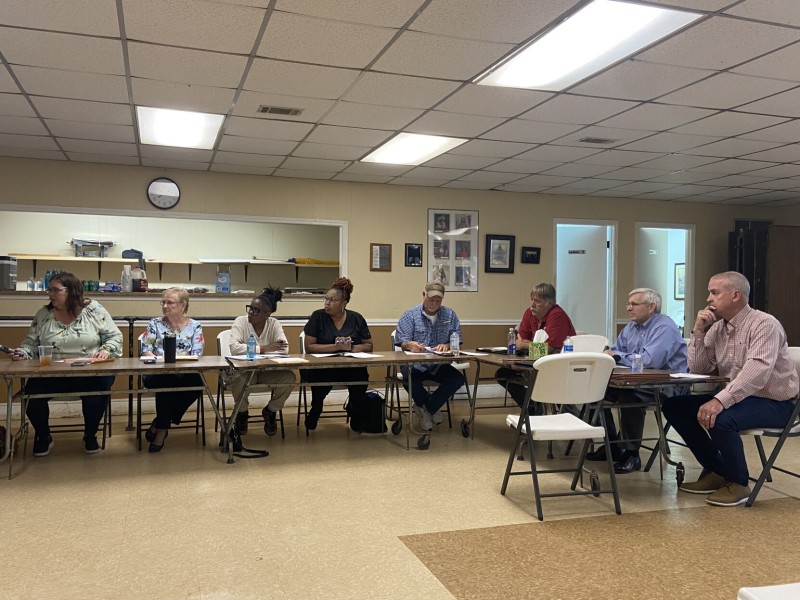
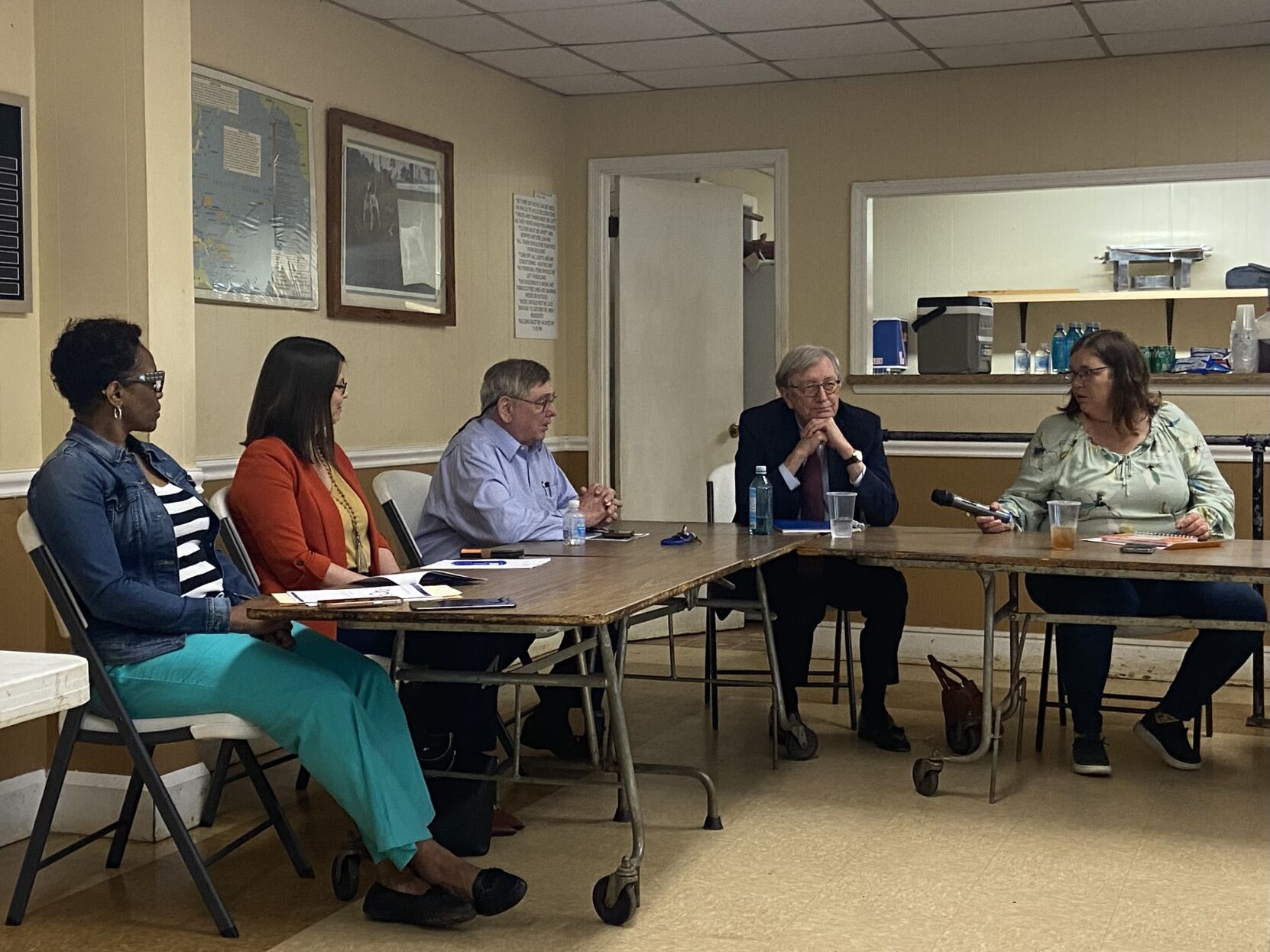
EDISON – Edison residents did not get the answers they hoped for during a special called meeting with city leadership and the Georgia Department of Audits and Accounts this week.
Edison hasn’t submitted a legally required audit since 2018, after former clerk Tami Fincher took over as the city’s clerk. That noncompliance places the city on the state DOAA’s noncompliant list and makes it ineligible to receive state funding. The city hired financial accountant Lori Moore in October to sort the books, but she informed residents Monday night that the city’s books – financial documents, meeting notes, transaction records, ordinances – are in such disarray that a clean audit would not be able to be produced.
Cities and counties have to be in good stewardship, having submitted audits for each of the five most recent years to be compliant. Greg Griffin, Georgia’s state auditor, suggested at the Monday meeting that the city focus on this year’s audit instead, which Moore said she will have no problem organizing the books for.
“Let 2024 be your first year of getting a good set of financial statements and an audit done,” Griffin said. “I would make sure your processes are put in place … make sure your house is in order going forward. Then, if you’ve got other time, I would work my way back.”
After some discussion, Edison’s mayor and City Council agreed. This means Edison will likely not be eligible for state funding until 2029.
“I don’t want to waste time and effort on dirty (business),” Councilman Curtis Adams said to the room. “Let’s spend the time and effort on what can get us out of this hole.”
The council also agreed to move forward with the state DOAA’s office conducting the 2024 audit – something Griffin told The Albany Herald the department rarely does but is willing and able to do in this circumstance.
Edison isn’t alone in its noncompliance. Griffin told The Herald that there has been “a good number” of cities and counties that have been noncompliant for a period of time. At Monday’s meeting, he said that number is growing.
The most recently posted report from March 18, had 126 Georgia cities and 22 counties on the noncompliant list. Griffin said this number is down a bit and also a snapshot in time as they consistently get late audit reports from local governments.
He said most of the cities are on the smaller side but not necessarily all are rural. Many cities and counties haven’t been compliant for multiple years.
Other southwest Georgia cities include Andersonville, Arlington, Colquitt and Fort Gaines as well as several area counties, including Dougherty County.
Sumter County’s Andersonville has a population of about 235, according to the Georgia Municipal Association site. Its city clerk, Teresa Owens, wears many hats. She said the city’s reason for its noncompliance is a lack of city staff – it has more departments than employees. Owens is the only person managing these departments and the city’s books. She said it’s like a juggling act.
She said no fault falls on the city’s hired auditor, who is based in Americus and completes audits for multiple cities. Filing the city’s audit just falls low on the priority list when one person is managing every other function.
“You just have to find the time to be able to devote to that,” Owens said. “When you get in, there’s so many things that you already have to do, you just kind of shuffle things around.”
She compared it to fighting wildfires.
“You just come in and you put out whatever fire there is that day,” Owens said.
The lack of staff is an issue for many of the places on the noncompliant list. This is called “segregation of duties” and is noted on a submitted audit’s list of findings, which is comments on the design or effectiveness of a city or county’s internal systems. This could include financial reporting, compliance and/or internal effectiveness.
Edison also has this issue.
Griffin said a lack of certified personal accountants to take on the work of preparing small city audits is another issue that’s been exacerbated since the COVID-19 pandemic.
However, while Edison isn’t unique in its noncompliance, it is unique in that the city was upwards of a half-million dollars in debt in July 2023, with a significant amount of money — $600,000 in federal funding — unaccounted for.
When city residents began pressing for answers on where these funds went, Fincher — then the city clerk — resigned in the summer of 2023, and former Mayor Reeves Lane and the entirety of the council resigned in the following months.
In an October meeting, the council announced that criminal activity was suspected. A GBI investigation was called for but subsequently denied due to the city’s noncompliance with the audit department, Moore said. City officials won’t comment on whether other investigations are underway.
Edison’s noncompliance is harming the city in other ways.
On top of its debt, the city has struggled with its sewer systems, broken water lines and meters, city staff shortages and properties in need of repair, including its city hall, which had leaking after a particularly strong rainstorm. It has been unable to apply for state funding to address these issues because of its failure to file audits.
Councilwoman Tia Ingram brought up at Monday’s meeting the potential of another severe storm coming through the city and the fact that the state would not be able to supply grants or aid for recovery.
Edison is in Calhoun County, which has been touched by tornadoes in the last year and also dealt with damage from Hurricane Michael in 2018. The Southeast, including all of Georgia, has been highlighted as one of the most vulnerable areas as sea levels rise. This opens up the door for more flooding both on the coast and inland, according to a report from Phys.org. This poses the question: Are those noncompliant cities and counties prepared to recover without state relief?
Griffin said the state Department of Audits is a mostly hands-off entity; it simply collects the city and county audits from across the state. However, in recent years, the lengthy noncompliant lists caught the department’s attention, and he said more and more state lawmakers have reached out asking for help for those noncompliant cities and counties within their districts.
Georgia Rep. Gerald Greene, R-Cuthbert, was one of those legislators. The DOAA has been working with Greene and the House Rural Development Council on potential legislation that would lessen the burden for local governments when it comes to their financial reporting. The plan is to introduce the legislation in the 2025 legislative session.
While Edison’s council members seemed prepared to move forward in focusing on the 2024 audit, some residents expressed concerns about accountability for the previous council and city clerk.
Marcia Killingsworth, an Edison resident, wrote in a text that she’s been concerned about accountability since she first started attending Edison’s virtual council meetings in July 2020. She watched Monday’s meeting from a Facebook livestream on an Ingram account.
She wrote that the city’s announcement that it no longer plans to work on the missing audits for 2018 through 2022 concerns her for three reasons, the first being how this decision will impact potential investigations into the city’s missing funds.
The second concern is accountability of the previous council’s handling of federal funds as well as five years of state grants, property and local option sales taxes, fees and other revenue. The city received this money yet still managed to amass major debt, she wrote.
“What happened to all that money?” Killingsworth asked. “It certainly wasn’t spent on capital or infrastructure improvements. The citizens deserve answers.”
She wrote that she also worries that Monday’s path will leave Edison “on its own” financially until 2029 when the citizens are already suffering due to steep bill increases.
“Citizens of Edison are already paying one of the highest – maybe even the highest – millage rates in the entire state; our water, gas, trash, etc. fees have gone through the roof, and we are having to pay for neglected infrastructure repairs that the feds funded with pandemic relief money … that has gone missing,” she wrote.
Mayor Shirley Worthy acknowledged the accountability concerns at Monday’s meeting.
“We’re not ignoring anything,” she said. “We’re not covering up anything. It’s just that this is what’s been recommended as the best option for us to get back on our feet and to move forward.”
Moore also was clear in an interview with The Albany Herald that the city does not plan to just “do away with” previous audits.
Both said the city wants to eventually put together the missing audits.
But for right now, the city’s priority is meeting audit reporting requirements and receiving clean opinions on the audit with no disclaimers to start efforts to meet the five-year requirement.
Author

Related Articles

That ATV you drive around might not be legal. Edison, GA, looks into passing local ordinances
The use of golf carts, UTVs and ATVs and low speed vehicles has grown in popularity in recent years. Some cities have specific ordinances, allowing these different vehicles. Others, like Edison, never developed any local laws to address them, but Edison Councilman Curtis Adams said he’s noticed more and more on the streets. This prompted discussion on potential ordinances during Edison’s council meeting,
Arlington business owner accuses Police Department of failing to make arrests for repeated robberies
An Arlington business owner plans to close two of his businesses in the city next Wednesday in protest of what he said is “unequal protection under the law.”

No. 2-ranked Calhoun County wins thriller over Monroe, 63-60
The No. 2-ranked Calhoun County Cougars (8-0) remained undefeated Friday night with a hard-fought 63-60 victory over Monroe in front of a packed home crowd in Edison.
