
Albany City Attorney Nathan Davis heads into retirement after more than two decades
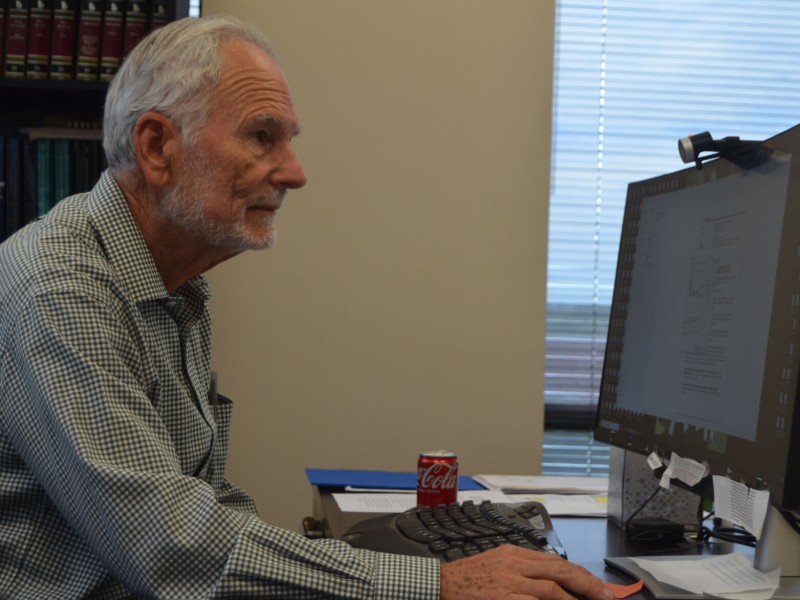
Staff Photo: Alan Mauldin
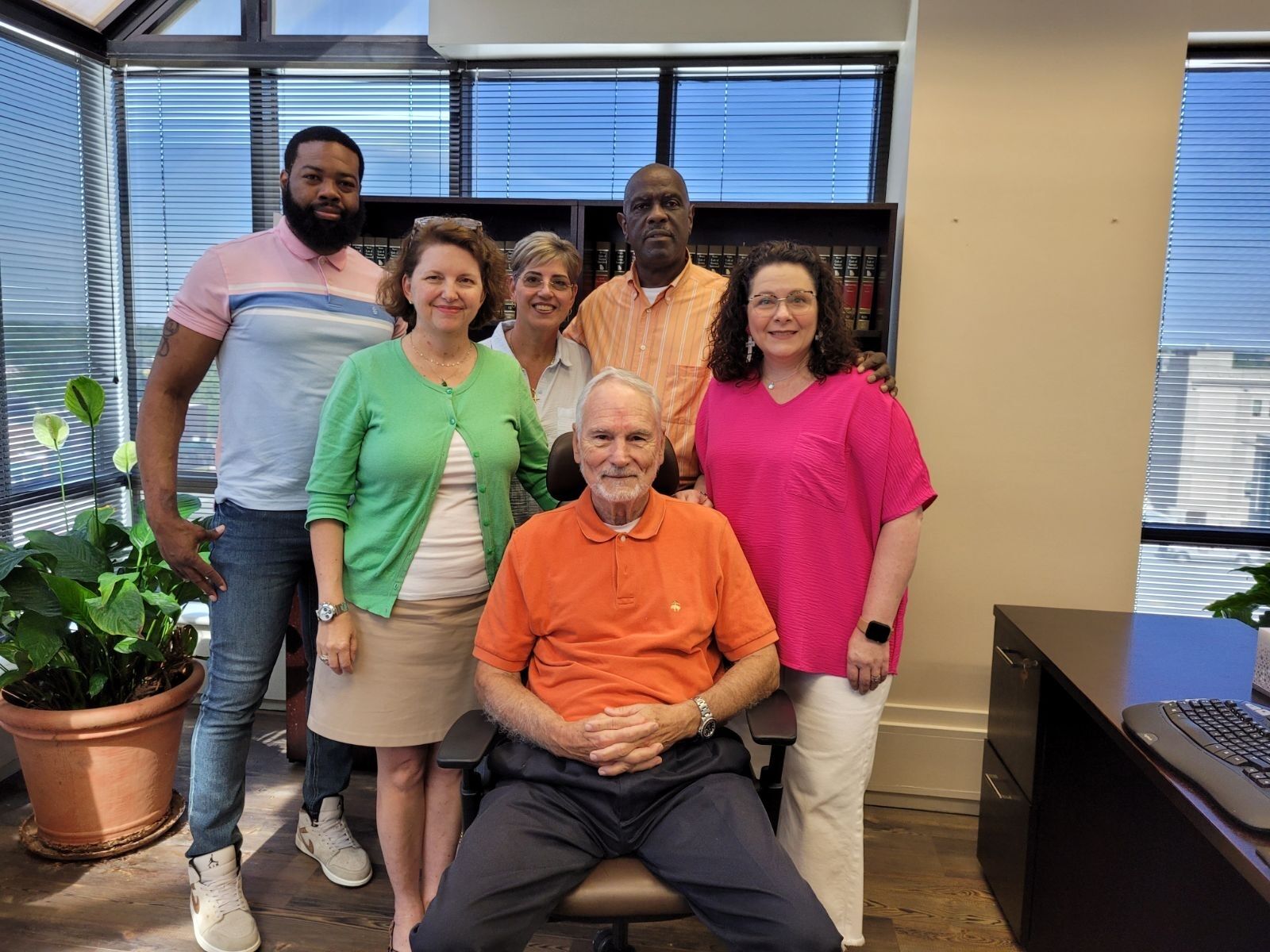
Special Photo
By Alan Mauldin
[email protected]
ALBANY – After more than 21 years of attending Albany City Commissions meetings, drafting legal documents and sometimes ending his day at a commissioner’s town hall meeting, City Attorney Nathan Davis is taking a break, at least from the world of law and government.
The 77-year-old, whose final day on the job was Friday, now plans to spend more time with grandchildren, one a college baseball player at Abraham Baldwin Agricultural College and two granddaughters who are in grade school in Albany. He also wants to pursue his love of hunting, exploring the woods in southwest Georgia and visits to the beach.
It was his experiences in southwest Georgia that led the Jacksonville, Fla., native, who spent most of his formative years in Miami, to Albany.
While attending college and law school at Mercer University in Macon, he frequently spent school breaks in the area.
“I didn’t have a car, so during breaks I ended up down south with friends,” he said. “I had a friend in Moultrie. I found people are friendly down here. It was just so different (than the people in Miami). I told my parents I’m just going to stay somewhere up in this area.”
Davis’ father was an airline mechanic, and his mother a telephone operator, and the latter made it her mission to see that he attended college.
“She decided I was going to be the first kid to go to college in the family, and then worked to earn the money,” he said.
After seeing the sacrifices his mother made, as a student Davis said he worked hard to take advantage of the opportunity, graduating with honors and earning a spot on the Mercer Law Review.
“She just worked so hard,” he said. “I just remember that, and how my parents worked so hard. That’s why I worked so hard because I didn’t want that work to go to waste.”
After graduating from the Mercer University School of Law, Davis got a rare opportunity of a clerkship with William Bootle, a U.S. District Court judge for the Middle District of Georgia, who is famous for civil rights cases, including the ruling that forced the integration of the University of Georgia. He worked in that judge’s office for two years.
“I was fortunate enough to get a position with an Article III federal judge,” Davis said. “I went on and was fortunate enough, continuing as an assistant U.S. attorney. (There) I was fortunate enough to try a lot of cases in the Middle District of Georgia.”
His cases as a prosecutor included white-collar crimes, a big murder case that involved a homicide at Fort Benning, as well as other criminal and civil cases. He worked extensively with a number of federal law enforcement agencies.
“It was a lot of traveling,” Davis said. “It was just a fast-paced environment. I’m not bragging. I’m just lucky that it wound up like that. Everything was always interesting, all the cases. It was just a pleasure to work with the FBI or whatever the agency was.”
After leaving that job, Davis relocated in Albany with a local firm before striking out on his own. Another lucky break was getting the job as solicitor, prosecuting cases in Albany Municipal Court. As an attorney in his own private practice, that work provided a steady income.
“It really helped me, because I think it was $75 an hour,” Davis said. “The monthly checks allowed me to cover a lot of my overhead, plus the other work I was doing. I did that for many, many years. Then I think I replaced (then-City Attorney) Al Grieshaber. Then I closed down my private practice and became city attorney.”
Since his early years on the job, the practice as city attorney changed dramatically. Having an in-house attorney saved the city a substantial amount of money, Davis said, on the many contracts and property sales closings in which the city is involved.
But in the old days, the office actually tried major cases in court, including a large Title VII civil rights lawsuit.
“That was a long trial,” Davis said. “That was a long, knock-down drag-out in front of jurors. We got a verdict in favor of the city. If we had lost, it would have cost the city a lot of money. There was no appeal, so it was all over.
“It didn’t cost anything. We just got paid for doing our job.”
Due to the complexity of trial work in the modern era, that kind of work is left up to specialists in the field now, and the number of attorneys has been reduced to two from the four onboard when he took the position. The other work performed by in-house legal staff is still a money-saver for the city, Davis said.
As he departs, the retired city attorney said he is leaving the office in the capable hands of Michael Custer, who is taking his place, and paralegal Stacie Mote, whom Davis referred to as “the linchpin of the office. This office would not exist without Stacie. She (Custer) is just excellent. The city is lucky to have her. She’s a super asset.”
Having a qualified staff as he rides off into the sunset is a satisfaction for Davis, who will not be jetting off to the other side of the world but will be pursuing some of his favorite pastimes.
“I’m not going to be traveling the world,” he said. “I do intend to spend more time outdoors, go to the beach, things like that. We like Albany. With the good weather and stuff, I might go back to playing tennis. We’ll still be living here. I’ve been really fortunate.”
Albany Commissioner Jon Howard, the longest-serving member of that body, said that he was impressed by the work that Davis put into the job and in serving the city. Often the city attorney would accompany him to after-hours town hall meetings and listen to the audience’s comments with interest.
“He always came to my town hall meetings,” Howard said. “He had good input and was always polite with the constituents. We always joked he was the seventh commissioner.”
Davis, who announced his retirement last week and left with little fanfare, told city officials he did not want a big to-do upon his departure.
“I like Nathan,” Howard said. “He was very professional and he was open-minded and he would give you a legal opinion based on the law. I would say if you were to call all of the elected officials that are still with us, I don’t think any of them will give you a bad word about him.”
When the commission was in closed-door sessions, discussing a specific topic allowed by law for discussion out of the hearing of the public and the discussion veered into another issue, Davis would notify commissioners that they should stay on the subject at hand, Howard said.
“He would tell us this is not something we should be discussing, and he would pull us back in,” Howard said.
Davis’ presence will be missed, Commissioner Chad Warbington said. The Ward IV commissioner also recalled that Davis was the attorney who closed the first real estate deal.
“Nathan’s knowledge of the inner workings of the city and city government is amazing, and he will be missed,” Warbington said. “He was the person always behind the scenes keeping us out of trouble. He kept us, the city commission, out of trouble, and he kept the city out of trouble.
“Overall, for a city to have a city attorney for some 20 years is remarkable.”
Author

Related Articles
My Grandpa Was Killed in World War II. I Met Him Through His Letters Home
Gina Wolf’s grandfather died before she was born. His letters sent to her grandmother from Europe during World War II made it possible to know what kind of man he was.

‘Sounds Like a Mutiny.’ Secret Recording Exposes Claims of Toxic Leadership After a Marine’s Suicide
This week’s War Horse story follows the systemic failures before and after the death of Cpl. Drew Mobley who was the third in two years at Marine Corps Base Quantico to die by suicide.

Southwest Georgia artists recognized at packed opening of exhibition
The annual juried exhibition, one of the region’s largest showcases of visual art, features approximately 46 artists and nearly 90 works spanning painting, sculpture, ceramics, photography and mixed media.
