
Anglers can have a say in future of Shoal bass
Special Photo
By Tom Seegmueller
[email protected]
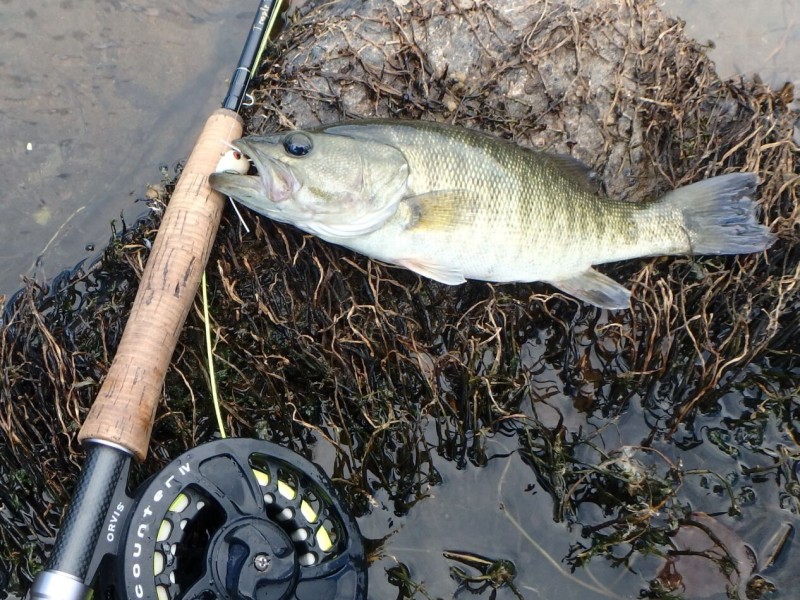
ALBANY — Southwest Georgia is literally “God’s Country” for anglers passionate in their pursuit of Shoal bass. In this instance, the phrase serves as a verification that this regional purity is largely due to the fact that this is the only place in the world where the fish can be found.
Micropterus cataractae, as the species is formally known, is a member of the sunfish family native only to the Apalachicola, Chattahoochee, Flint (ACF) River Basin and was identified as a “new” species in 1999. Although the fish is not currently considered threatened or endangered, it is considered to be a rare species with an extremely limited range.
Therefore, the Georgia Department of Natural Resources is currently conducting an online survey in an effort to determine public interest and gather input in developing an updated plan to better manage this unique natural resource. The easiest way to access the survey is to search “Georgia DNR Shoal Bass Survey” and use the DNR link.
“We want to manage the shoal bass population for the catch-and-release anglers as well as the anglers that want to harvest them,” Rob Weller, the fisheries supervisor for DNR, said. “We are interested in seeing if we can increase the size of the fish anglers are catching as well as have a population that supports the fish being harvested.”
Weller said that some of the data DNR used to evaluate the current status of the Shoal bass population was gathered from anglers who participated over the past two years in a tag study on the ACF. He emphasized that a great deal of research goes into the preparation of any proposed management plan.
The survey asks if Georgia anglers would support regulation of a total limit of 10 bass per day with only five of the fish being from a list that includes the Altamaha, Bartram’s, Chattahoochee, Redeye, Shoal, Smallmouth, Suwannee or Tallapoosa. It also asks if anglers would support a statewide 15-inch minimum length limit for Shoal bass.
Other questions on the survey include: Would anglers support the lower Flint River between Lake Blackshear Dam and Lake Seminole having trophy Shoal bass regulations, such as a protective slot limit of 15-20 inches? Would anglers support the lower Flint River between Lake Blackshear Dam and Lake Seminole having a trophy shoal bass regulation, such as an 18-inch minimum length limit?
Shoal bass are highly regarded not only because of their rarity, but for their tenacity and fighting ability when hooked. The fact that their favored habitat is the rocky shoals of the creeks and rivers in the ACF Basin results in an extremely strong fish. The fact that they can be caught on a wide array of tackle, from live bait to flies, adds greatly to their appeal. So much so that anglers come from around the world to pursue them.
Whether your goal is to catch and release a personal best Shoalie or put some on the dinner table, interested anglers should take advantage of this opportunity to let their opinions be known.
Author

Related Articles

My Grandpa Was Killed in World War II. I Met Him Through His Letters Home
Gina Wolf’s grandfather died before she was born. His letters sent to her grandmother from Europe during World War II made it possible to know what kind of man he was.

‘Sounds Like a Mutiny.’ Secret Recording Exposes Claims of Toxic Leadership After a Marine’s Suicide
This week’s War Horse story follows the systemic failures before and after the death of Cpl. Drew Mobley who was the third in two years at Marine Corps Base Quantico to die by suicide.

Southwest Georgia artists recognized at packed opening of exhibition
The annual juried exhibition, one of the region’s largest showcases of visual art, features approximately 46 artists and nearly 90 works spanning painting, sculpture, ceramics, photography and mixed media.
