
BARRY LEVINE: Ray Charles hit the chart, Jack, in 1961
THE OLD ROCKER: ‘Hit the Road, Jack’ was Charles’ second of three No. 1 hits
By Barry Levine
“Hit the road Jack and don’t you come back no more. (What you say?)”
— Ray Charles, “Hit the Road Jack,” 1961
It doesn’t seem possible that 56 years have passed since Albany native Ray Charles had the No. 1 hit in the land with “Hit the Road Jack.”
It might not seem like it, but it is.
“Hit the Road Jack” was the second of three No. 1 hits for Charles on the Hot 100. The first was “Georgia on My Mind” in 1960 and the last was “I Can’t Stop Loving You” in 1962.
Although Charles wrote much of his material, he did not write any of his No. 1 hits.
Charles’ version of “Georgia on My Mind” was officially designated as the state song in 1979. Hoagy Carmichael and Stuart Gorrell wrote the tune in 1930.
R&B artist Percy Mayfield penned “Hit the Road Jack” and it was first recorded in 1960 as an a cappella demo sent to Art Rupe, head of Specialty Records. It became famous after it was recorded by Charles with The Raelettes’ Margie Hendrix.
Country singer/songwriter Don Gibson wrote “I Can’t Stop Loving You” and it was first recorded in 1957. It was released in 1958 as the flip side of “Oh, Lonesome Me,” a Top 10 hit.
Charles’ recording of “Hit the Road Jack” hit No. 1 for two weeks on the Hot 100, beginning on Oct. 9, 1961. The song was No. 1 on the R&B chart for five weeks.
“Besides Hit the Road Jack,” Charles’ had nine other No. 1 hits on the R&B chart. The others were “I’ve Got a Woman” and “A Fool for You” in 1955, “Drown in My Own Tears” in 1956, “What I’d Say” in 1959, “One Mint Julep,” and “Unchain My Heart” in 1961, “I Can’t Stop Loving You” and “You Are My Sunshine” in 1962 and “Let’s Go Get Stoned” in 1966.
“Hit the Road Jack” won a Grammy for Best Rhythm and Blues Recording of the year.
The song was ranked No. 387 on Rolling Stone magazine’s list of “The 500 Greatest Songs of All Time.”
Charles, who lost his sight at age 7, pioneered the genre of soul music during the 1950s by combining blues, rhythm and blues, and gospel styles into the music he recorded for Atlantic Records.
He also was responsible the integration of country music, R&B and pop music during the 1960s with his crossover success on ABC Records. While he was with ABC, Charles became one of the first black musicians to be granted artistic control by a mainstream record company.
Charles reached the pinnacle of his success at Atlantic with the release of “What’d I Say,” a complex song that combined gospel, jazz, blues and Latin music. He later said that he had composed the song spontaneously as he was performing in clubs and at dances with his small band.
Despite some radio stations banning the song because of its sexually suggestive lyrics, the song became Charles’ first crossover Top 10 pop record.
Charles developed into more than just a singer, performing at many national political and sports functions.
He performed at two presidential inaugurations: Ronald Reagan’s in 1985 and Bill Clinton’s in 1993. On Oct. 28, 2001, seven weeks after the terrorist attacks of Sept. 11, Charles appeared during Game 2 of the World Series, between the New York Yankees and host Arizona Diamondbacks to perform “America the Beautiful.”
In 2003, he headlined the White House Correspondents Dinner in Washington, D.C., attended by President George W. Bush, first lady Laura Bush and cabinet members Colin Powell and Condoleezza Rice.
Charles’ last public appearance was on April 30, 2004, at the dedication of his music studio as a historic landmark in Los Angeles. He died on June 10, 2004, at age 73.
This week in rock history
Jackie Wilson recorded “Lonely Teardrops” on Oct. 15, 1958. It became his first Top 10 hit, reaching No. 7 on Pop chart.
Sam Cooke’s “You Send Me” was released by Keen Records on Oct. 16, 1957. The single became his biggest hit, topping the charts and selling 2.5 million copies. During the next eight years, he charted 28 more songs.
Dion & The Belmonts split over what was described as “musical differences” on Oct. 17, 1960. Dion DiMucci said that The Belmonts were leaning too much toward “middle of the road” music, but insiders said that the sharing of money was the major factor.
The Temptations continued their long string of hit singles when the second of their four No. 1 hits, “I Can’t Get Next To You,” topped the charts on Oct. 18, 1969.
Blind Singer Jose Feliciano recorded his version of “Light My Fire” on Oct. 19, 1967. It reached No. 3.
The Four Seasons’ “Big Girls Don’t Cry” was released on Oct. 20, 1962. It became their second straight No. 1 hit, spending five weeks at the top.
“Jailhouse Rock” became Elvis Presley’s ninth chart-topper during over an 18-month period on Oct. 21, 1957.
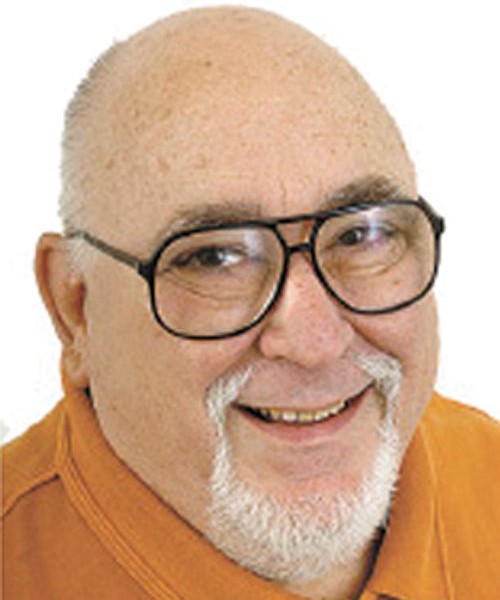
Barry “The Old Rocker” Levine is an entertainment writer for The Albany Herald. He can be reached at [email protected].
Related Articles
My Grandpa Was Killed in World War II. I Met Him Through His Letters Home
Gina Wolf’s grandfather died before she was born. His letters sent to her grandmother from Europe during World War II made it possible to know what kind of man he was.
‘Sounds Like a Mutiny.’ Secret Recording Exposes Claims of Toxic Leadership After a Marine’s Suicide
This week’s War Horse story follows the systemic failures before and after the death of Cpl. Drew Mobley who was the third in two years at Marine Corps Base Quantico to die by suicide.

Southwest Georgia artists recognized at packed opening of exhibition
The annual juried exhibition, one of the region’s largest showcases of visual art, features approximately 46 artists and nearly 90 works spanning painting, sculpture, ceramics, photography and mixed media.
