
Barry’s success as easy as 1-2-3
Philadelphia’s Barry switched from successful athlete to singer
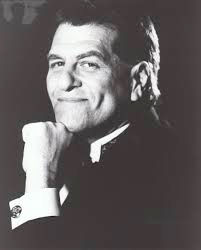
By Barry Levine
For Len Barry, it was as easy as “1-2-3.”
After splitting with The Dovells, the R&B singer struck gold when “1-2-3” jumped to No. 2 on the charts in November 1965, trailing only The Supremes’ “I Hear a Symphony.” Barry’s song sold more than 4 million copies.
Barry, who wrote the song, said in a recent telephone interview that “1-2-3” had a much different meaning than what most thought.
The Philadelphia native said he got the idea for “1-2-3” from the Marvelettes’ 1962 Top 20 hit “Beachwood 4-5789.”
“I was going out with one of the Marvelettes (an all-black female group with Motown), and her family was strongly against the relationship, especially her mother. The song really was about interracial relations that were as easy as ‘1-2-3.’ “
The song “1-2-3” was featured on the soundtrack of the 1995 film “Mr. Holland’s Opus,” which starred Richard Dreyfuss and co-starred Glenne Headly, Jay Thomas, Olympia Dukakis and William H. Macy.
“1-2-3” also was one of the songs that appeared in John Lennon’s jukebox. Lennon filled his jukebox with 40 singles to accompany him on tour and “1-2-3” was one of them.
Barry began performing while at Overbrook High School in Philadelphia, not as a singer, but on the basketball court and baseball diamond.
The 6-foot-1 singer was a regular on the basketball team for three years during the late 1950s that lost just one game. Richie Allen, who gained fame as a slugging third baseman for the Philadelphia Phillies, starred on the team that defeated Overbrook.
Incredibly, three members of that Overbrook team, Walt Hazzard, Wali Jones and Wayne Hightower, had careers in the National Basketball Association. Hazzard played with the L.A. Lakers, Seattle, Atlanta, Buffalo and Golden State from 1964 to 1974. Jones performed for Baltimore, Philadelphia, Utah and Detroit from 1964 to 1976. Hightower starred for San Francisco, Baltimore and Detroit from 1962 to 1967. He later played in the American Basketball Association from 1967 to 1972.
Ralph Heyward, also a member of that team, starred for the University of Seattle, but did not play in the NBA.
Barry starred for Overbrook’s baseball team as a first baseman and occasional catcher and was offered a professional contract by the St. Louis Cardinals, which he rejected.
Barry switched from the court and diamond to the stage after high school when he entered the U.S. Coast Guard. He sang with the Coast Guard Band in Cape May, N.J., and was so encouraged by the audience’s response and he decided to make music his career.
His father indirectly influenced Barry’s decision. “When I asked my mother where my father was, she always would respond, ‘He’s working … He’s working.’ That’s when I decided I didn’t want to work a 9-to-5 job,” Barry revealed.
He formed The Brooktones late in his senior year at Overbrook. They performed at local school functions and occasionally at John Madara’s Philadelphia record store. Madara had co-written Danny & The Juniors 1957 No. 1 hit “At The Hop.”
The Brooktones recorded a Barry-written song called “No, No, No”, which gained some recognition in the Philadelphia area, but the group had little success outside the immediate sector.
In December 1960, Barry’s group auditioned for Cameo/Parkway record execs and was quickly signed by the label.
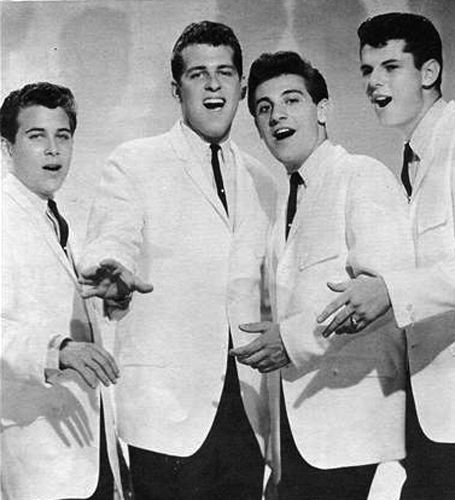
Cameo exec Bernie Lowe was not enthralled with the group’s name, The Brooktones, and wanted a new name and suggested that they change their name to the Deauvilles after the renowned Deuville Hotel in Miami Beach, Fla.
The group acquiesced to the new change, but thought it was too hard to spell and so they changed it to the Dovells.
In the spring of 1961, the Dovells went to Cameo’s studios to record their new “A” side: the 1957 Teenagers’ ballad “Out in the Cold Again.”
While this session was proceeding, Cameo/Parkway promotion man Billy Harper entered the studio, talking about a new dance kids were doing called “The Stomp” at the Goodwill Fire Hall in Bristol, a Philadelphia suburb.
They decided to write “The Bristol Stomp” and they did it overnight. They returned the next day and recorded it. “Out in the Cold” became the “B” side.
Calling it “Bristol Stomp” as opposed to “The Stomp” was a stroke of genius. According to Barry, there are 42 cities in the country named Bristol and they all thought the song was named for their city.
By October, “Bristol Stomp” had risen to No. 2 of the charts.
Cameo/Parkway execs felt that they had found the Dovells’ niche, and followed “Bristol Stomp” with several dance songs that charted including “Do the New Continental” (No. 37), “Bristol Twistin’ Annie” (No. 27), “Hully Gully Baby,” (No. 25) and “The Jitterbug” (No. 82).
The Dovells had their next smash hit in the summer of 1963 when “You Can’t Sit Down” climbed to No. 5. The song originally was done as an instrumental by the Phillip Upchurch Combo in 1961. Upchurch’s version was a moderate hit topping out at No. 29.
“You Can’t Sit Down” was The Dovells’ last Top 40 hit. It also was the favorite of all of the songs by the Dovells and Barry.
“It was an immediate smash,” recalled Barry. “It just exploded and was an instant hit.
“Some songs are ‘work songs’ that take time. ‘Bristol Stomp’ sold 140,000 copies in the Philadelphia area before getting New York play. … It just took time to succeed.”
The group’s next release “Betty in Bermudas” in the summer of 1963 only reached No. 50.
One of the most interesting aspects of the Len Barry Dovells was, because of their sound, most of their fans thought they were a black R&B group, when, in reality, all of the members were white. This sound enabled the Dovells to regularly get booked in primarily black venues in the Northeast including New York, Philadelphia and Washington.
Simmering tensions among group members erupted at a Christmas show at a Miami Beach hotel in 1963, and Barry left the Dovells.
Barry’s departure followed in the footsteps of other lead singers who left their groups including Clyde McPhatter and Ben E. King (Drifters), Jackie Wilson (Billy Ward & The Dominoes), Johnny Maestro (The Crests) and Jerry Butler (The Impressions).
According to Barry, the friction was about harmony problems.
A rock ‘n’ roll insider said the real problem was that Barry, the lead singer on all of the group’s hits, was the only member of the Dovells who could sing.
“The other members of the group wanted to do four-part harmony like the Four Freshmen and Four Preps, but I knew they did not have the voices to do that,” Barry explained.
After the contentious split, Barry changed his stage name from Len Borisoff to Len Barry.
Barry felt that name would be more recognizable than Borisoff. He also said that his father owned three neighborhood bars in Philadelphia under the name of Joe Barry.
Barry quickly left Cameo/Parkway and signed with Decca Records with a far more lucrative contract.
“All The Dovells got from Cameo/Parkway for selling all those records was a station wagon and bookings, but not a penny from the records sold,” he revealed.
Barry admitted he was nervous working as a solo act because he had always worked in a group setting.
“Sure I had trepidations about going solo, but I had confidence in my abilities,” he revealed.
The concerns quickly dissipated when “1-2-3”skyrocketed up the charts in 1965.
He had two more Top 40 hits in 1966 with “Like A Baby” and “Somewhere,” a song from the Broadway show and movie “West Side Story.”
“I really didn’t want to record “Somewhere” because I always considered myself an R&B singer and “Somewhere” is not an R&B song.” Barry said.
With his new contract with Decca, he was allowed to write some of his songs, something he was not permitted to do with Cameo/Parkway. “The record company execs at Cameo/Parkway simply told me, ‘You sing and we’ll write the songs.’ “
The combination of singing and writing and performing helped Barry increase his 1966 income to a whopping $3 million.
Possessing dual citizenships for the United States and England, Barry lived in London from 1972 to 1976, in part because he enjoyed the city’s history and in part the way Brits treated their performers. “One you’re a star in England, you’re a star for life. I was much more popular in England than I was in the United States,” Barry said.
He also continued writing songs while in London and one of his tunes “Zoom” by Fat Larry’s Band was No. 1 in Europe for 12 weeks.
In May 2008, Barry reinvented himself as an author with the publication of “Black Like Me,“ a novel. The storyline involved a pair of Caucasian siblings growing up in a largely African-American neighborhood, accepted by some, rejected by others.
Barry probably got the idea for the book from his youth growing up in a Philadelphia neighborhood where he said his family was the only white family within a three-mile radius.
Barry was well versed in the subject as he earned his master’s degree from the University of Pennsylvania in racial and ethnic relations.
He has since signed a two-book deal with Simon & Schuster, one of the nation’s biggest publishing companies.
The first was called “Kenyatta” and the second, which he expects to be released in the spring, will be entitled “Rebel Without Applause.” The book, an autobiography, starts with the assassination of President Kennedy in November 1963. Barry was in Dallas with the Dick Clark Caravan of Stars and was on the street viewing the Kennedy caravan just before he was shot.
The book will contain a CD of eight of Barry’s songs, believed to be a first for the publishing industry. Among the songs on the CD were “Black Like Me,” “C’mon Man,” ”Push” and “I Can’t Sing.” Some off the songs pertain to race relations.
Barry Levine is an entertainment writer for The Albany Herald. He can be reached at [email protected]
Related Articles
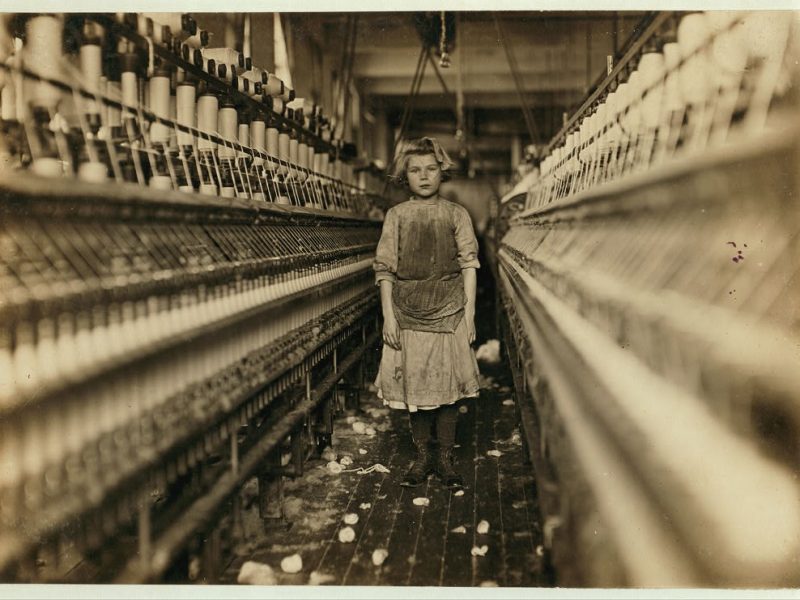
From cotton to cloud: In the data center debate, is rural Georgia once again being asked to carry the cost?
Across much of rural Georgia, the abandoned cotton warehouses and shrinking tax bases remain — enduring reminders that industries built to serve distant markets do not necessarily stay rooted in the communities that first sustained them.
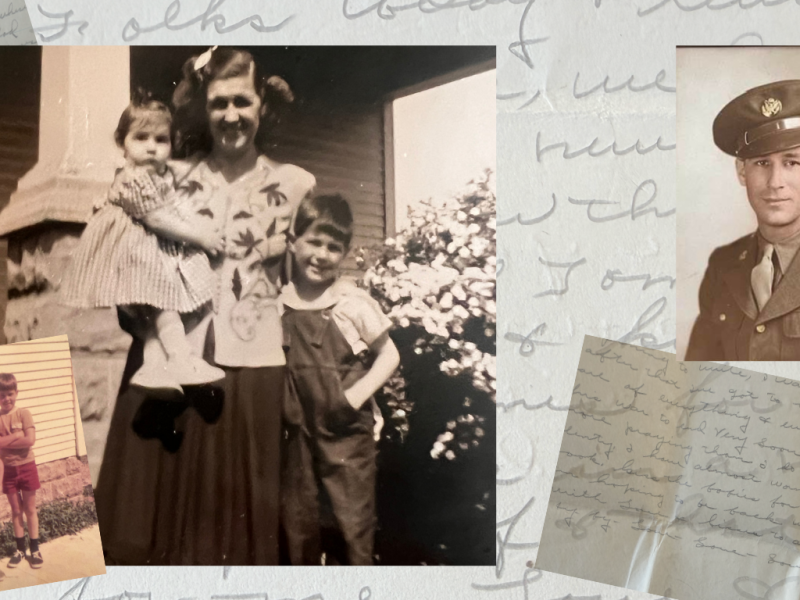
My Grandpa Was Killed in World War II. I Met Him Through His Letters Home
Gina Wolf’s grandfather died before she was born. His letters sent to her grandmother from Europe during World War II made it possible to know what kind of man he was.
‘Sounds Like a Mutiny.’ Secret Recording Exposes Claims of Toxic Leadership After a Marine’s Suicide
This week’s War Horse story follows the systemic failures before and after the death of Cpl. Drew Mobley who was the third in two years at Marine Corps Base Quantico to die by suicide.
