
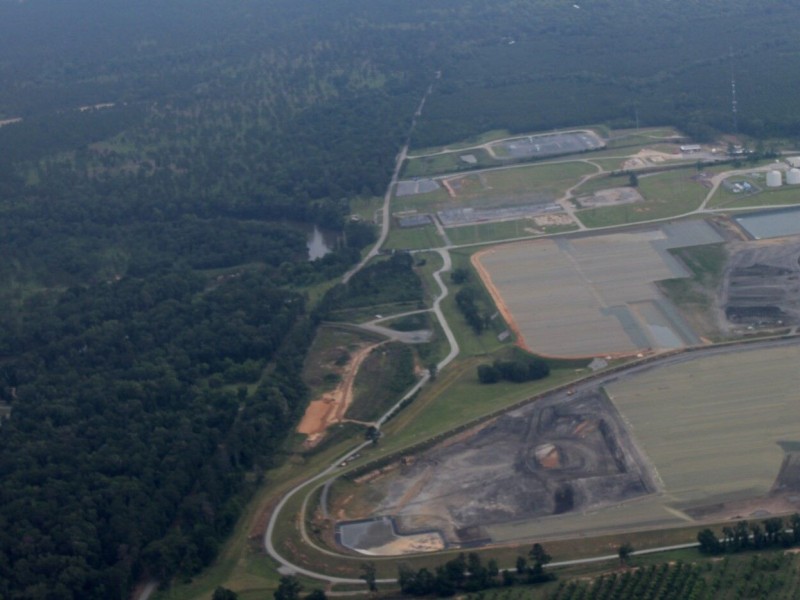
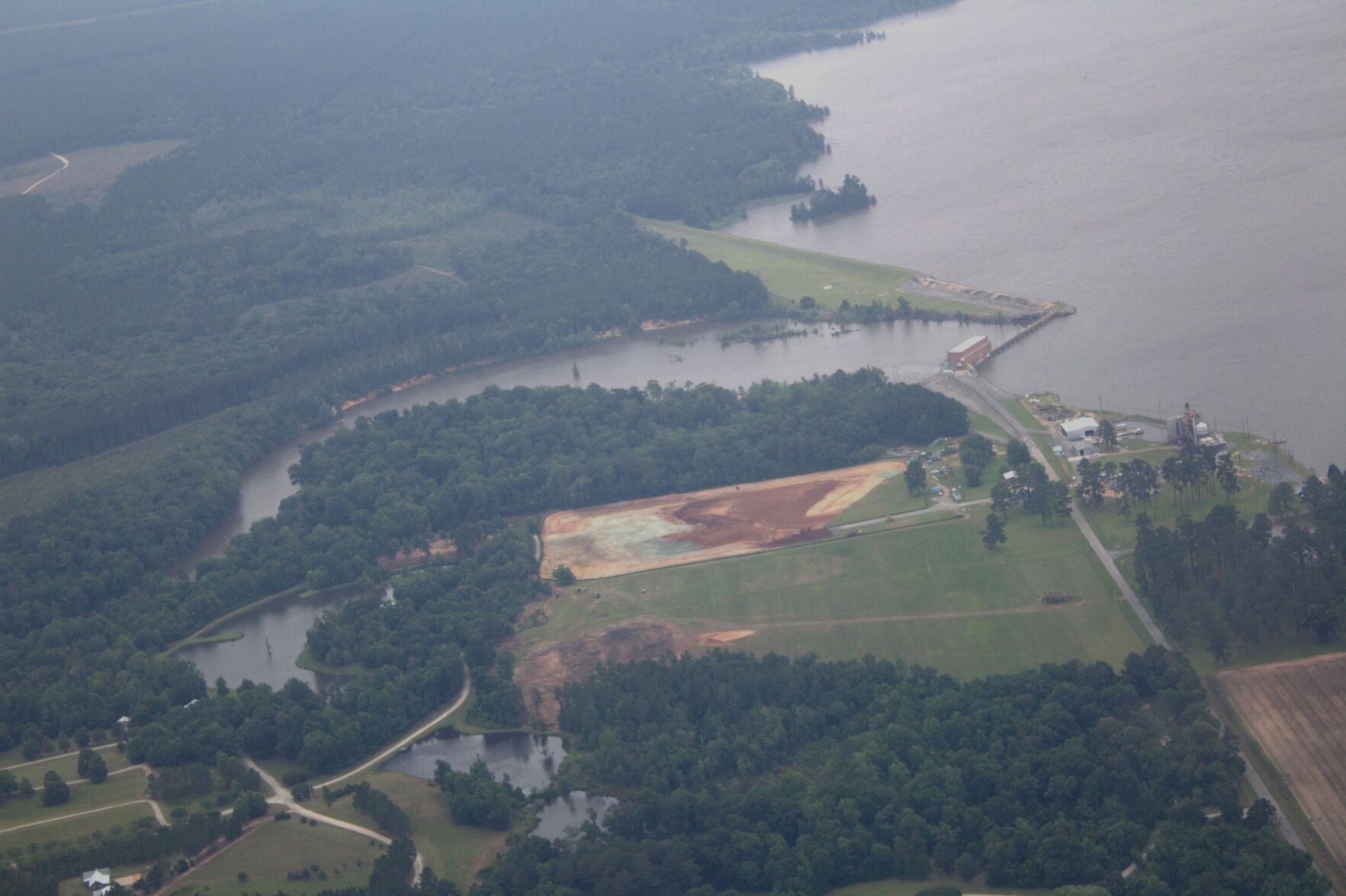
Coal ash being removed from the banks of the Flint River
Special Photo: Flint Riverkeeper
By David Dixon
Special to The Albany Herald
ALBANY — Coal ash in ponds from both Georgia Power’s decommissioned Plant Mitchell site and Crisp County Power Commission’s (CCPC) electric-generating plant in Warwick are being removed from the banks of the Flint River.
Coal ash (coal combustion residuals, or CCR) contains toxic metals like cadmium, mercury, selenium and arsenic. When wet, metals within the CCR can leak, contaminating the surrounding environment. EPA has concluded that unlined coal ash ponds can be harmful to both humans and the environment.
“We are exceptionally pleased that we are in the final stages of achieving removal of the coal ash from the Flint River floodplain,” Flint Riverkeeper Executive Director and Riverkeeper Gordon Rogers said.
The unlined ash ponds along the Flint River from both entities have leaked into the Floridan aquifer. This happens due to the fact that the ash ponds are unlined, exposed to the underlying groundwater, and are sited on Karst limestone. This type of geology is a honeycomb of cracks and fissures that allows rain and flood water to seep into the aquifer below. Most of the leakage is gradual, but occasionally a large leak has developed, such as the one more than 25 years ago at Plant Mitchell.
Starting in 2014, Flint Riverkeeper, a local environmental nonprofit, strongly advocated with the power utilities to responsibly close these coal ash ponds by excavating them to lined landfills where they will no longer pose a threat to the surrounding waterways. By 2022 CCPC had removed all the ash from their lone pond. That ash from the Warwick facility was sent to the lined EPA subtitle D Crisp County Landfill per a contact at the power plant in accordance with their disposal plan with Georgia EPD.
Georgia Power decided to remove the ash from the three ash ponds at Plant Mitchell, on the Mitchell-Dougherty county line, to various Portland cement factories. This ash will be utilized as an ingredient in materials manufactured by that company. The removal of the ash was initiated in 2020 and is continuing to this day.
Removal of the ash from the banks of the Flint River is a victory for the region’s businesses, farmers, homeowners, communities, and recreational water users. Unlined ash ponds were never a good idea, much less by a water body; however, they were allowed by the regulations of the time.
Not only do most of them leak, there have been disastrous failures of ponds in Eden, N.C., in 2014 and the Kingston Plant near Nashville, Tenn., in 2008. Millions of tons of toxic ash spilled into three river systems, causing untold amounts of damage and pollution. The Kingston disaster remains the largest solid waste spill in U.S. history, and almost 10 times the size of the Deepwater Horizon disaster in the Gulf of Mexico.
Legal actions and settlements from these two incidents plus other problems in the Carolinas and in Virginia appeared to have a tremendous influence on how the two sites on the Flint River were resolved.
The decisions by Georgia Power and Crisp County Power Commission should be well-received by the lower Flint basin citizens.
Author

Related Articles

My Grandpa Was Killed in World War II. I Met Him Through His Letters Home
Gina Wolf’s grandfather died before she was born. His letters sent to her grandmother from Europe during World War II made it possible to know what kind of man he was.

‘Sounds Like a Mutiny.’ Secret Recording Exposes Claims of Toxic Leadership After a Marine’s Suicide
This week’s War Horse story follows the systemic failures before and after the death of Cpl. Drew Mobley who was the third in two years at Marine Corps Base Quantico to die by suicide.

Southwest Georgia artists recognized at packed opening of exhibition
The annual juried exhibition, one of the region’s largest showcases of visual art, features approximately 46 artists and nearly 90 works spanning painting, sculpture, ceramics, photography and mixed media.
