
Coke mastermind Woodruff had huge impact on southwest Georgia
Special Photo
By Tom Seegmueller
[email protected]
“There are no limits to what a man can do or where he can go, if he does not care who gets the credit.”
— Robert Winship Woodruff
ATLANTA — Although the above would become Woodruff’s Creed, those who observed him as a young man did not see him going very far. After graduating from the Georgia Military Academy (now Woodward Academy), he enrolled at the Georgia Institute of Technology and promptly flunked out. From there, he went to pursue his higher education at the Emory University campus at Oxford, and during his one semester there it appeared his major accomplishments were “cutting class and spending money.”
The man who would later become known as “The Boss” and “Mr. Anonymous,” was off to an inauspicious start.
In 1909, at age 19, Woodruff turned down his father Earnest’s offers of employment and went to work as a laborer for the General Pipe and Foundry Co. His first week there was spent shoveling and sifting the sand used in the molding process. His skills with a shovel, or lack thereof, led to a transfer to be an apprentice in the company’s machine shop, where he lasted a year before being fired.
However, the man who would later build the Coca-Cola empire was rehired by General Fire Extinguisher, the foundry’s parent company, where he advanced into a position in the sales department. His interest in automobiles led him to take a sales position with White Motor Company in Cleveland, Ohio, where he flourished, rapidly rising to become the company vice president. During WWI, while serving in the U.S. Ordinance Department, he pushed for the adoption of a truck design that could only be produced by White Motor Co., and the company’s wartime profits soared.
In 1923 Earnest Woodruff once again offered his prodigal son an opportunity in one of the family businesses. In 1919, he and a group of investors had purchased the Coca-Cola Company from Asa Candler. Robert Woodruff accepted the offer and, taking on the role of president of the company, three years later, at the age of 37, he had turned the company into an international entity establishing its foreign department.
During WWII, Woodruff did everything in his power to ensure that American troops were able to drink a Coke wherever they were stationed. As a result, bottling plants sprang up around the world in the footsteps of advancing American troops. When the troops came home, the bottling plants remained in operation, creating a truly worldwide presence for Coca-Cola.
Woodruff would serve as the president of the Coca-Cola Company from 1923 until 1954. He would continue to guide the company as a board member until 1984.
As impressive as Woodruff’s business acumen might be, it is not his greatest legacy. His most profound legacy would be that of a philanthropist. He had always been generous, giving anonymously behind the scenes to a variety of causes and organizations. His early efforts helped Atlanta create its international presence.
In 1937, he stepped up his game, creating the Trebor Foundation for the enrichment of Atlanta. Upon his death in 1985, the foundation reversed the spelling of its name, establishing the Robert W. Woodruff Foundation. The goal of the foundation expanded to continue Woodruff’s goal of improving the quality of life for all Georgians.
Today the Foundation makes grants in six general categories: health, education, environmental, human services, arts and culture, and community development. The greatest portion goes to education.
Interestingly, two pillars of Woodruff’s legacy are tied directly to his passion for quail hunting. In the late ’20s he purchased 28,000 acres in Baker County, creating Ichauway Plantation. On one of his early visits to the property, while standing in the yard of the modest home he had built there, one of the older workers approached.
“I just want to meet the new ‘Boss’,” the worker said. While he talked to Woodruff, he began to shake uncontrollably. When he climbed back upon his wagon and left, Woodruff asked plantation manager Roy Rogers, “What was wrong with that fellow?” “Malaria,” Rogers replied. It turned out that the disease was endemic throughout the region, and more than 60% of the residents in Baker County had contracted it. Most were too poor to afford medical attention.
Woodruff immediately called a contact in Atlanta and had a barrel of quinine pills shipped to Rodgers with the instructions that they be distributed throughout the county to anyone in need. It was evident, however, that more effort was necessary to combat the disease. In 1937, the Boss arranged for a clinic focused on malaria control to be set up near the general store on Ichauway’s main road.
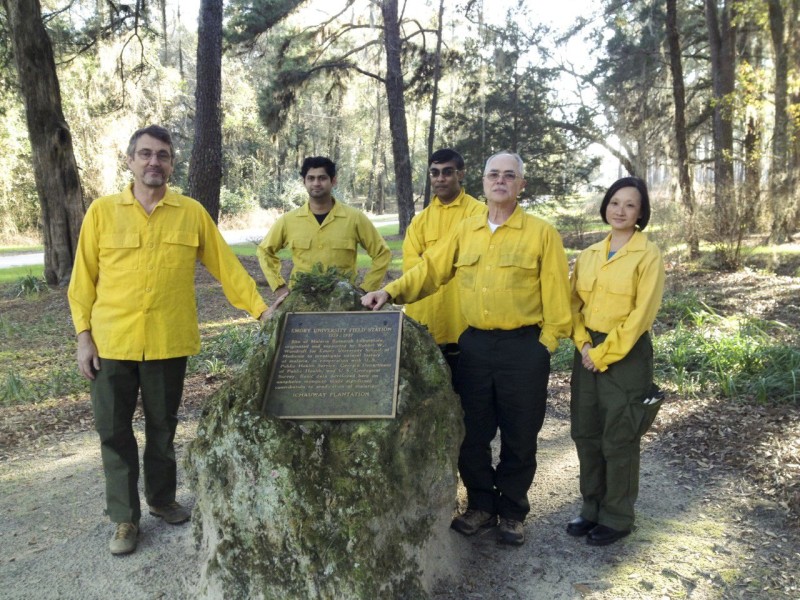
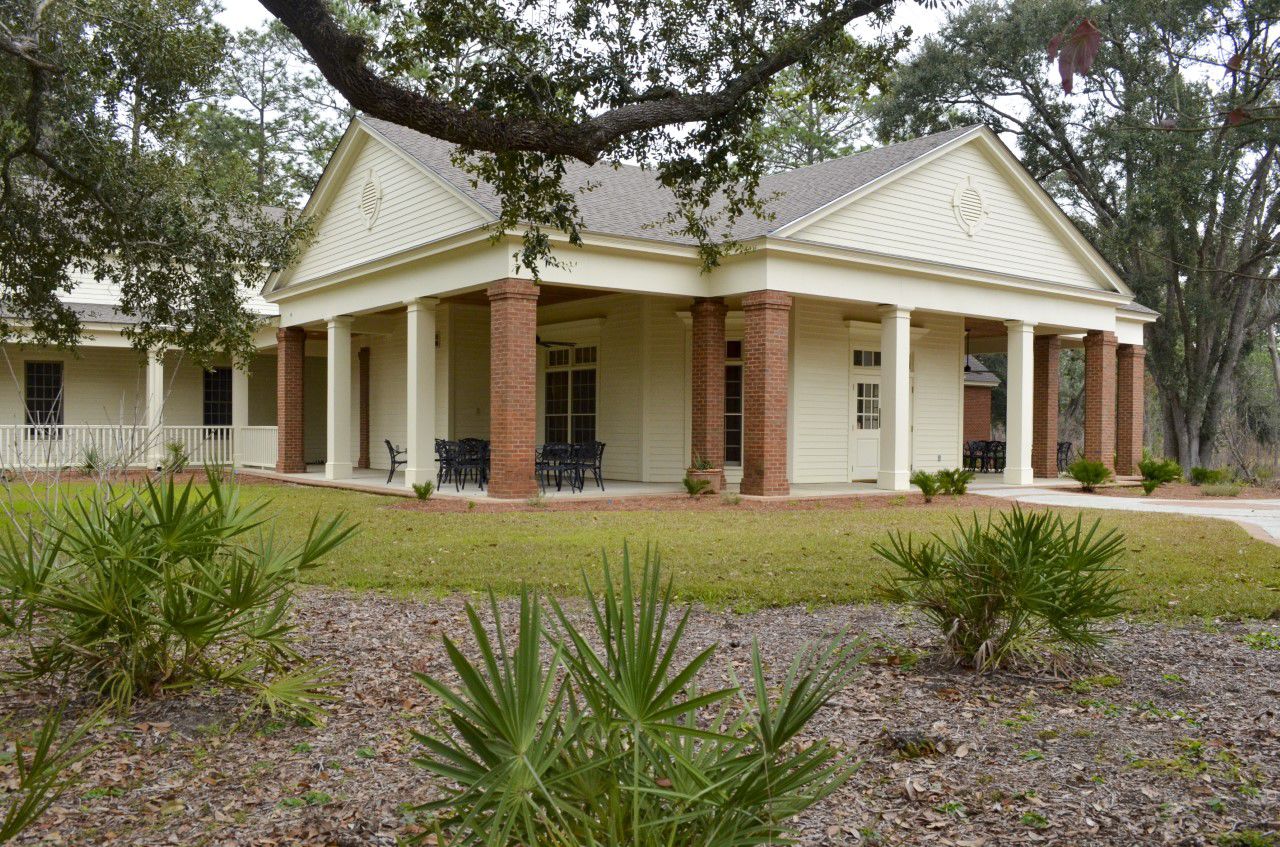
He went on to build housing and offices to support medical staff from the Malaria Research Foundation and the Emory University School of Medicine, creating a clinic providing free medical services to all persons in the county affected by the disease. Woodruff would continue to support these efforts with the provision that Emory personnel and labs be utilized in the project, leading to creation of the Emory University Field Station at Ichauway.
When WWII broke out, it was a foregone conclusion that U.S. troops would be fighting in tropical regions. In 1942, the research facility at Ichauway became the WWII Malaria Control in War Areas Program, with much of the work still being done in conjunction with the labs at Emory. In 1946, the program would be renamed the Communicable Disease Center headquartered in Atlanta Georgia. With a million-dollar annual budget, 60% of their initial efforts were focused on mosquito control and abatement.
In 1947 the federal government made a token payment of $10 to Emory University for 15 acres of land that would become the current campus of the Center for Disease Control and Prevention. So an attempt to prevent the spread of Malaria in Baker County resulted in the CDC being in Atlanta instead of Washington, D.C.
Another Woodruff contribution related even more directly to Ichauway was the establishment of the Joseph W. Jones Research Center following Woodruff’s death in 1985. The Woodruff Foundation, following an extensive evaluation of potential ways to preserve and utilize the property, established a research center there. In typical Woodruff fashion, the center was not named for him. Instead it was named in honor of his most trusted associate and confidante, Joseph W. Jones.
To date, more than 100 research students from regional universities have completed thesis research with the on-site advisers at the center. More than 80 staff members at the center are dedicated to the mission, “to seek to understand, to demonstrate and to promote excellence in natural resource management and conservation on the landscape of the southeastern Coastal Plain of the United States.”
The bobwhite quail, indigo snake and red cockaded woodpecker are just a few of the species that are benefiting from this research. The longleaf pine-wiregrass ecosystem found there is one of the most diverse in the United States if not the world.
Ichauway also factored into Woodruff’s philanthropic and civic efforts in more subtle way. Whenever an idea needed to be communicated or an attitude needed adjusting, what better setting for a seemingly casual conversation while riding the mule wagon or on horseback following a brace of bird dogs?
One such occasion occurred in 1964, when the Nobel Committee announced Martin Luther King Jr. had been awarded the Nobel Peace Prize. Public reaction was sharply divided. Ralph McGill, publisher of the Atlanta Constitution, wrote in an editorial, “The award of it to this American honors all Americans.” Others were not so gracious. Eugene “Bull” Conner, Birmingham’s Commissioner of Public Safety, declared the Nobel Committee, “was scraping the bottom of the barrel.”
When King accepted the award in Oslo, Norway, Atlanta Mayor Ivan Allen Jr. extended his personal congratulations and proposed that the city of Atlanta should come together and honor King’s achievement.
This would soon prove to be easier said than done and as a committee worked to organize the event that would be an unprecedented segregated event for that time. Allen realized that he would need Woodruff’s help in winning over the white business elite. He visited Woodruff at Ichauway and obtained an endorsement for the dinner from Woodruff. Returning to Atlanta, Allen invited those necessary for the events success to gather at the Piedmont Driving Club, where they received an important message: “It is embarrassing for Coca-Cola to be located in a city that refuses to honor its Nobel Prize winner. We are an international business. The Coca-Cola Company does not need Atlanta. You all need to decide whether Atlanta needs the Coca-Cola Company.”
The night of the banquet, which was sponsored by Coca-Cola, began with a high degree of tension. Would the white leadership show up or would they even send surrogates? Rumors that the KKK was going to protest outside and other potential threats caused the Atlanta Police Department to delay King’s arrival out of regard for his safety.
As King took his seat at the head table, he leaned over to discreetly whisper his apology to the mayor for his late arrival.
“I forgot what time we were on,” King said. Curious, Allen asked, “How’s that?” King replied, “Eastern Standard Time, CST, or CPT.” “CPT?” Allen queried? “Colored People Time, King replied to a stunned Allen. “It always takes us longer to get where we’re going.”
King’s humor reflected the mood that night for the more than 1,500 guests in attendance. The event ended with an impromptu singing of’ “We Shall Overcome.” Atlanta had shown that it was well on the way to becoming, “The City Too Busy to Hate”.
Not all the projects and actions of the Woodruff Foundation are massive. However, that does not diminish the impact on those that are the beneficiaries. Several years ago, Walter Flint recalled an event that occurred while he was circuit lay minister to a small church in Elmodel.
“We had saved enough money through collections to purchase a small window air conditioner,” Flint said. “One Sunday, when I pulled up to the church, I noticed the unit was missing.”
As he walked into the sanctuary, trying to think how he would break the news to his congregants, he noticed a piece of paper taped to the back wall. Closer inspection revealed it was a note explaining how to operate the thermostat beside it, which controlled a new central heating and cooling unit. Mr. Anonymous had struck again.
His impact in Baker County has been so great that the unofficial motto there is, “We don’t do the P (for Coke soft drink rival Pepsi) thing!” Many others scattered across Georgia feel the same way.
Related Articles
My Grandpa Was Killed in World War II. I Met Him Through His Letters Home
Gina Wolf’s grandfather died before she was born. His letters sent to her grandmother from Europe during World War II made it possible to know what kind of man he was.
‘Sounds Like a Mutiny.’ Secret Recording Exposes Claims of Toxic Leadership After a Marine’s Suicide
This week’s War Horse story follows the systemic failures before and after the death of Cpl. Drew Mobley who was the third in two years at Marine Corps Base Quantico to die by suicide.

Southwest Georgia artists recognized at packed opening of exhibition
The annual juried exhibition, one of the region’s largest showcases of visual art, features approximately 46 artists and nearly 90 works spanning painting, sculpture, ceramics, photography and mixed media.
